



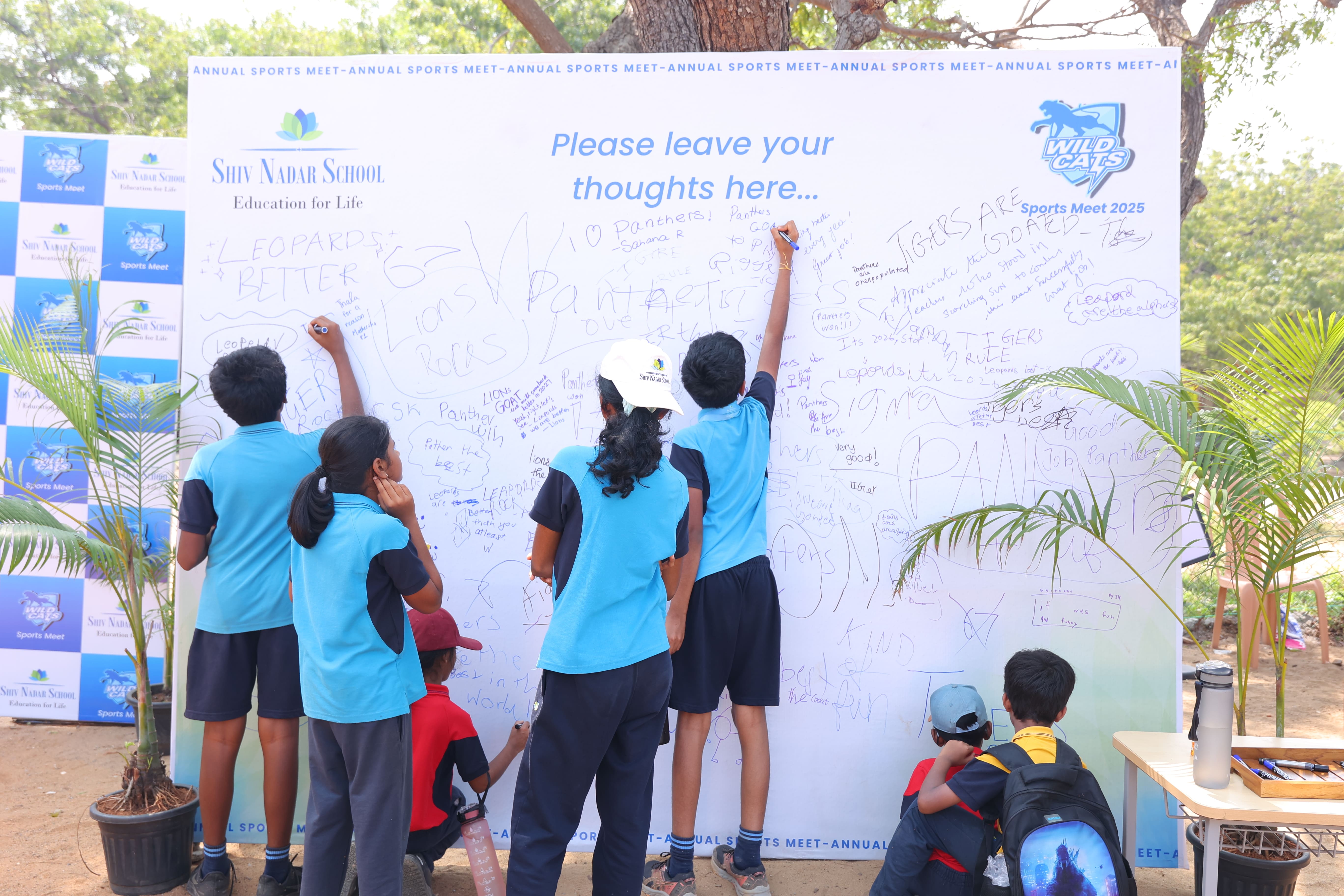
user_school

JOBS AND OPPORTUNITIES

Job Title School function department subject grade date
Head - Physical & Heath Education Chennai Non-Academic Sports Physical & Health Education All

Fill the below form to apply for the profile or send your CV to [email protected]

One file only.
64 MB limit.
Allowed types: gif, jpg, jpeg, png, bmp, eps, tif, pict, psd, txt, rtf, html, odf, pdf, doc, docx, ppt, pptx, xls, xlsx, xml, avi, mov, mp3, mp4, ogg, wav, bz2, dmg, gz, jar, rar, sit, svg, tar, zip.
One file only.
64 MB limit.
Allowed types: gif, jpg, jpeg, png, bmp, eps, tif, pict, psd, txt, rtf, html, odf, pdf, doc, docx, ppt, pptx, xls, xlsx, xml, avi, mov, mp3, mp4, ogg, wav, bz2, dmg, gz, jar, rar, sit, svg, tar, zip.

JOBS AND OPPORTUNITIES

Job Title School function department subject grade date
Education Technology Integrator (ETI) Chennai Academic Middle Years Programme (MYP) Education Technology Integrator (ETI) All

Fill the below form to apply for the profile or send your CV to [email protected]

One file only.
64 MB limit.
Allowed types: gif, jpg, jpeg, png, bmp, eps, tif, pict, psd, txt, rtf, html, odf, pdf, doc, docx, ppt, pptx, xls, xlsx, xml, avi, mov, mp3, mp4, ogg, wav, bz2, dmg, gz, jar, rar, sit, svg, tar, zip.
One file only.
64 MB limit.
Allowed types: gif, jpg, jpeg, png, bmp, eps, tif, pict, psd, txt, rtf, html, odf, pdf, doc, docx, ppt, pptx, xls, xlsx, xml, avi, mov, mp3, mp4, ogg, wav, bz2, dmg, gz, jar, rar, sit, svg, tar, zip.

The Power of Questions: Nurturing thinking in an inquiry classroom

What makes learning meaningful?

Is it the information students remember? Is it the answers they write in an examination in a limited amount of time? Or is it something deeper- the ability to think, question, and make sense of the world around them?

In an inquiry-based classroom, particularly within the IB Middle Years Programme (MYP), learning begins with questions of different shapes and sizes and not just a predefined set of facts to be learnt. Questions are the engine of inquiry. They stimulate curiosity, guide investigation, challenge assumptions, and ultimately help students construct conceptual understanding.

However, an important misconception about inquiry is that every question must be profound or philosophical. Effective inquiry classrooms value questions at different levels. Some questions simply help students observe. Others prompt analysis. Still others push students to form conceptual generalisations. Together, these layers of questioning support the gradual development of thinking.

Read More: A Guide to Understanding the IB (DP & MYP) Curriculum

At its heart, inquiry is about creating learning experiences where students are encouraged to wonder:

Why does this happen?

How does this work?

What might this mean beyond this situation?

These are the questions that move learning from facts to understanding. 

Educational research on concept-based inquiry suggests that inquiry learning often begins by engaging students emotionally and intellectually, activating their prior knowledge, and inviting their initial questions before deeper investigation begins. In the MYP classroom, this phase is essential because it creates the conditions for meaningful learning rather than passive reception of information. 

A simple example illustrates how questioning can spark thinking. 

Recently, our MY1 students visited Dakshina Chitra, the living heritage museum in Chennai that showcases traditional homes and cultural practices from across South India. Rather than experiencing the visit as a passive tour, students were provided with a worksheet designed around guiding questions. These prompts asked them to observe details carefully: 

  • What materials are used to build these houses?
  • Why might homes in different regions look different?
  • What similarities and differences do you notice across architectural styles? 

At first glance, these questions appear straightforward. Yet they encourage students to move beyond observation to analysis and interpretation. As students explored the houses, discussions began to emerge. Some noticed that roof structures varied across regions. Others wondered whether climate influenced building materials. Gradually, students began connecting their observations to broader ideas about environment, culture, and adaptation. 

In this way, structured questioning became the starting point for conceptual understanding, a central goal of the MYP framework. 

As students progress through the programme, the nature of questioning evolves. In earlier years, teachers often provide more structured inquiry to guide thinking. Over time, students begin to take increasing ownership of the inquiry process. 

Read More: Community Project Session for IB MYP 3 at Shiv Nadar School Faridabad 

This shift becomes particularly visible in MY3 through the Community Project. Here, students are encouraged to identify issues that matter to them within their communities. Instead of receiving predetermined research questions, students frame their own inquiries: 

  • What challenge in our community needs attention?
  • Why does this issue exist?
  • What action could help address it? 

These questions reflect a deeper level of thinking because students are defining problems, exploring perspectives, and planning action. They go beyond simply gathering information. In this process, the teacher's role shifts from delivering knowledge to facilitating inquiry. 

Similarly, in science classrooms, students often design their own investigations. A teacher might begin with a broad conceptual question such as: What factors influence plant growth? Students then refine this into testable inquiries, designing experiments, collecting data, and reflecting on results. Through this process, they develop key Approaches to Learning (ATL) skills such as research, critical thinking, and self-management, along with disciplinary knowledge. Others help them organize their thinking and identify patterns. 

Read More:  Shiv Nadar School Noida is now an IB MYP Authorised School 

What becomes evident across these experiences is that questions guide every stage of learning. Some questions help students engage with a topic. Some help them investigate evidence.Eventually, students begin forming generalisations- statements of understanding that connect concepts and can be applied beyond a single example. When students reach this stage, they are developing ideas that can transfer to new contexts, which is beyond the recall of information without a context. 

This is one of the most powerful goals of the IB philosophy: helping learners build knowledge that is transferable and meaningful. This also helps in furthering our commitment to lifelong learning at Shiv Nadar School

Yet perhaps the most significant shift in an inquiry classroom occurs when students themselves become the questioners. Instead of waiting for the teacher’s prompts, they begin to ask: 

  • Is this always true?
  • What evidence supports this idea?
  • Could there be another explanation? 

These moments signal something important. They show that students are developing agency as learners, instead of merely participating in lessons as passive listeners. This is the goal of our MYP classrooms. 

In the end, the success of an inquiry classroom may not be measured by how many answers students produce, but by the quality of the questions they learn to ask to pursue meaningful journeys responding to those questions. When classrooms nurture curiosity, encourage reflection, and value thoughtful questioning, they cultivate learners who are prepared for the complexities of the world beyond school, beyond any single examination. 

Perhaps, then, the most important question we can ask ourselves as educators and caregivers is this: 

Are we creating spaces in the classrooms and outside where curiosity thrives? Are we modelling the thinking process that we want our children to embody? 

Because when students learn to ask meaningful questions, they begin to see learning as a journey of discovery of their own selves and the world around them.  

2026-03-19
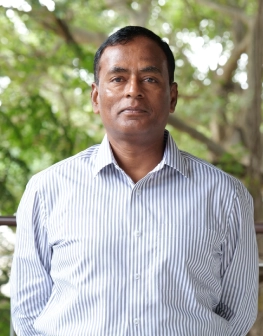
Col. Jerry Simeon brings over three decades of distinguished leadership experience shaped by service across diverse operational and institutional environments. Raised in a military family and educated at Army Public School, New Delhi, St. Xavier’s, Ranchi, and Kendriya Vidyalaya Secunderabad, he developed early adaptability, discipline, and a strong sense of purpose. After clearing the UPSC, he joined the National Defence Academy, beginning a career defined by strategic responsibility and mission-focused leadership.

An engineering graduate (B.Tech, Electronics) from the Military College of Electronics & Mechanical Engineering under JNU, and an MBA from Osmania University, he has consistently invested in strengthening his professional capabilities. His executive education at IIM Bangalore, advanced technical training in the United States with Thales Raytheon and John Deere, and Lean Six Sigma certification reflect his commitment to continuous learning and operational excellence.

Over the course of his career, he has led operational and training formations across Jammu & Kashmir, Assam, Bhutan, Mumbai, and the North East. His roles have included Battalion Commander in Mumbai, providing engineering support to tri-service units and INHS Asvini; Director Engineering Support at the Directorate General of Assam Rifles under the Ministry of Home Affairs, overseeing logistics and procurement; and Deputy Commandant and Chief Instructor at 3 EME Centre, Bhopal, where he steered academic, administrative, and infrastructure development initiatives. A two-time recipient of the General Officer Commanding-in-Chief Commendation Card, he is recognised for operational rigour, institutional strengthening, and organisational impact.

Known for his calm, systems-oriented approach and commitment to building resilient teams, he brings strategic insight, governance experience, and a deep understanding of institutional leadership.

An avid marathon runner who also enjoys golf and squash, he is married and has a daughter working in the technology sector. In the next chapter of his professional journey, he seeks to contribute meaningfully to mission-driven institutions, applying his experience to build high-performing, future-ready organisations.

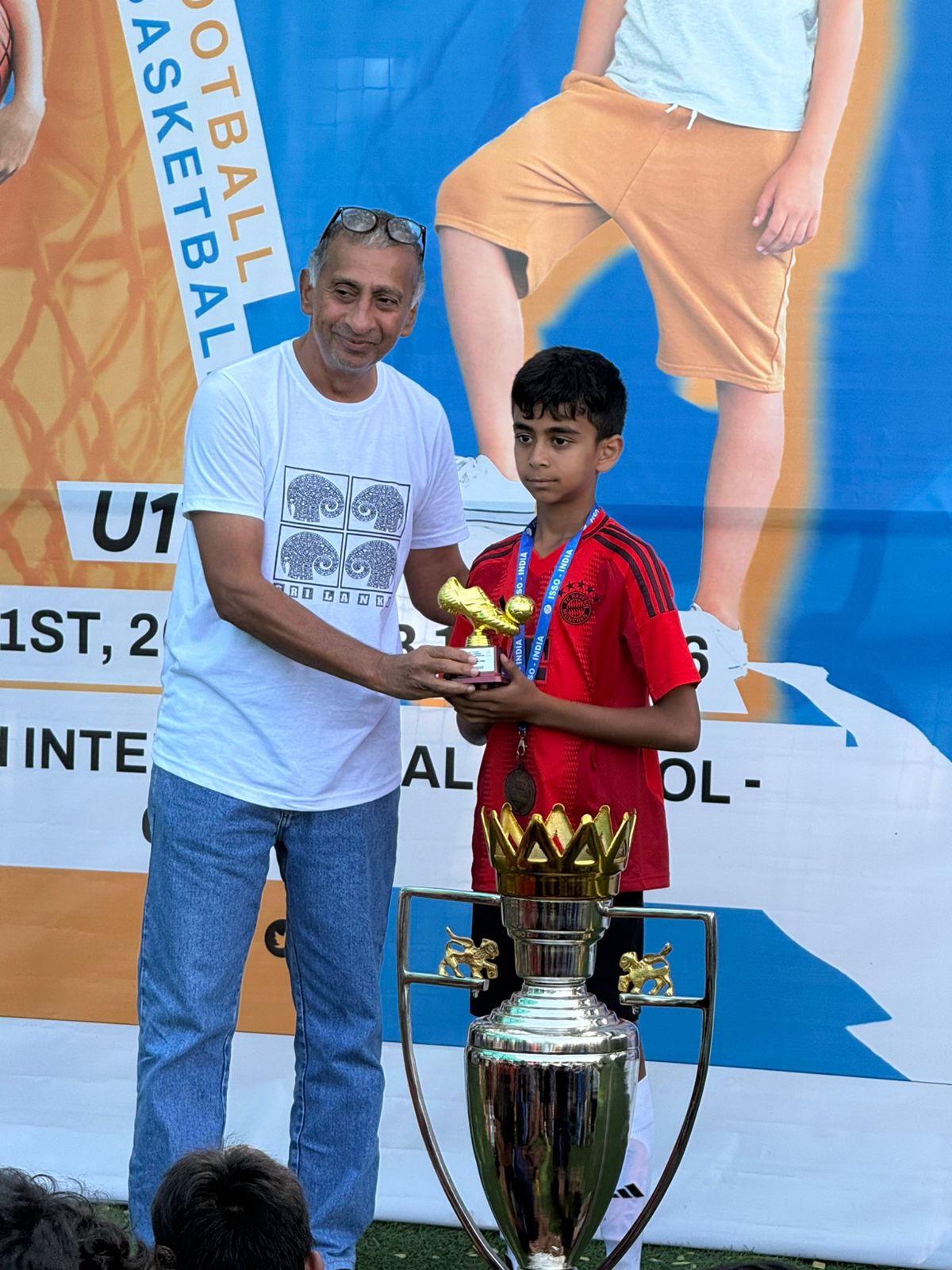
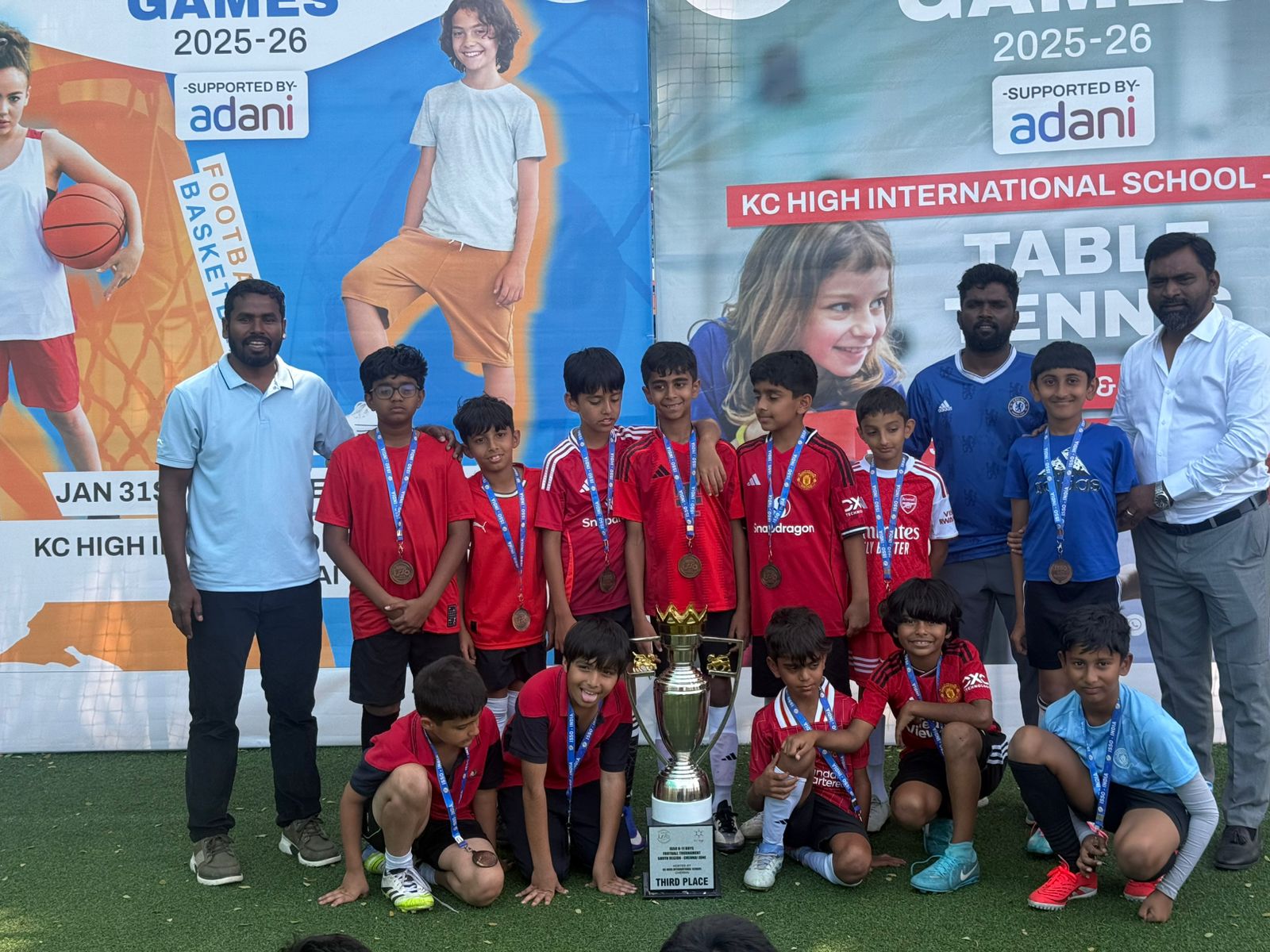
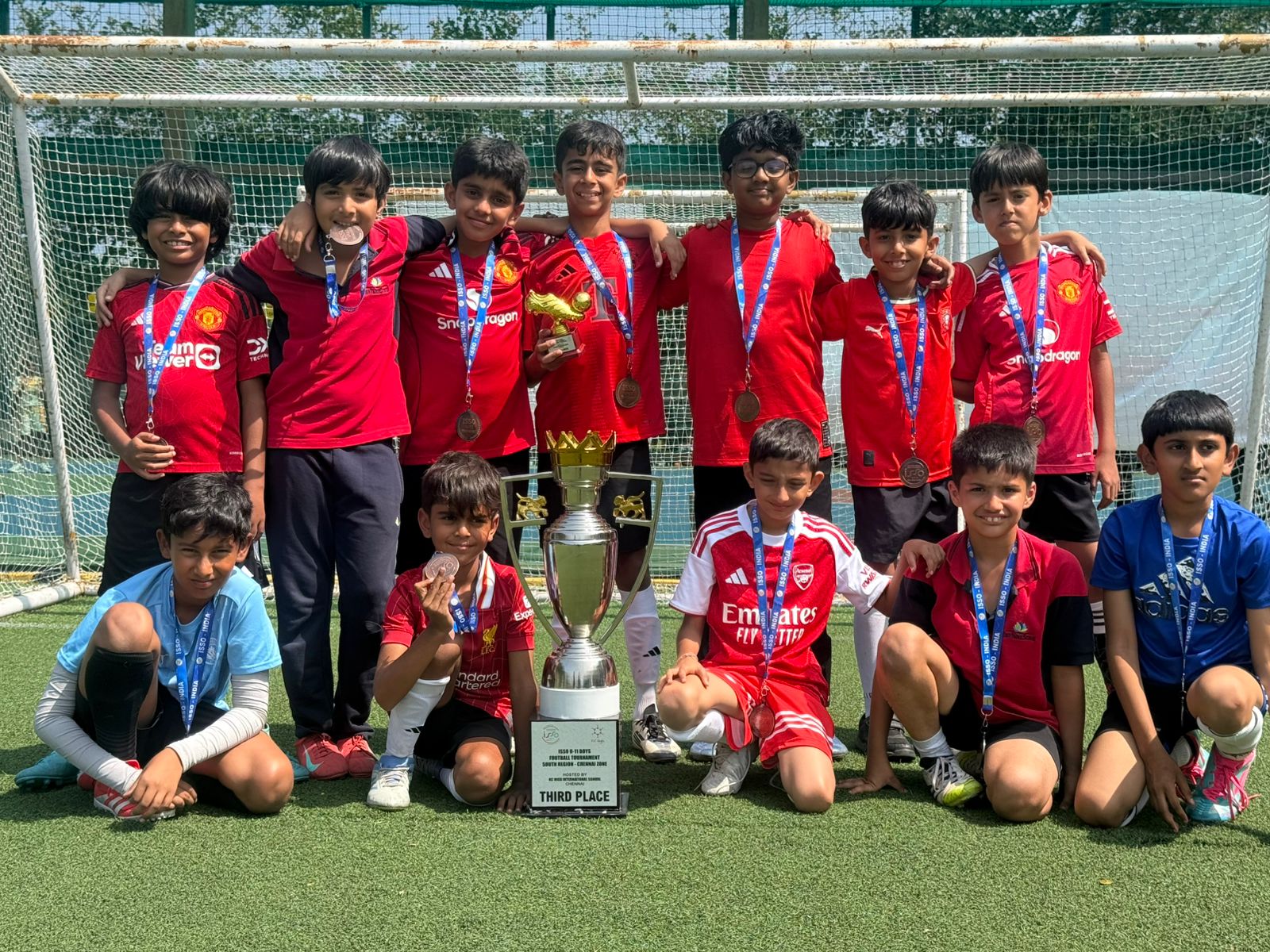
Under 11 Boys Secure 3rd Place at ISSO Tournament

isso

Our students proudly represented the school at the ISSO (International Schools Sports Organisation) Tournament, demonstrating determination, teamwork, and a strong sporting spirit throughout the competition.

We are pleased to share that the Under 11 Boys Football Team secured an impressive 3rd place overall in the South Region - Chennai Zone. The team showed consistent effort, collaboration, and resilience across matches, reflecting the values we aim to nurture through school sports.

A special mention goes to Gautam Dev Gokul (PY5), who emerged as the Top Scorer of the tournament, scoring an outstanding 15 goals across four matches.

Under 11 Boys Football Team

  • Diyaan Lodha (PY3)
  • Mithran Dev Gokul (PY3)
  • Skandan Sethuraman Periyannan (PY3)
  • Suhaan Gupta Caves (PY3)
  • Aarav Bherwani (PY4)
  • Kabir Nahata (PY4)
  • Rana Rajiv (PY4)
  • Tejas Kamalakara (PY4)
  • Maahir Bajaj (PY4)
  • Advaith Amarnath (PY5)
  • Gautam Dev Gokul (PY5)
  • Pranath Darshan Jain (PY5)

We congratulate our students on this achievement and commend them for representing the school with commitment and sportsmanship.

ALL ,

Arts ,

Award ,

Badminton ,

Board ,

Competition ,

Curriculum ,

School ,

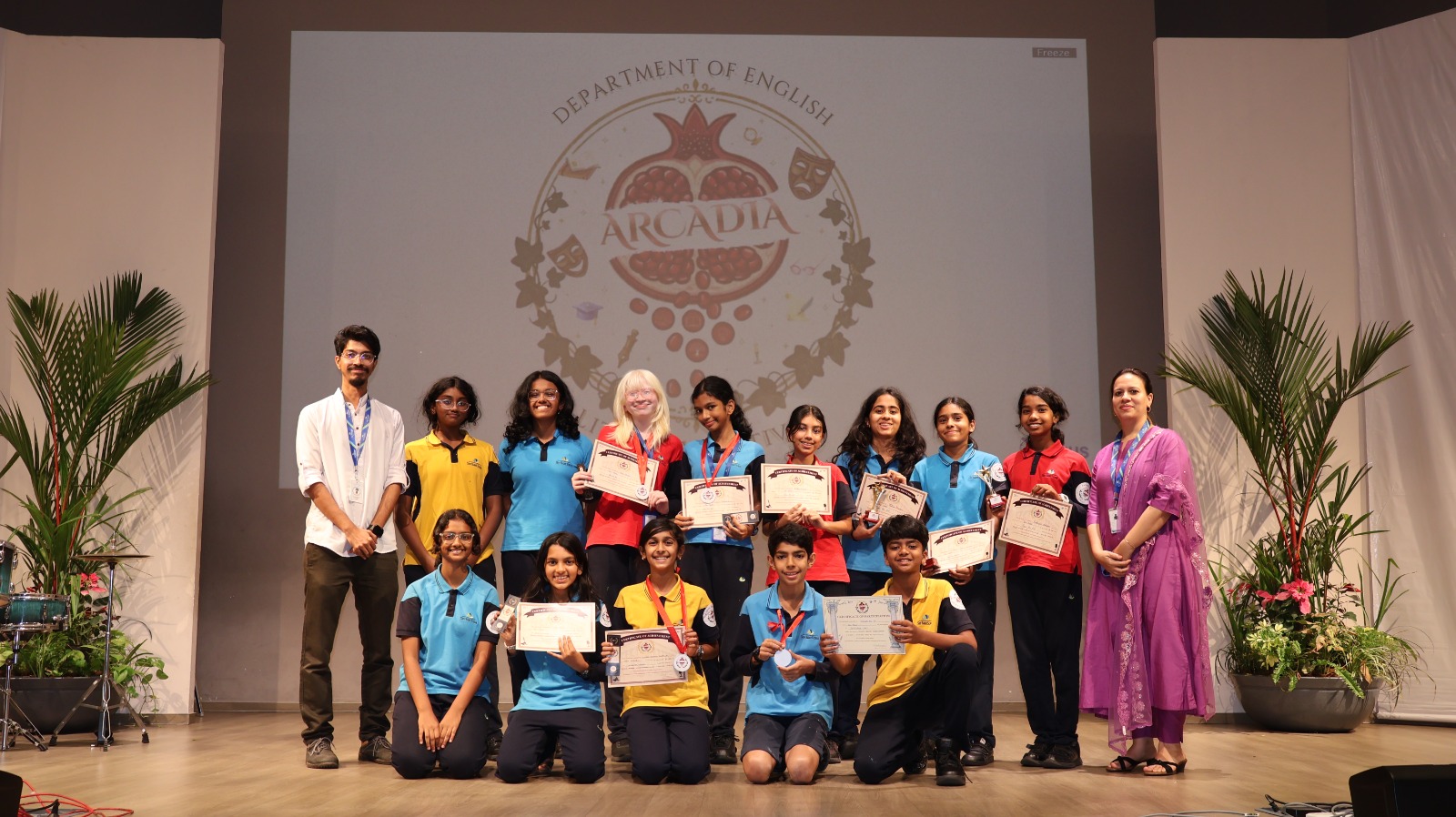
Celebrating Literary Excellence at Arcadia

arcadia

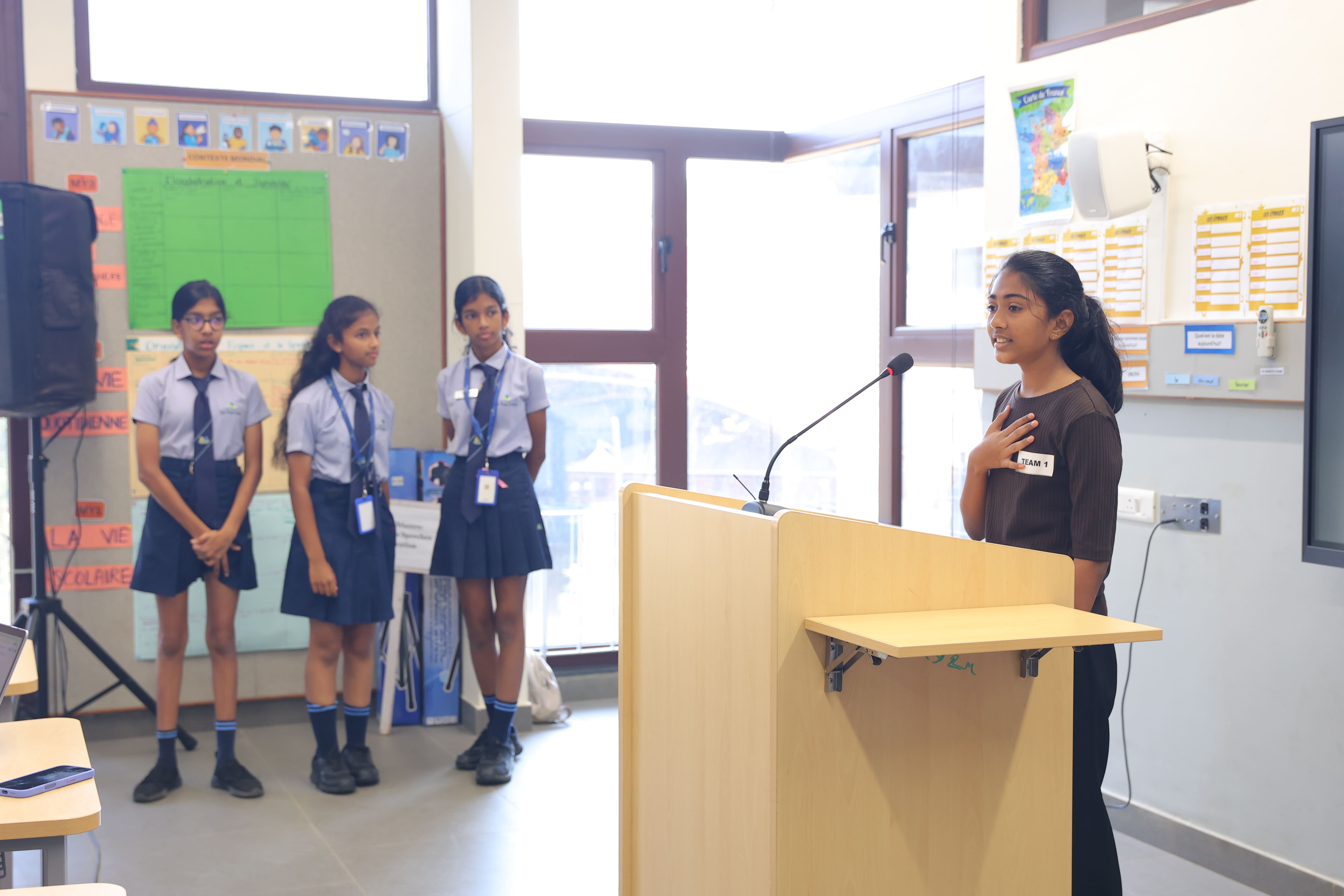
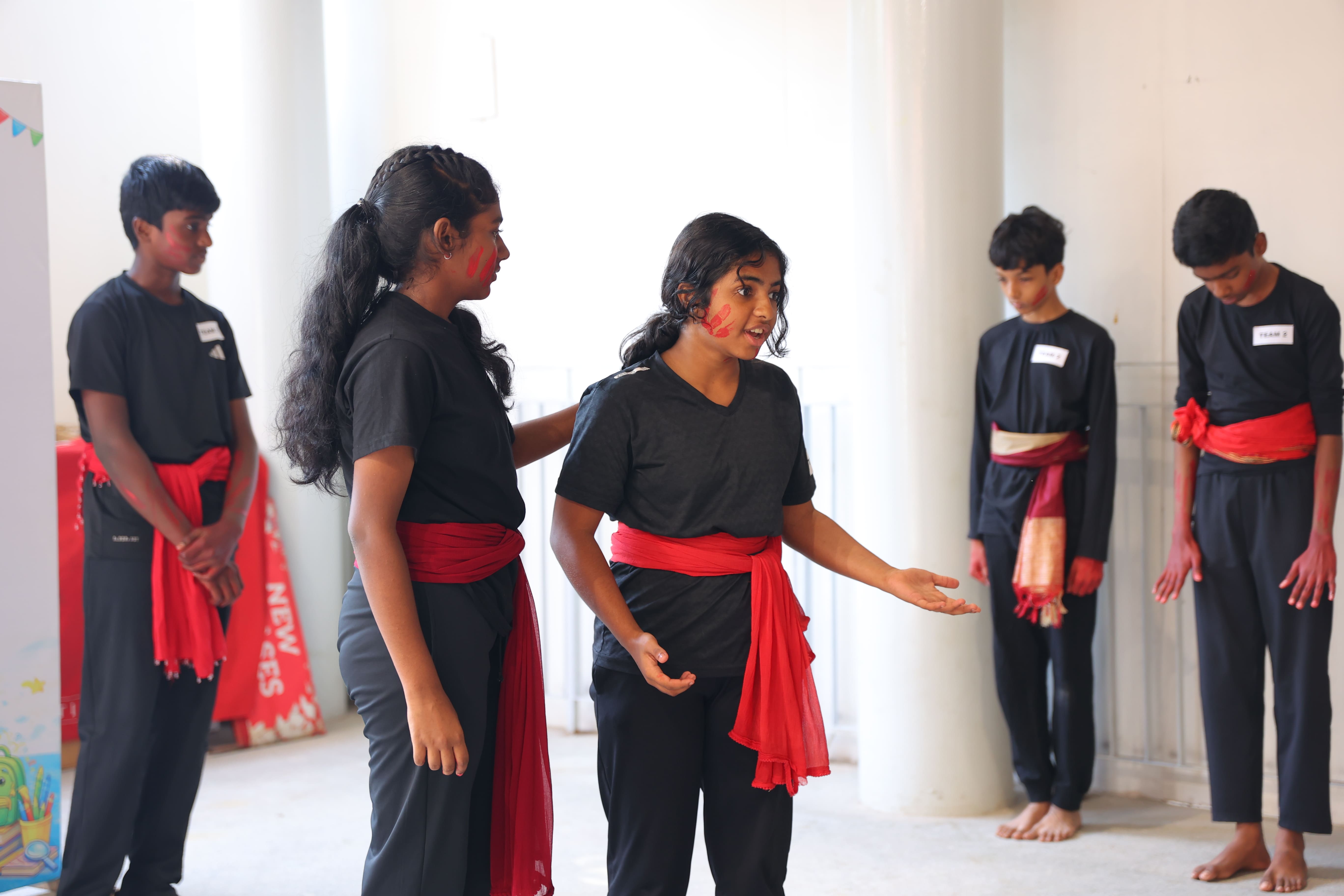
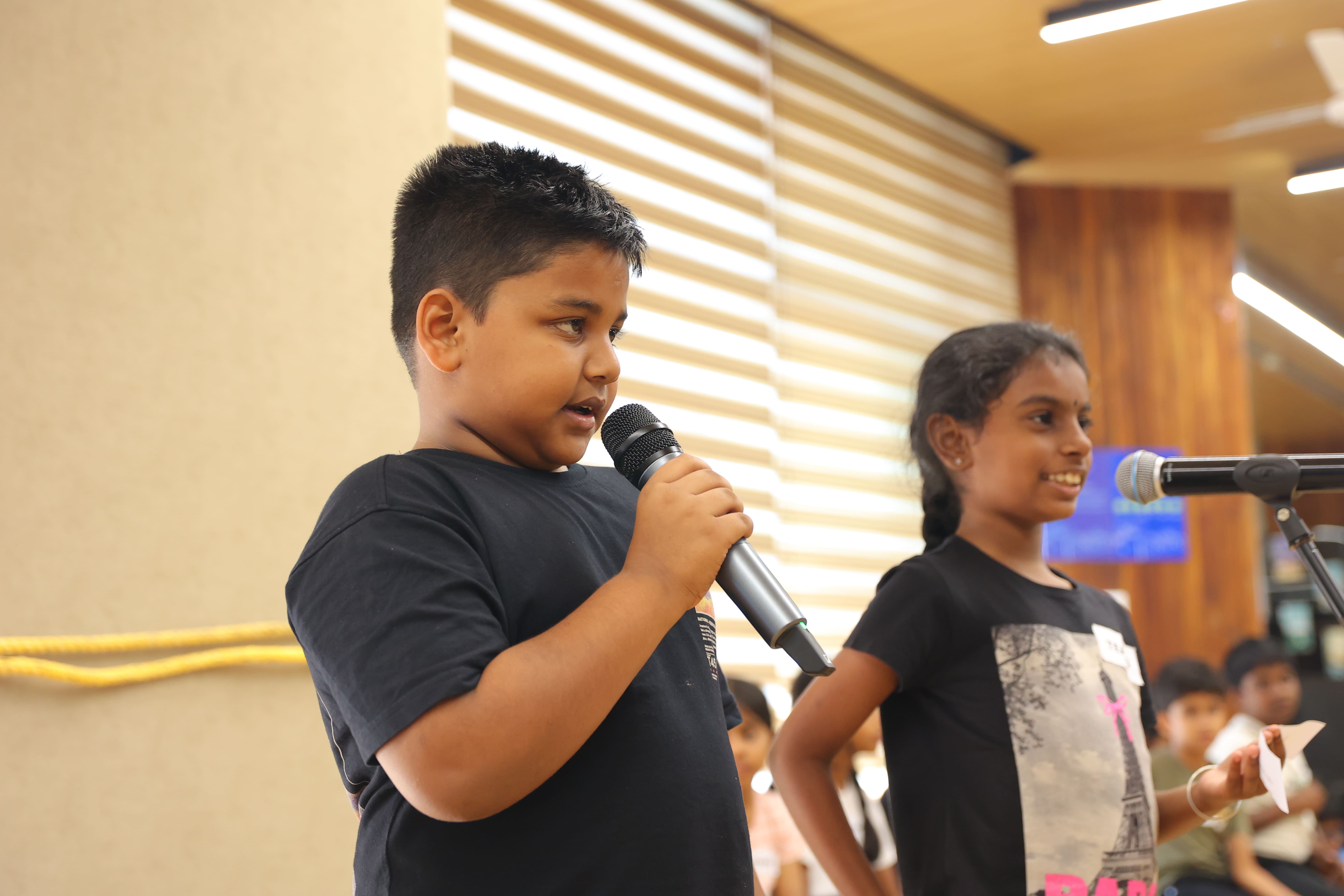
Our Middle Years students recently represented Shiv Nadar School, Chennai at Arcadia, the Literary Fest hosted by Hiranandani Upscale School, and returned with several commendable achievements.

Participation in such platforms allows students to apply their classroom learning in authentic settings—speaking with confidence, collaborating with peers, and responding thoughtfully to unfamiliar challenges. These experiences are especially valuable during the middle years, as students develop independence, voice, and self-assurance.

We are pleased to share the following results:


Character Parade

  • Nihara Mammen Mappillai – 2nd Place
  • Vihana Bansal – 3rd Place


Ode to Objects

  • Anika Shagee – 1st Place
  • Ananya Jammi – 3rd Place


Pass the Plot

  • Ahalya Niranjan, Pradhayini Chellapan, Mallika Narayan – 1st Place
  • Sahana Radhakrishnan, Manvi Khicha, Aradhya Parakh – 2nd Place


JAM (Just A Minute)

  • Samar Ram – 2nd Place


Shiv Nadar School, Chennai was declared Overall Champions – 2nd Place.

Through their participation, our students demonstrated confidence, creativity, and collaboration, reflecting the emphasis we place on communication, critical thinking, and meaningful engagement in the middle years.

ALL ,

Arts ,

Award ,

Badminton ,

Board ,

Competition ,

Curriculum ,

School ,

Shiv Nadar School Chennai is now an Authorized IB PYP World School


Shiv Nadar School, Chennai is now an authorized IB PYP World School and is officially part of the prestigious IB World School community.

This authorization reflects our focus on delivering a high-quality, inquiry-based educational experience. Learning at our school is designed to nurture students who are curious, knowledgeable, and caring, while encouraging them to take responsibility for their own learning.

As we enter this new chapter, we look ahead to deepening student agency, critical thinking, and responsible action, as part of our continued pursuit of educational excellence.


Competition ,

Creative ,

Cricket ,

Curriculum ,

Dance ,

Economy ,

Education ,

Education For Life ,

Environment ,

Fitness ,

IB ,

Innovation ,

Leadership ,

Lifestyle ,

Middle ,

Music ,

Nature ,

Nutrition ,

Outbound Learning ,

Parenting ,

Performing Arts ,

Philosopy ,

Pre Primary ,

Primary ,

Progressive ,

Reading ,

Relationships ,

School ,

School Life ,

Science ,

Secondary ,

Senior Secondary ,

SNS Guest ,

Soccer ,

Speaker ,

Sports ,

Theatre ,

Travel ,

Visual Arts ,

Welness ,

Writing ,

Outstanding Performance at the Gymnastics Tamil Nadu State Championship

Gymnastics

Outstanding Performance at the Gymnastics Tamil Nadu State Championship

Our learners delivered an outstanding performance at the Gymnastics Tamil Nadu State Championship, held in Chennai on 13 and 14 December 2025. Competing at the state level, students from PY1 to PY3 demonstrated exceptional discipline, skill, and sportsmanship across multiple events.

The young gymnasts secured several medals in floor, beam, and vault, reflecting not only their talent but also their consistent training, perseverance, and commitment to excellence. Their achievements mark a proud moment for our entire school community and stand as a testament to the strong foundation of physical education and competitive sport nurtured at the school.

Medal Winners

  • Sanghamitra Rana Baskar: Floor – Bronze | Beam – Gold
  • Daksh Yogan Pari: Floor – Gold | Vault – Silver
  • Aisha Shagee: Floor – Gold | Beam – Silver
  • Dhanika Singh: Floor – Gold | Beam – Silver
  • Riyaan Balajee: Floor – Gold | Vault – Silver
  • Raja Nakshatra: Floor – Gold | Beam – Silver

We congratulate all our gymnasts for their remarkable achievements and commend their dedication, resilience, and spirit. We look forward to seeing them continue to grow, challenge themselves, and shine in future competitions.

ALL ,

Arts ,

Award ,

Badminton ,

Board ,

Competition ,

Curriculum ,

School ,

MY3 Community Project Showcase: Learning Through Action and Responsibility


As part of the MYP Community Project 2025–26, MY3 learners showcased their ongoing work to the Middle Years Parents. This meaningful engagement marked the first Community Project showcase in the run-up to the final MYP Community Project Exhibition.

What is the MYP Community Project?

The Community Project is a core component of the IB Middle Years Programme (MYP) undertaken by students in MY3. It invites learners to identify a real community need, explore it through inquiry, and take purposeful action to make a positive difference. The project places strong emphasis on student agency, reflection, and responsibility, while developing key skills such as research, planning, collaboration, communication, and self-management.

Through the Community Project, students move beyond academic learning to engage with the world around them—understanding impact, ethics, and the importance of sustained action.

The Showcase: A Reflective Checkpoint

For this first showcase, MY3 learners voluntarily set up stalls to present their projects, clearly articulating their goals, the communities they serve, success criteria, and evidence of action taken so far. Parents engaged in thoughtful conversations with students, asked questions, and offered feedback, gaining deeper insight into both the purpose and the process of the Community Project.

The showcase served as an important reflective checkpoint for learners.  It was an opportunity to pause, evaluate their progress, and consider next steps as they continue their journey toward the final exhibition. While some students chose to raise funds through sales-based initiatives, others focused on awareness-building and advocacy, highlighting the diverse ways in which meaningful community impact can be achieved.

Looking Ahead

This first MY3 Community Project Showcase reflects learning in action, where student voice, reflection, and responsibility come together. As learners continue to refine their projects, they will deepen their understanding of community needs and prepare for the culminating MYP Community Project Exhibition.

Most importantly, the showcase reinforced the value of authentic engagement and parent partnership, demonstrating how collaborative learning experiences can enrich understanding and empower students to create purposeful change.


Creative ,

Curriculum ,

Education ,

Education For Life ,

IB ,

Innovation ,

Leadership ,

Middle ,

Philosopy ,

Progressive ,

School ,

School Life ,

Science ,

The Shark Tank Experience: When Ideas Meet Opportunity


In the Shark Tank experience, students stepped confidently into the role of young entrepreneurs, pitching their product ideas with clarity, conviction, and purpose. This engaging platform encouraged learners to think creatively while grounding their ideas in real-world problem-solving.

Adding an authentic and exciting dimension to the experience, parents from our school community took on the role of the Sharks. They listened attentively, asked probing questions, and offered constructive feedback, challenging students to think deeper and refine their ideas in the moment. The dynamic exchange mirrored real entrepreneurial settings, making learning both meaningful and memorable.

Throughout the process, students demonstrated strong critical thinking, communication, and adaptability, responding thoughtfully to questions and iterating on their pitches with confidence. The experience highlighted their ability to articulate ideas, defend choices, and learn from feedback.

Together, these experiences exemplified learning beyond textbooks—where creativity meets application, and ideas are nurtured through authentic engagement. Most importantly, the Shark Tank experience showcased the power of parent partnership, reinforcing how collaboration between school and families can enrich the learning journey in truly impactful ways.


Competition ,

Creative ,

Curriculum ,

Education ,

Education For Life ,

IB ,

Innovation ,

Leadership ,

Middle ,

Philosopy ,

Progressive ,

School ,

Science ,

SNS Guest ,

Subscribe to Chennai