


Raising Responsible Leaders

Ms Shashi Banerjee, Principal, Shiv Nadar School Noida, has authored the following piece. This was initially sent out as a letter to the parents.

Dear Parents,

Our children have braced the cataclysmic change in their immediate world with amazing resilience and by and large, a quiet acceptance. In most cases, they have provided unconditional support and love to their elders by shouldering responsibilities as much as has been possible in keeping with their age and individual capacities. This is certainly a time to express our gratitude for the hope they offer and stand for.

Children of these times, especially the past decade or so, are equal victims to environmental degradation at all levels - of the physical erosion of our natural environment, reckless growth and development of consumption and consumerism, an all-time low in socio-political discourse and unmediated lifestyle role-modelling offered as variant models of modernity and liberalism which strongly clash with traditional value systems. As victims of this onslaught, many of these adolescents have not had any moral or spiritual anchor to hold on to, and thence emerges an aberration in social behavior - such as the 'locker room episode' - an anomalous sporadic social eruption sending moralists and masses across into an angry chorus of 'Let's fix them - did I not say, this technology is the evil that spoils them?' This simmers, till the next big thing gets exposed. And the world carries on bearing little or no accountability for the actions of their young ones, though thankfully, many do acknowledge and constantly engage with how best to empower our young to thrive and, together, build a better world.  

Thinking objectively, beyond all the outrage, it saddens me that perhaps the society, and we as adults, have failed our young people. When in the process of becoming adults do our children get conditioned into such structures and systems? Does this not come from the socialization process, learned behaviours and attitudes from seeing all that is modelled around us - in family conversations, in movies, in advertisements, in songs, and subtly in so much around us?

It is perhaps a time for all of us to look within and wonder what we need to review and reconstruct to ensure that we scaffold our children to be respectful adults. To themselves and all around them. 

We, at School, talk about digital citizenship and cyber safety as part of our curriculum and we go deeper into age appropriate topics of gender sensitivity, the thought and vocabulary of respect and equality, sexuality and more in a safe and non-judgmental space. There are no taboo topics - for that is what creates a repressed mind more often than not, channelized towards inappropriate behaviors. 

img

As a School, through the curriculum of scholastic and co-scholastic engagement and wellbeing sessions, we constantly create environments and lessons that engage the student to think critically, to question, to reflect and to share their voices. To have thoughts, feelings, opinions and actions that they take ownership of. To empower each of them to find meaning and purpose for themselves and what they can contribute as global citizens. We will continue to create safe spaces where students can express their individuality and stand tall whether or not they 'fit' in.

This integrated, concept-based curriculum is woven into lesson plans and into a daily/weekly/ monthly/yearly timetable in the following ways:

1.      Social, Emotional, Physical and Ethical well-being modules as part of their 'Health and Well-being Classes' - spiritual well-being through the practice of mindfulness and attitude and skill building through Aha Sports. 

2.      Development of empathy and connect with the self and community through the exploration of traditional and non-linear forms of learning in the Co-Scholastic and Aha Arts programmes.  

3.      Environmental education through Sustainable Development Goals, based on Design Thinking. 

4.      Robust Technology learning programme infusing Digital citizenship enabling creativity and innovation, reducing consumption. 

5.      Problem and Project-based learning through programmes such as the Capstone. 

6.      Career Guidance and Self-awareness building through Internships and Work life exposure. 

7.      World affairs and higher order thinking, reading, listening and writing skills through the learning modules of Education for Life, Model United Nations, Literary, STEAM and Electoral Literacy Clubs, Exchange programmes, Community, Service and Outbound Learning Experiences. 

However, the efficacy of all these inputs and the entire paradigm of raising ethical, responsible, happy, aesthetically sound and purposeful citizen leaders, persons of substance, is subject to the harmony of this critical relationship between Parents, School, Family and Friends, and the immediate and larger Society.  This could be summed up as the 'Village ' that raises the child. 

The New World demands our attention in revisiting parenting, schooling and community interaction norms. Each one of us will need to re-examine our roles and responsibilities, our do's and don'ts, in order to raise a worthy individual who could be valued and would thrive and contribute (not just live) with dignity. 

What can you do as a parent? 

As a parent, there is nothing more important than to keep channels of communication open. This is the toughest when the child is an adolescent - moody and uncommunicative. Do not give up! This is when they need us most. We may feel unloved and not needed, and it takes enormous patience and unconditional love to not give the same back.

They need love. They need boundaries. They need conversations. As they grow they need consistently to see us model the values that we hold dear, hear us share our principles, our non-negotiables and for us to know that even when they do not seem to be listening, it is stored away somewhere. Let us hold firm to the non-negotiables, even in the face of tantrums and recalcitrance. Let us not be afraid of difficult conversations - our children need them.

Instinctive and informed parenting and value-led education are effective known ways to educate and guide our young for life. Together, let us continue to raise ethical, responsible, happy, contributive and purposeful leaders of an ever-evolving brave new world!


2020-05-29

Ecosophy - the Future of Humankind

(Authored by Ms Monica Sagar, Principal, Shiv Nadar School Gurgaon.)

Twenty Nineteen and Twenty Twenty have been watershed years in terms of climatic devastation.Examples are rife; from the raging fires in the Amazon rainforests and Australian bushfires, both of which have scorched millions of acres of forest along with innumerable endemic species, to closer home in Uttarakhand, with fires in the Nainital district turning our exquisite biodiversity into ashes. Close on their heels has been COVID19, cyclones around the Indian peninsula, locust attacks, and a spurt of mild earthquakes with predictions of more to come. Time and again philosophers, leaders and scientists have cautioned humankind about the abuse of our lovely and unique Mother Earth. It is high-time we collectively look towards Ecosophy - the wisdom embedded in our very planet.

First used in the ‘70s by the French philosopher Félix Guattari and Arne Naess (the Norwegian father of deep ecology), the term ‘Ecosophy’ overturns the previously-held belief that Man is at the apex of the food chain. Ecosophy instead encapsulates the understanding that human beings are but a part of an intricate biodiversity, in which every living organism is inter-connected by delicate, invisible threads of co-existence, needed to create and sustain a vibrant, healthy planet. Gandhiji’s evergreen words, “The Earth has enough for every man’s need but not enough for every man’s greed” and his principles of non-violence, as well as the Buddhist practice of mindfulness are all conducive to the principles of Ecosophy. Simply put, Ecosophy is the philosophy of ecological balance.

In these times, as adults increasingly look towards ways of conscious living, there is a need, now more than ever, to introduce our children to the concepts of Ecosophy as well. It must run as a central theme in our academia to teach future generations the importance of seeing themselves as one part of a beautiful whole. We must lend our focus on the restoration and sustenance of the systems of nature, as opposed fulfilling human greed, by way of misuse and wastage of natural resources.


At Shiv Nadar School, we are sowing the seeds to make our students conscious citizens of the world. Take, for example, cross curricular projects during our annual Funkaar Week (a week fully dedicated to experiential learning and approaching concepts from a holistic & multidisciplinary point of view). During this time, students may be studying different species of trees, flowers and insects in Science, recreating them in Art/craft and weaving stories about them in Language and Theatre. The Early Years students learn to grow vegetables and herbs in small patches and movable trolleys. Vermi-composting, reducing pollution and water & power conservation have been perennial themes in Middle School. In Senior School, our Capstone projects have enabled students to weave science and technology in the creation of sustainable projects, like green lighting for dwellers of slum shacks, smart traffic light systems, vertical green walls with drip irrigation, hydroponic agriculture, recycling excess RO water, just to name a few. The need of the hour, however, is to encourage curriculum drafters across the world to create curricula with the spirit of Ecosophy as the central theme, as opposed to treating subject domains in silos.

In fact, along with their children, parents too can be travellers along the same journey of Ecosophy. Minimalism has taken the world by storm in the last few years. The rise of popular figures, such as Marie Kondo, has brought along with it a movement. It has taught many of us a different way of living – finding joy in simplicity and gratitude, as opposed to adding blindly to the clutter with things we rarely use. Some of us now avoid using vehicles for short distances, choosing instead to walk or even cycle.

Today, there is a dire need to alter the rapid pace of our lives to bring in more peace, joy and stillness for the sake of our children. Some suggested family activities could include observing and documenting, through photographs, the number of unique birds or insects visiting a tree near the house. Alternatively, to encourage scientific curiosity in our babies in the Early Years, they could be taught to observe and document birds and insects (with a magnifying glass) visiting their kitchen gardens and balcony plants. Lower primary children could do an ‘environmental audit’ of grocery lists with parents, in order to replace things in non-sustainable packaging as well as encourage locally sourced alternatives, so that we can minimise the family carbon footprint. We could also substitute chemical detergents and pest repellents used in our homes with organic alternatives. Upper primary students could look at recycling discarded RO water in their homes. Vegetable and fruit peels could also be segregated and vermi-compost prepared for your earthen potted plants. With time, many more such activities can be consciously woven into the very fabric our lives.

Somewhere, during the course of history, we have developed a notion that the idea of Ecosophy is counter-intuitive to the idea of  Economic growth. Theories centred on ‘survival of the fittest’ and ‘materialistic consumerism’ abound, having made us compete for survival with other species. We must now look at win-win outcomes, in which species can survive as well as thrive, collaboratively. We have been running our lives amassing symbols of ‘success’ that have been defined by the Industrial Revolution, some 300 years ago! Now, the time must come to mature as a species by moving past lip-service to eco‐science (Ecology) and instead, rising towards eco‐wisdom (Ecosophy).

A global endeavour beyond political short-sightedness and geographical boundaries is needed to create policies that help us joyfully learn from, and collaborate with, all forms of life to develop the Ecosophy of care. Thus, we must now look at raising the ‘quality of our lives’, rather than our ‘standard of living’. The time is ripe for us to attend to this particularly critical need of our children and their futures - learning to live in harmony with nature - much before we dedicate ourselves to ensuring their success as entrepreneurs, researchers, economists, doctors and engineers.


References:

https://www.kosmosjournal.org/article/ecosophy-natures-guide-to-a-better-world/

https://www.encyclopedia.com/environment/encyclopedias-almanacs-transcripts-and-maps/ecosophy

https://www.tandfonline.com/doi/abs/10.1080/02604027.1989.9972135


2020-06-18

From Fear to Fascination: The Energy Bootcamp 2020!

Is nuclear energy something to be feared or is it something to be fascinated by? Curious minds were sat on one side of the screen, keenly observing, listening and learning – on the other side of the screen sat scientists, educators and experts, luminaries in their fields, allowing students to discover the answer to this very question.

The world has long seen the terms ‘Energy Security’, ‘Sustainability’ and ‘Environmental Safety’ as divergent concepts. But to enable students to truly understand the magic of nuclear science, facilitate student exposure through scientist interactions and dispel long-held misconceptions, a spectacularly eclectic set of events were held as a part of the Energy Bootcamp 2020. Global stalwarts from the field of nuclear science, plasma physics, sustainability and beyond were invited for student interactions, experimental sessions and as a part of the jury for various competitions.

Organised by Shiv Nadar School Noida in association with Indian Youth Nuclear Society (IYNS), a whopping 2000 students across different backgrounds and streams participated in this first-of-its-kind event, from Shiv Nadar School Noida, Gurgaon and Faridabad, as well as Vidya Gyan schools and Shiv Nadar University.

And so, October 6 to November 8 came to be about all things nuclear – think scientist-guided virtual nuclear reactor tours, out-of-this-world light experiments, art, design, rap and meme competitions, rasode me science experiments and more such creative intra- and interschool competitions! The Bootcamp featured participation from leading scientists from India and abroad, including Dr Nitendra Singh, Founder and President, IYNS, Dr Arvind Kumar, CSIR-National Aerospace Laboratories, Nikhilesh Iyer and Ganesh V, BARC, Dr Mohit Sharma, Jozef Stefan Institute, Slovenia, Dr Joyeeta Sinha, ITER, France and Sunaina Kundra, Samyak Munot, and Vaishnavi Tiwari, IYNS.

img


The month-long event was kicked off with a spirited quiz, and further rounds saw students competing in video and project making competitions. Exciting and awe-inspiring experimental sessions were organised with scientists, and on multiple occasions, students were sat fully immersed even till 10 o’clock at night!

Such expert interactions and sessions held throughout the month on contemporary issues of energy science and climate change left the students thoroughly inspired and gave them a fresh perspective on complex issues, as well as a deeper, more nuanced understanding of advanced concepts. Students were also given career-related advice on taking up nuclear science further, as a profession. Another major highlight was the guided virtual tours to nuclear irradiation facilities at Nuvia India, ITER, France and ITER India.

img


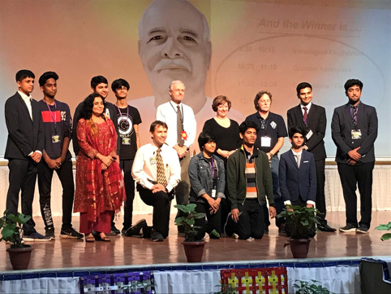
The three-day culmination, from November 6-8, featured one of the most exciting events of all – the Youth Parliament, featuring student teams from all the schools and eminent international experts and panellists from diverse fields, including Dr Kapil Narula (University of Geneva), Dr Nandakumar Janardhanan (JNU, Nuclear First), Dr Patrick Das Gupta (University of Delhi), Dr Nitendra Singh (IYNS) as well as Mr Raymond Fernandes (Director of Education, Shiv Nadar School). “Sustainability: Energy and Environment” was the topic of discussion. The students of Vidya Gyan Sitapur cinched the winning spot on the leader board, with Shiv Nadar School Noida close on their heels in second place.

img


Through these spirited individual and group activities and competitions, students learnt about the scope of smaller and safer nuclear plants, nuclear fusion as well as hybrid power plants as a part of a diversified energy mix. Our budding scientists and policy makers thoroughly enjoyed the scientist interactions and were astounded to learn of the additional benefits of nuclear energy in fields like agriculture, industry and more.

Challenges of the 21st century call for solutions that lie far beyond the pages of a textbook and the walls of a classroom. Sustainability and energy security are dynamic, multidisciplinary topics and as the decision-makers of tomorrow, students must be given the freedom to learn by using their ability to think critically and collaborate globally, in evaluating solutions for a safer, cleaner and more hopeful tomorrow.


2020-11-12

‘Education for Life’ It Is!

In manners big and small, planned and spontaneous, fun and serious, we try our best to make learning exercises meaningful for our children. The guiding light for the same is the principle of lifelong learning, which we follow with full dedication to arrive at an academic and co-scholastic structure capable of preparing a child not just for the next exam, but for all the surprises that life might hold for him. Education is not a journey with a beginning or an end. While we realise it, we are also extremely conscious of the fact with the pace at which the world is progressing, it is near impossible to predict what kind of challenges lie ahead for our students when they step out into the world as independent individuals.  It is hence, that the concept of ‘Lifelong Learning’, is so important to us and the world of knowledge we are striving to create.

The month of November, we spent, introducing you to the concept of Lifelong Learning, and the manner in which it is followed in our school. As the next month looms closer, we brace ourselves to explore yet another value, but not before we give you a final peek into the various activities which speak loudly of our commitment to ‘Education for Life’. You have all been introduced to these activities earlier – but now is when we put it in the prism of Lifelong Learning, and serve it fresh to remind you of the efforts we are undertaking to make education a more fruitful journey for our children.

So here – Five Activities which carry the essence of Lifelong Learning in them!

Funkaar Week

Concluded in October this year, the Funkaar Week is a week full of experiential and creative engagements for the children. It is a week with no studies, but a lot of learning. Children get to explore varied arts, and their scholastic curriculum is pursued through the route of practical, hands-on learning experiences. Funkaar is an annual event, which creates equal amount of enthusiasm in students, teachers and parents. A detailed discussion of Funkaar can be found here, but for the purpose of this article, we can tell you that with the kind of responses students give us, we feel we are successful in fulfilling the aim of inducing love for learning in our children through this short period of exploring an overwhelming set of activities.

img

AHA! Time


A key USP of the school, the AHA! Time is aimed at unearthing and nurturing the ‘element’ in all of us. Our website will tell you a lot about this programme and its various subdivisions here. The Aha! Programme is embedded into our curriculum as a daily set of activities our children are exposed to in domains across visual and performative arts, as well as sports. Story-telling, Needle Work, Cooking and Nature-Awareness are also areas of learning our students are familiarised with. To create a joyous atmosphere of learning, and helping children develop skills other than academics are the aims of Aha! This extra hour of activities, daily, has so far been serving its purpose well, and this we say with confidence when we see our children identifying and living their passions in front of us each day.

img

Joy of Sharing Week


Here is another week of experiences which are not drawn straight from the needs of the curriculum, but which are very strongly inspired by the need of humanity and sensitivity in life. The Joy of Sharing week is a celebration of all those elements of life which often overlook our attention, but which are important parts of our environment and society nevertheless. The fact that we all have to rise above ourselves and exist as individuals who are caring, sharing and loving is our core message to all students during this week. This is also the message we would like to send out to collective humanity if we are survive and exist as an empathetic race. You may read more about it here.

img

Anandam


Anandam is a grand cultural feast which happens each year in the month of February. It is a celebration of all the learnings students have taken home during the Aha! Time. Students put on display their performances of dance and music and also display their paintings and craft in the form of an exhibition. It is also an opportunity for our parents to interact and understand the Aha! Programme and its achievements in a more direct manner. Students and teachers are already excited about this year’s Anandam – and we will keep bringing up for you the best updates from the programme here, on our blog!

img

OLE


It was just in our last blog article that we spoke to you about Outbound Learning Experiences, and the kind of value they add to the spirit of learning, togetherness, caring and understanding between peers. The OLEs are never random or whimsical destinations chosen for a vacation. Rather, they are carefully planned trips suited to a particular age group and its learning needs. You can know more about the recent trips undertaken by our students here. There are a few more outbound trips happening in December (one is underway as we write this article) and updates on the same shall be available all across our social media channels!

img

We hope this entire month, you all got to learn a little more about our school. As for us, we had fun talking about the best of our world, and reliving it all too – in a short span of a month. Stay happy, stay humble, stay a learner for life!

2014-11-30

An Open Ended Year

And here we are again, in the blink of an eye, at the threshold of another brand new year knocking at our doors. It is a mix of excitement and nostalgia for us here at Shiv Nadar School. The excitement surfaces each time we think of the brilliant, innovative, engaging plans we have in place to pursue with our students as soon as they come back to school in January. The nostalgia arises out of introspective silence we observe while looking back at our successes, achievements, learnings and all situations which surprised us, or simply left an impact on us. The year 2014 itself witnessed a mix of the good and bad in terms of events and incidents, and we made every attempt of keeping our students abreast with how the world around them was changing. It is a fond juncture to sit at and think about it again, just one more time.

Since a while now, we have made it a habit of engaging in conversations about our value system with all stakeholders of our organization. This interaction acquires intensity and discursive nature when conducted with students and employees within the school premises. It is the same depth we aspire to achieve in conversations conducted online. It is hence that we decided to adopt ‘Openness and Transparency’ as the theme for the month of December, and bring to fore the importance of open communication in our organization.

Right from our CEO, to the Principals – Ms. Shashi Banerjee and Ms. Monica Sagar – everyone insists on the observation of honesty and transparency in all our engagements. These are not merely values we teach our students, but we also maintain that they should be followed as a principle by everyone. It is said that children might forget what you teach them, but they never forget who you are. Values when practiced seldom require preaching.

img

A number of initiatives and activities are instituted in our system to consistently emphasise on a culture of Openness and Transparency. These include the Cheers to Peers programme, which was held on 24th December, 2014. Cheers to Peers is an annual Reward and Recognition event, organised by the HR teammore about which can be read here.

img

An interesting discussion on our Value System was conducted with the Student Council members, to gain insights into how they perceive different values. Many interesting ideas were mooted by students, and very unconventional definitions of our six core values suggested. An example is the following idea of Openness and Transparency as articulated by Charita, a seventh grade student of Shiv Nadar School, Gurgaon.

img

We have always maintained open and responsive channels of communication with our parents. Information about schools experiences and activities are shared with them and feedback encouraged. We value parent feedback very highly, and hence, an annual parent feedback survey is conducted, the salient observations of which significantly impact the school policies. Besides, counsellors in both our schools work actively to eliminate anxieties and offer support to parents looking at discussing issues related to pedagogy or parenting. We have always asserted and believed in the fact that parents are key stakeholders in the organization, and it is only when they have faith in our methods can we excel at building the beautiful world of learning we constantly aspire for.

To conclude, we would like to share with you these lovely words by Rupa PalChowdhury, Teacher at Shiv Nadar School, Noida.

“Openness and Transparency lies at the very core of any learning institution. It’s like opening your window to the freshness of the breeze and the light. You should be ready to receive, to make space within your heart, to accommodate new ideas, adapt to changes and in turn be brave enough to show your weakness as much as your strength.”

On that note, we journey on to the next year. Wishing you the best!

2014-12-31

Looking Back at 2020

As we find ourselves settling into a brand new year, we look back at the learning experience the past year has been. As we found clarity through chaos, “Education for life” was redefined in a unique sense – we revelled in being able to discover ever new ways, means and tools, in the realisation that truly, we are all learners and there can never be a limit to knowledge and learning.

We invite you to journey with us in our four-part experience, Looking Back at 2020.

img


Our first part “Learn” will touch upon the overall learning experience that was 2020 - in creating a digital classroom that would, as our traditional classroom, keep our learners at the centre. We also delve into how we could create new experiences and make the best out of having school in a virtual landscape.

Through “Innovate”, we look at how we could take the experience of school beyond the walls of the classroom. Our philosophy of investment in the role of technology as an enabler from our inception held us in good stead in last year. Our flagship events and experiences were entirely reimagined in unique ways to fit the online mode and we also had some inventive new events this year. For some of these, we crossed borders went international – without physically meeting even once!

Our penultimate part of the series “Explore” captures perfectly our journey in stepping out of the realms of the school. Over a milestone year, we recognise our students' achievements, in terms of individual projects as well as victories in some renowned external competitions; as well as our educators’ recognition for their yeoman’s work through the year.

Lastly, through “Evolve”, join us in our final reflections on the year as we look at how we have grown through every challenge, and our take-homes for the start of a new year. We also delve into efforts made for the community in helping one another stay afloat.

2021-01-29

Learn

The New Year is often described as Janus-faced, with one head looking back to take stock of how far we’ve come, and the other, looking ahead. As we settle into the new year, we reflect on the highlights from our 2020, and understand the lessons we’ve learned to carry us ahead. We welcome you to join us in the four-part “Looking Back at 2020” journey.

With the physical closure of schools last year, innovation, quick thinking and resilience had to take centre-stage to create a digital classroom that had to be just as effective as the traditional one in transacting teaching and learning. Together, we the Shiv Nadar School community collectively dipped our toes into a new normal, reinventing and adapting ourselves as we went along. Feedback, dialogue and open communication allowed us to strengthen what worked, and recraft what didn’t.

During the uncertain summer of 2020, the three campuses of Shiv Nadar School sought to maintain connection and engagement with students.

Shiv Nadar School Noida introduced Summer LIVE Personal Projects–each student was to take up a real world problem, and outline an action-oriented approach with clearly delineated roles of the government and community (with a focus on schools) from both a local and global perspective.

img

Shiv Nadar School Faridabad created meaningful opportunities for holiday engagement with students through the performance arts – using technology, students were able to record and mix vocal choral performances as well as dance performances as a group.

Shiv Nadar School Gurgaon’s holiday engagement Bhasha: The Language of the Artssaw the students taking up any of the arts – be it theatre, music, dance or art - and coming together with the faculty in class, by creating meaningful projects.

Our holiday engagement was thus able to serve as a bridge between the abrupt closure of the physical school and the ensuing online classes.

As regular school classes resumed post the summer break, to teach effectively in the digital classroom, an entirely new way of teaching-learning was still in the process of being innovated. A paradigm shift was critical to enhance learning. And thus, what may have evolved over a matter of years, or perhaps even decades, had to be done in a matter of weeks.

With time, we found increasing success with effective online teaching-learning. At the heart of this was student attention and engagement. With creative problem solving, strategizing and imaginative tech tools, we were able to make the best out of having school in a virtual landscape. We launched Tools for Teachers - an effort towards knowledge-sharing, for educators by our educators – distilling our experience and knowledge with the virtual classroom into easy-to-read guides.

Peppered throughout the school year, in conjunction with our regular, timetabled classes, we invited luminaries across various events and competitions. Ruskin Bond came in for “Meet The Author”, Dr Kiran Bedi’s session “Breaking Stereotypes” was a truly enriching experience for our students, Shantum Seth from the Ahimsa Trust had a virtual session on mindfulness and Jo Chopra, writer and acclaimed disabled rights’ worker came in for a session as a part of our Ability Week.

img

Our year also had a motley bunch of other events, webinars and workshops at all three campuses where we touched upon socio-emotional health, sustainability, cybersecurity, nutrition, mental health and more.

Last year was gripped by an unprecedented turbulence across the world and in adapting to this ever-changing environment, 2020 truly became a learning experience for all – testing our mettle not just in terms of tangibly adapting to the digital, but also in terms of our growth, strength of character and personal mastery. As we take stock of this learning, let us next look towards how we innovated and imagined new solutions and landscapes over the year.

2021-01-28

Evolve

In the final part of our series, we reflect on a milestone year – a year that was designed to test our mettle, offering us challenges galore and through every challenge, the opportunity to grow and evolve.

Amidst the continuous chaos, most, if not all of us, realised afresh our ability to face and embrace even the most difficult situations. As we stepped out of ourselves in creating a healthy space for our students and for each other, paradoxically, our circumstances encouraged us to go further inwards in introspection. We learned to enjoy our own company, yet our bonds with the community were forged stronger than ever this past year, without physically meeting even once.

“Education for life” was redefined in a unique sense – we revelled in being able to discover ever new ways, means and tools, in the realisation that truly, we are all learners and there can never be a limit to knowledge and learning.
 

(We released this video celebrating educators everywhere - the real VUCA Warriors - transforming a Volatile, Uncertain, Complex, Ambiguous world into a new VUCA, characterised by Vision, Understanding, Clarity and Agility.)⁣


We experienced giving and receiving new depths of empathy for one another. And most importantly, through recognising our positions of privilege, our students, parents and staff took every opportunity to help others stay afloat.

The Shiv Nadar School Gurgaon Student Council spearheaded Reach One, Teach One, an initiative to secure brand new laptops for the children of the school’s support staff so that education could continue uninterrupted.

img


That’s What Classmates Do, a Shiv Nadar School Noida parent-led engagement ensured laptops for neighbourhood children. Community Kitchen was organised by Shiv Nadar School Noida to reach out to the communities around the school, serving around 500 meals every day.

Team Enkindle, a team of six from Shiv Nadar School Noida (in collaboration with Make-A-Wish Foundation) designed, executed and fundraised for a solution to address the menstrual hygiene crisis faced by low-income communities by distributing kits to over 1000 women and children.

img


Beyond this, individual students and their families across all three of our campuses fundraised and arranged donation drives in their own communities. 

As we look back and reflect on a year truly like no other, we find that it was through the critical relationships between School, Parent, Student, and the broader Community, that we have all been able to weather the chaos. Ever learning, innovating, exploring and evolving, our journey has now led us to the shores of 2021 – knowing not what life will bring, but strong in the knowledge of what we can bring to life.


2021-01-25

Explore

In the penultimate part of our series, we explore how the Shiv Nadar School community of teachers and students was able to take every opportunity the year offered to venture beyond the realms of the school.

Our students participated in competitions across different schools, categories and themes. Many took initiative by way of their own individual achievements. And in this milestone year, all of our educators truly did us proud, with many of them being awarded or given recognition for standout achievements. We recount a chosen few of the highlights.

Joie de Vivre, the inter-school cultural fest, saw winners from Shiv Nadar School Noida being able to push the most creative frontiers. Mahika Thampi taking the pole position for storytelling, Aarya Mahapatra at second place for Solo Dancing and Barish Raman and Mannat Khan snagging first and second positions respectively in the Stand-Up Comedy category.


Click on the following links to watch the students' performances:
BARISH RAMAN
MANNAT KHAN
MAHIKA THAMPI
AARYA MAHAPATRA


The National Design Championship 2020 saw Grade 8 Shiv Nadar School Gurgaon student Devasya Sharma win runner up on the national level for the game he designed “Underwater”. In the Regionals (across North India), Shiv Nadar School Gurgaon saw three winners in the categories of Industrial Design (Akshayae Tehlan, Grade 7), Game Design (Devasya Sharma, Grade 8) and Graphic Design (Hridank Mahajan, Grade 7). 

img

Shiv Nadar School Faridabad students shone in the Regionals as well, competing against around 500 schools in Delhi/NCR. Grade 6 students Sana Bose, Sahil Chhabra and Tejas Chitkara came first place in Movie Making, with Nalin Tanwer and Vihaan Garg coming second. Ishika Pannuu and Aryan Goenka came second place for graphc design and Akul Chitkara at second for app design.


Shiv Nadar School Gurgaon students Jeiya Khurana and Aditya Tanwar won The Youth Leader Competition organised by The Global Education and Leadership Foundation (tGELF) with their Grade 10 capstone project Fluid Force, which aims to conserve the monumental volume of water wasted through the RO filtration process.

img

The year also saw numerous student achievements through independent initiatives.

Shiv Nadar School Faridabad Grade 5 student Pranet Pahwa’s app XDOC+ was declared the winner of MIT’s App of the Month for December. Kshitij Goel of Grade 4 designed a low-cost portable ventilator device which won the Special Jury Innovation Award as well as the Audience Choice Award at the NXP India Young Innovators Challenge.

img

“Not A Test” a play directed by Deepmala Tiwari (former Shiv Nadar School theatre educator) featuring Shiv Nadar School Gurgaon students Ananya Bhagwat and Vyoma Lal, as well as educator Tanya Sharma, went live on Broadway. The play was livestreamed in November on the Broadway On Demand platform.

img

Our educators this year were the real VUCA Warriors in the face of the tempestuous waters of 2020. We are proud to note the recognition they received through the year.

Shiv Nadar School Noida educator Tuhina Joshi won UNESCO & Big Impact Conslting Group’s Progressive Educators’ Platform(PEP) Teacher’s Award. Hima Arora won “Innovative Teacher of the Year 2020” in the International Education Awards. Arzoo Rikhy and Shipra Adnan Bhartiya were recognised as Fellow Habit Heroes from the Harappa Foudation. Sumit Mandhwani and Deepika Joshi won the Reliance Foundation Teacher Award. Shiv Nadar School Gurgaon CENTA TPO Winning educator Sukanya Banerjee was invited by CENTA to facilitate a webinar as a part of their Webinar Series for Teachers.

img

Through learning, innovating and exploring our way through a precarious year, in the next and final article, we cast a look at perhaps the most important part of our journey of all – through the highs and lows, and successes and challenges, how we were able to evolve.

2021-01-26

Pioneering Scientific Temper

What does particle physics have to do with poetry or dance? Not much, to the layperson – but it’s all in a day’s work for a Shiv Nadar School student.

It is lunch time on a typical pre-Covid Tuesday afternoon and as usual, the cafeteria at school is abuzz with students. But today they aren’t just there for lunch; a section of middle school students has set up a stall with all kinds of inventions, projects and performances – this is their very own science “show and tell”.

img

By students and for students, this is one of the numerous activities which is scheduled solely for the purpose of discovering and sharing new ideas, independent of curriculum. Here, concepts aren’t limited to subjects, and science education doesn’t belong in textbooks.

In fact, science is looked at through the prism of intrigue, in a safe space where questions, debates, and discussions are always welcome - right from our youngest learners, to our most experienced educators.


SOWING THE SEEDS

At school, our learners’ first laboratory is nature. Guided nature walks are a part of their day, where children are taught to question everything. Even our youngest students are encouraged to draw inferences through their own observations. And while basic scientific concepts, such as density and other natural phenomena are thus demonstrated at a young age, the emphasis lies in cultivating a scientific temper right from early childhood.

As our learners progress, fascination is injected into every classroom session. Natural curiosity is fostered, as they learn to ask the big questions - what, why and how; the understanding between the educator and the learner being that questioning and critical thinking is at the foundation of the scientific process.

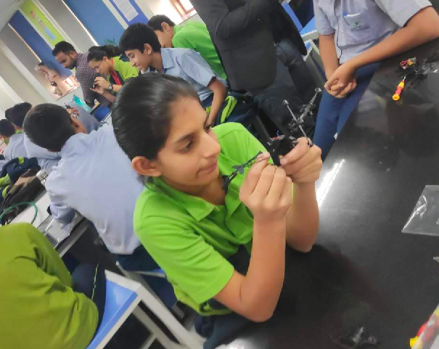
A helicopter-making workshop with Grade 6 – 8 organised with the Scientific Development Research Organisation (SDRO)


Frequently, senior students connect with and mentor primary and middle school learners so that they understand the principles behind projects. This transfer of knowledge is essential, not simply for the sake of knowledge itself, but more so for the confidence it builds in the younger children, encouraging them to trust the scientific process from a young age.

Higher order thinking is emphasised, and creativity is inherent in the process. To encourage children to see concepts in action, students are asked to weave a story through every activity in their day, to see that what they read in textbooks happening all around them. Facts and phenomena come alive; equally so, whether in the classroom, at the cafeteria or say, at the robotics lab.

img

(A discussion on Chandrayan II in a seminar organised for Grades 3-7)


SCIENTIFIC COLLABORATION

A scientific temperament becomes inherent to the process by the time students reach high school. Cross-pollination between the students at the three campuses of Shiv Nadar School as well as Vidyagyan Schools as also Shiv Nadar University is emphasised. Through their interactions with the University, our students see science in action at a different scale.

This level of collaboration has been exemplified most recently with the launch of the NucleUS magazine; a scientific endeavour developed through the collaboration between the students and educators of Shiv Nadar School Noida, Faridabad, Gurgaon and Shiv Nadar University. Students have published their own articles through this monthly publication, our teachers facilitating this process. (The magazine can be read over here - NucleUS (google.com))


TEACHERS AS ROLE MODELS

Our teachers serve as the first role models. Mirrored in them, students see the same curiosity and thirst for knowledge. Open dialogue is the hallmark of the teacher-learner bond, and new scientific discoveries and ideas are often shared between them with electric excitement.

img


(Constructing a Cloud Chamber to verify the existence of Cosmic Radiation, attended by educators from Shiv Nadar School, Vidyagyan and students from SNU)

Our educator Ms Vinita Sharat was recently featured in the prestigious Symmetry Magazine, a Fermilab/SLAC joint publication, in an article about introducing particle physics in the high school classroom. It’s common to find students discussing quarks and leptons with our teachers even till midnight and in the recently held Energy Bootcamp (link to the blog), students were held enraptured watching science experiments till all hours of the night.

Beyond their first role models, interactions with all kinds of national and global luminaries are facilitated as a part of the school experience. Dr Archana Sharma of CERN in Geneva and Dr H C Verma, renowned experimental physicist and author have come in for multiple interactions with the students. Over the last few years, global stalwarts have been frequently invited for sessions with students, most recently, Dr Nitendra Singh, Dr Arvind Kumar, Dr Mohit Sharma, Dr Joyeeta Sinha and more.

img

(An interactive session with Grade 9 and 11 on the existence of dark matter, dark energy and the Higgs-Boson particle, with Dr. Mick Storr, CERN)


THE SCIENCE EXPERIENCE: SCHOOL AND BEYOND

Science activities and experiences at school go above and beyond academic requirements. Domestic and international trips to facilities are a part and parcel of the student experience, for example visits to CERN, Geneva, virtual guided tours of nuclear reactors and so much more. Discussions and collaborations are facilitated within class, of course, but also beyond – intra-school, inter-campus, inter-school and even across international borders.

Take, for example, our recent participation in the Asian Regional Semi-Finals Space Settlement Design Competition in which our students were to form companies in a simulated professional workplace setting. Mentored by global industry leaders, they designed solutions to futuristic aerospace engineering scenarios.

img
(Students at the Indian International Space Design Competition in 2019)


This platform enabled the students to develop real-world management and industry skills over the span of a few months and facilitated global collaboration with students from schools in different countries coming together. Mission Discovery and the Global Cardboard Challenge are other examples of events in school where students get mentored and inspired by experts from NASA and more.

img

In today’s world, the foundation of a successful education lies in empowering the innate curiosity in children, as well as strengthening their confidence in the scientific process – a process that involves observing, questioning, testing, analysing, and communicating. Cultivating such a scientific temper ushers a thirst for knowledge and a love for lifelong learning, both of which are essential in pushing the frontiers of science in the 21st century.

2021-03-23

Subscribe to Science