





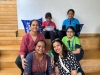


Empowering Student Agency: The Journey of Student Council Elections at Shiv Nadar School


The student council elections at Shiv Nadar School Faridabad are more than just a democratic exercise; they are a powerful embodiment of student agency, where students actively participate in shaping their leadership and governance. The process is designed to not only mirror real-world electoral systems but also to cultivate leadership qualities, responsibility, and a sense of service among students.

The journey begins with the distribution of nomination forms, offering students a platform to express their interest in running for various leadership positions within the Middle and Senior Student Council. This initial step is crucial as it allows students to reflect on their capabilities and aspirations, encouraging them to take the first step toward leadership.

Following the nominations, candidates undergo a rigorous assessment process that includes group discussions and interviews with teachers and the Heads of the school. This phase is critical as it ensures that only the most dedicated and suitable candidates are shortlisted for leadership roles. The involvement of teachers and school Heads in this process emphasizes the importance of selecting leaders who not only have the vision but also the capability to contribute meaningfully to the school community.

Once the candidates are shortlisted, the campaigning phase begins. This period is a dynamic and interactive time within the school premises, with candidates engaging their peers, showcasing their ideas, and building support for their vision. Posters adorn the notice boards, and meal times become opportunities for candidates to connect with their fellow students, sharing their plans for the betterment of the school. The assembly pitches are a highlight, where nominees passionately present their visions, hoping to resonate with their audience and garner the necessary votes.

The voting process itself is a simulation of the national electoral process, providing students with a hands-on experience of voting. It instills a sense of responsibility and engagement, as students make informed choices about who will represent their interests in the council. The voting results are eagerly awaited and announced in a school assembly, adding to the excitement and sense of involvement among the student body.

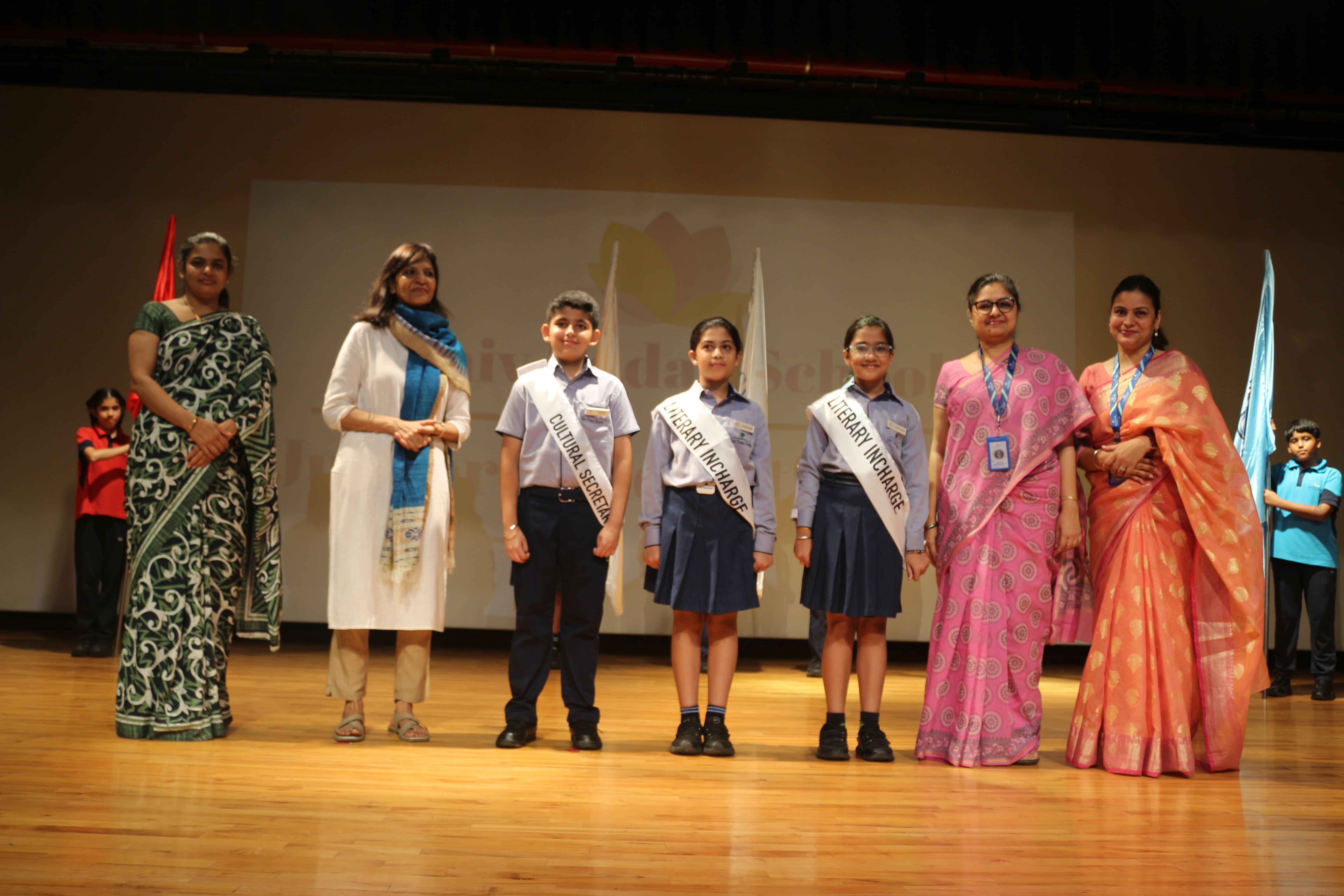
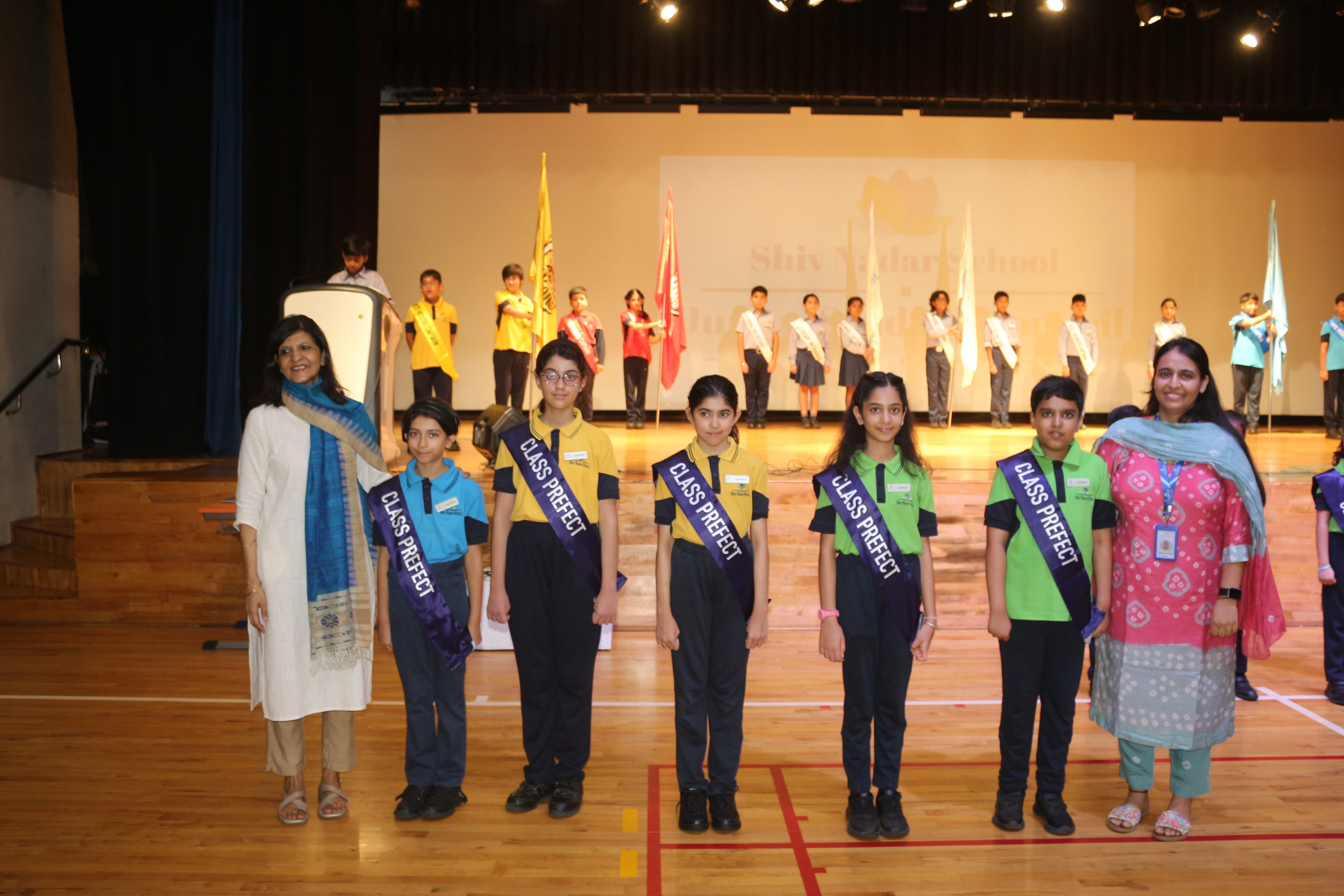
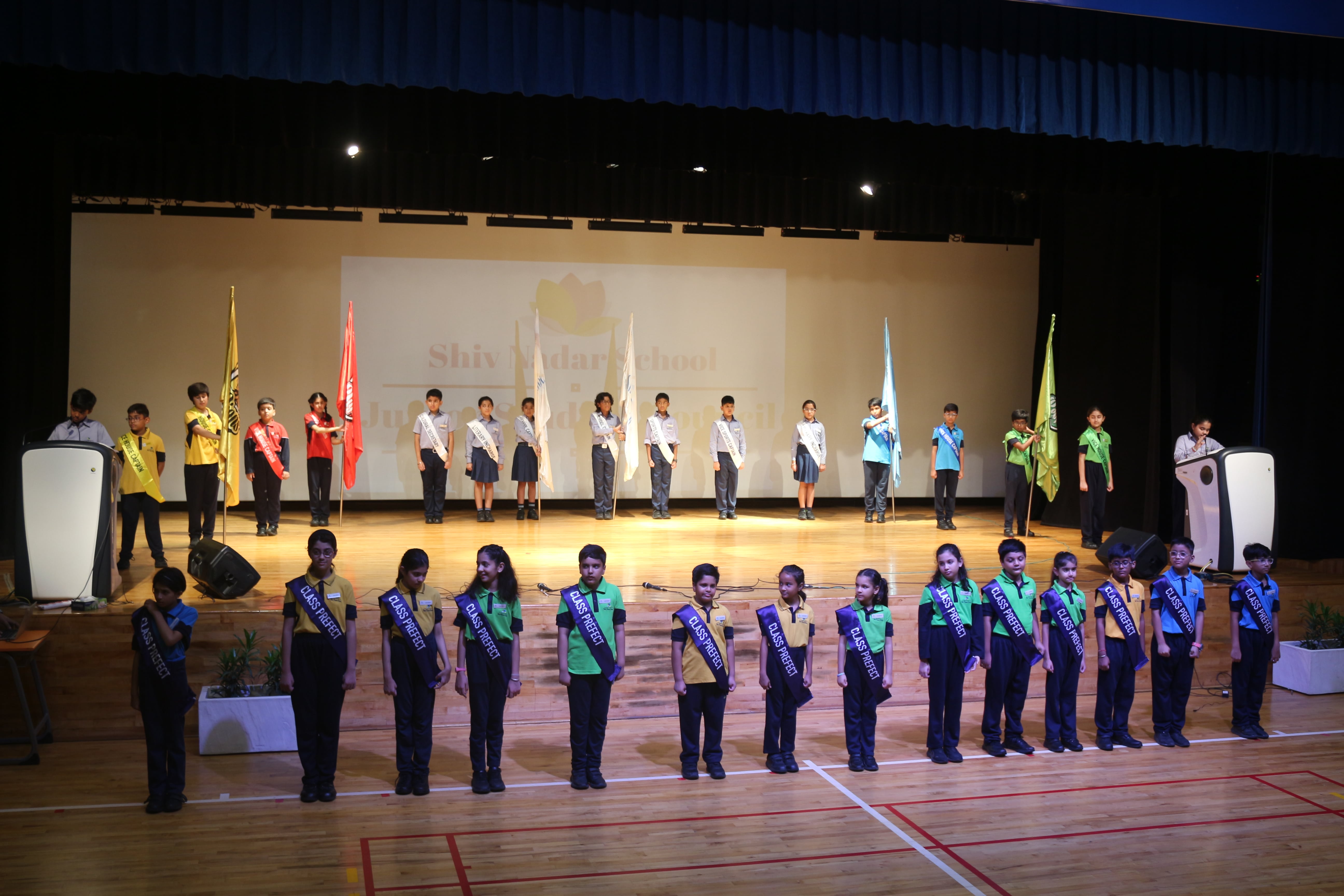
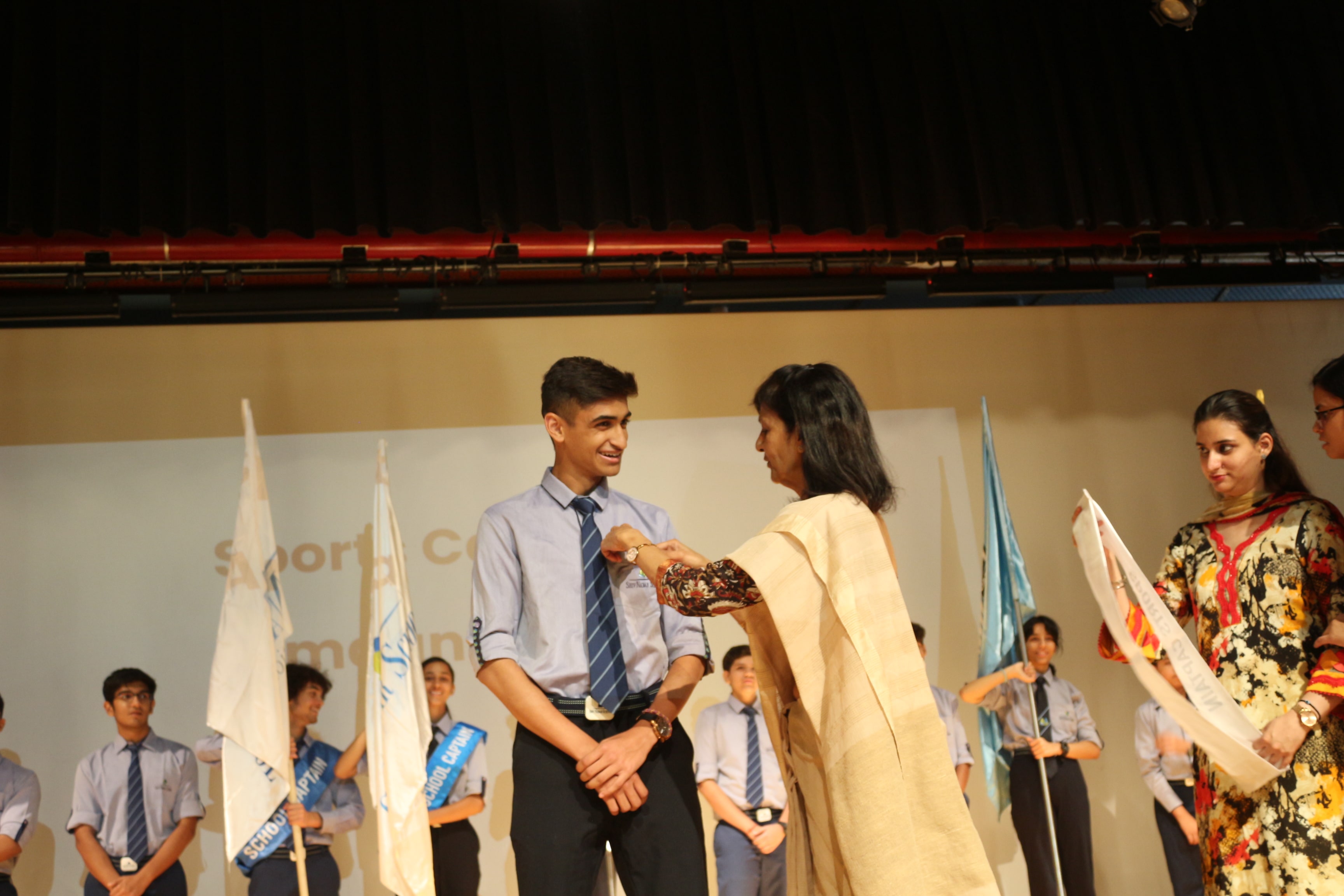
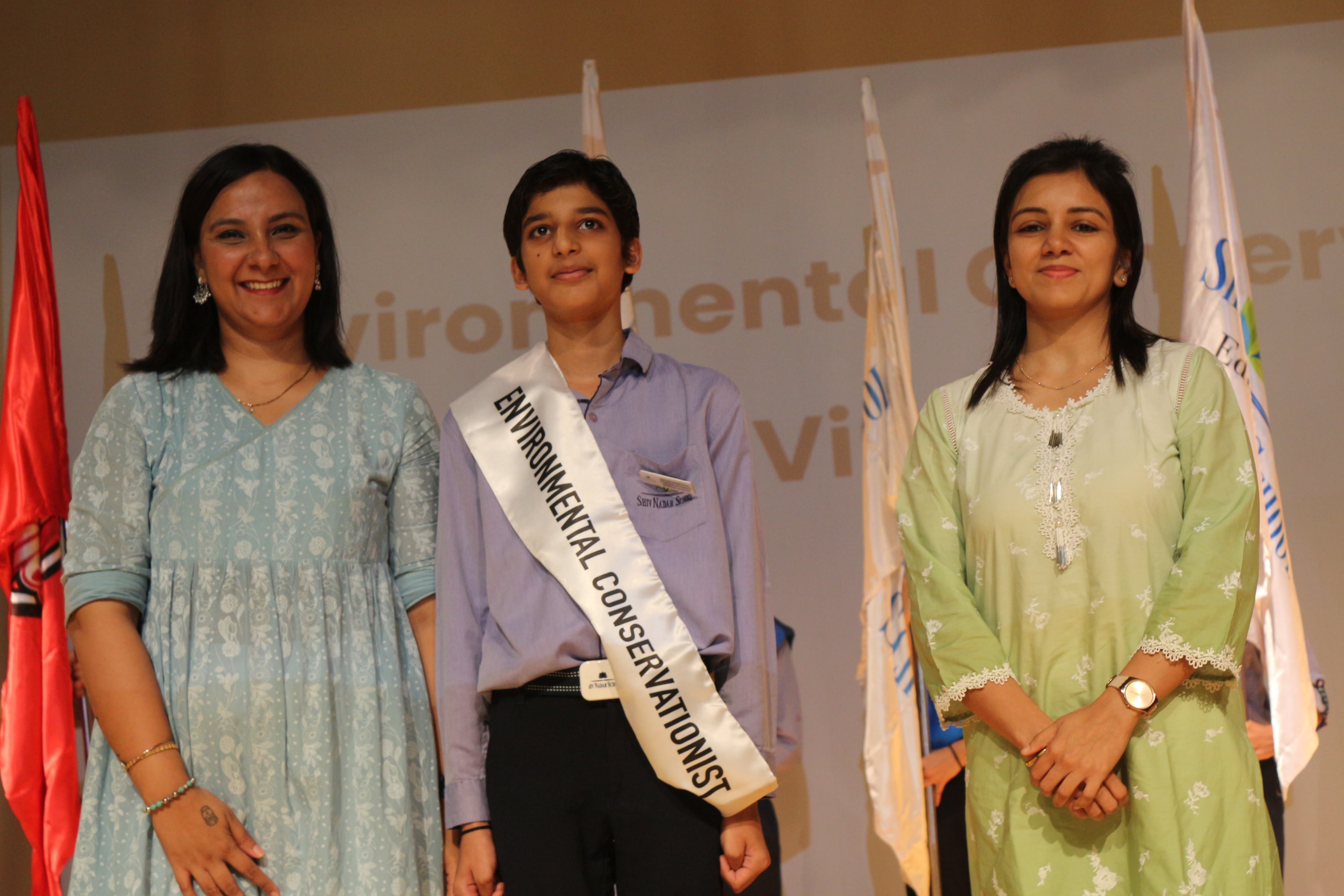
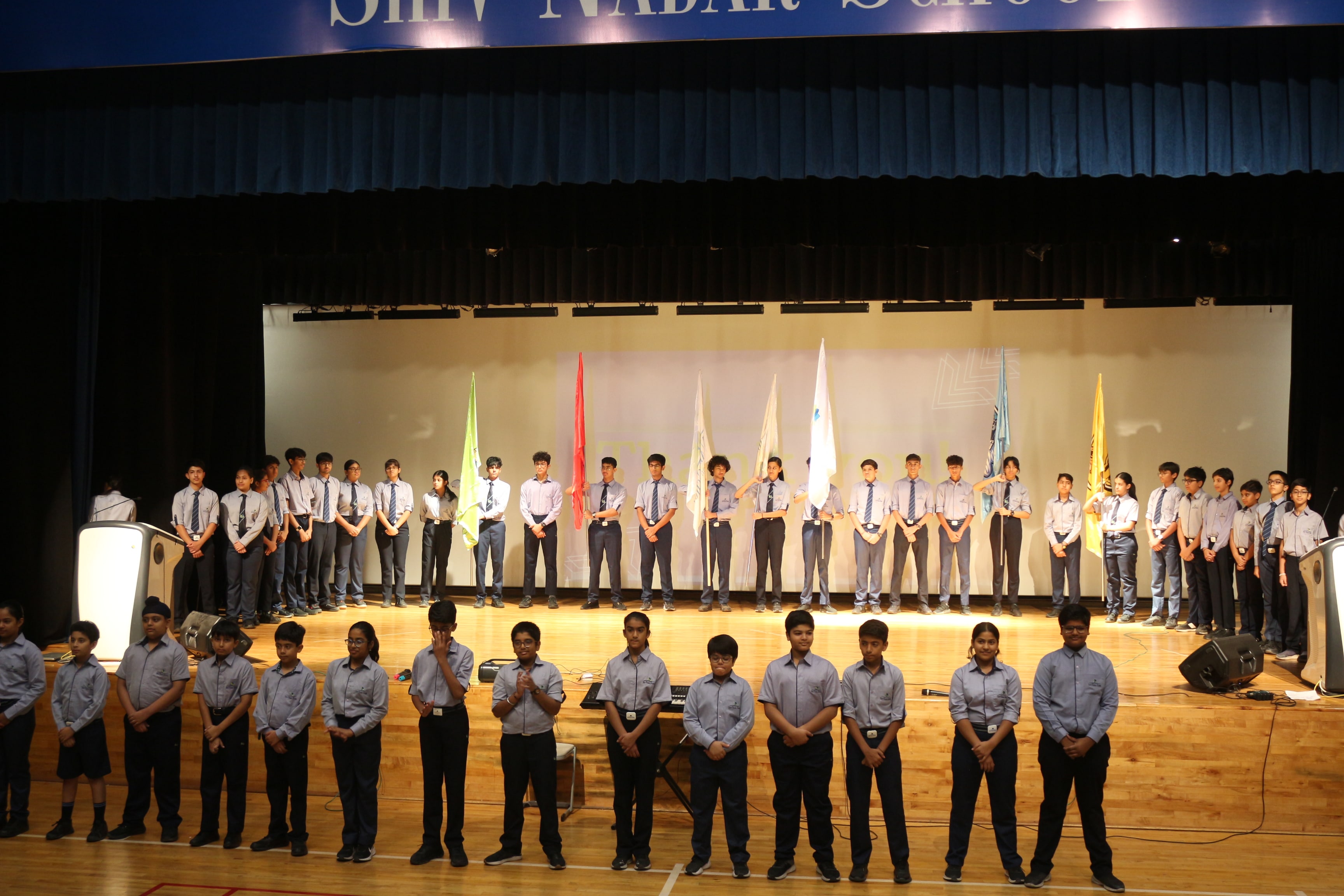
The entire process culminates in the Investiture Ceremony, a formal event where the newly elected council members are conferred with badges and sashes, symbolizing their roles and responsibilities. This ceremony, held on April 30, 2024, for the Middle and Senior Student Council and on August 9, 2024, for the Junior Student Council, is a moment of pride for the school community. The newly elected members take an oath to uphold the values of Shiv Nadar School and work tirelessly for the betterment of the students. The ceremony is also a platform for school captains, sports captains, and class prefects to share their visions, further inspiring their peers.

Director Principal Mrs. Anju Wal's address during the ceremony encapsulates the essence of student leadership, reminding everyone of the importance of responsibility, service, and the power of student agency in creating a vibrant school community.

The student council elections at Shiv Nadar School are not just about choosing leaders; they are about empowering students, fostering a sense of ownership, and preparing them to be responsible citizens and leaders of tomorrow. The entire process, from nominations to the investiture, is a testament to the school’s commitment to nurturing student agency in every aspect of their journey.


,

,

,

,

,

,

Competition ,

Creative ,

Cricket ,

Curriculum ,

Dance ,

Economy ,

Education ,

Education For Life ,

Environment ,

Fitness ,

IB ,

Innovation ,

Leadership ,

Lifestyle ,

Middle ,

Music ,

Nature ,

Nutrition ,

Outbound Learning ,

Parenting ,

Performing Arts ,

Philosopy ,

Pre Primary ,

Primary ,

Progressive ,

Reading ,

Relationships ,

School ,

School Life ,

Science ,

Secondary ,

Senior Secondary ,

SNS Guest ,

Soccer ,

Speaker ,

Sports ,

Theatre ,

Travel ,

,

Visual Arts ,

Welness ,

Writing ,

Fostering a Rich Reading Culture at Shiv Nadar School: A Memorable Visit by Author Shobha Tharoor Srinivasan


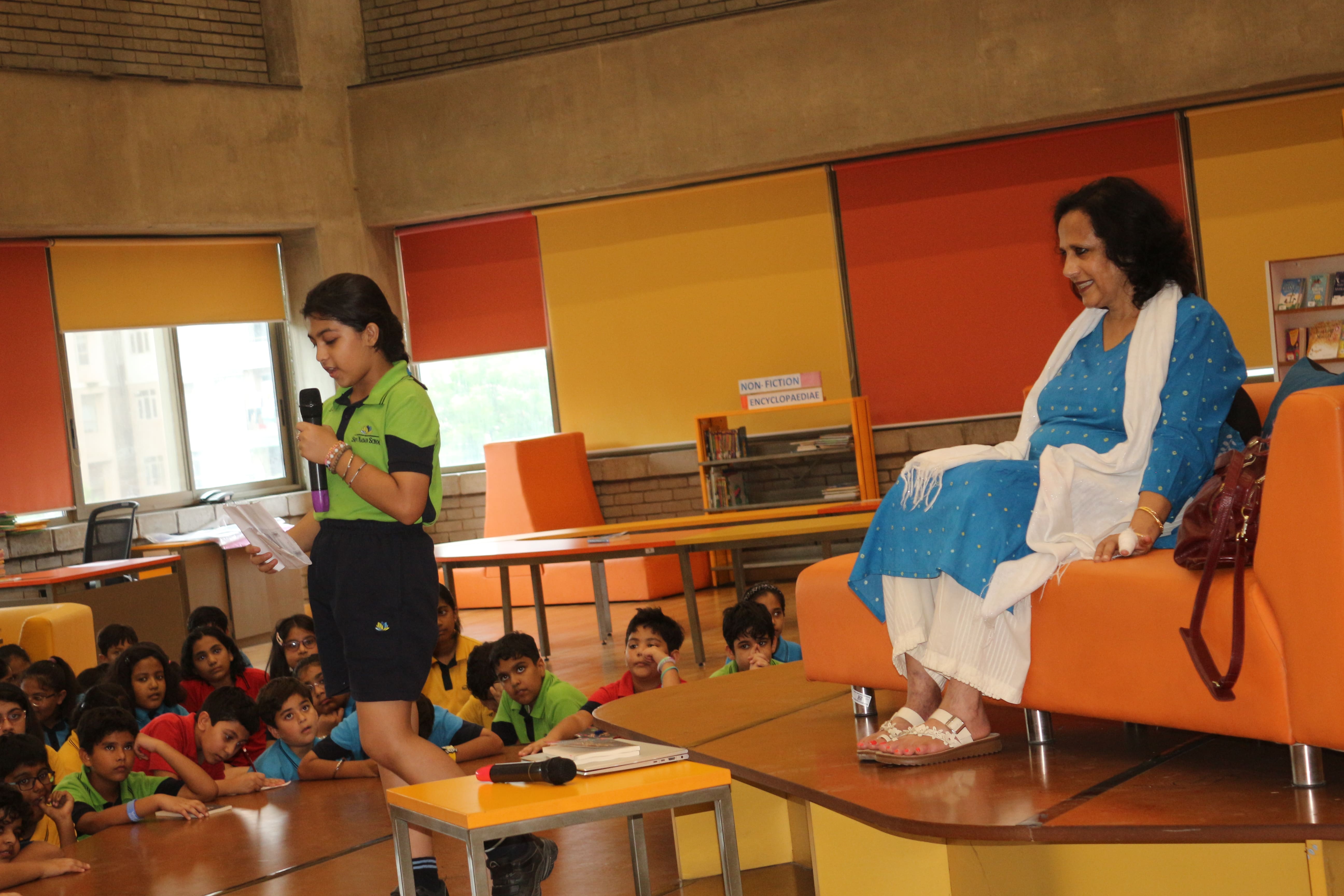
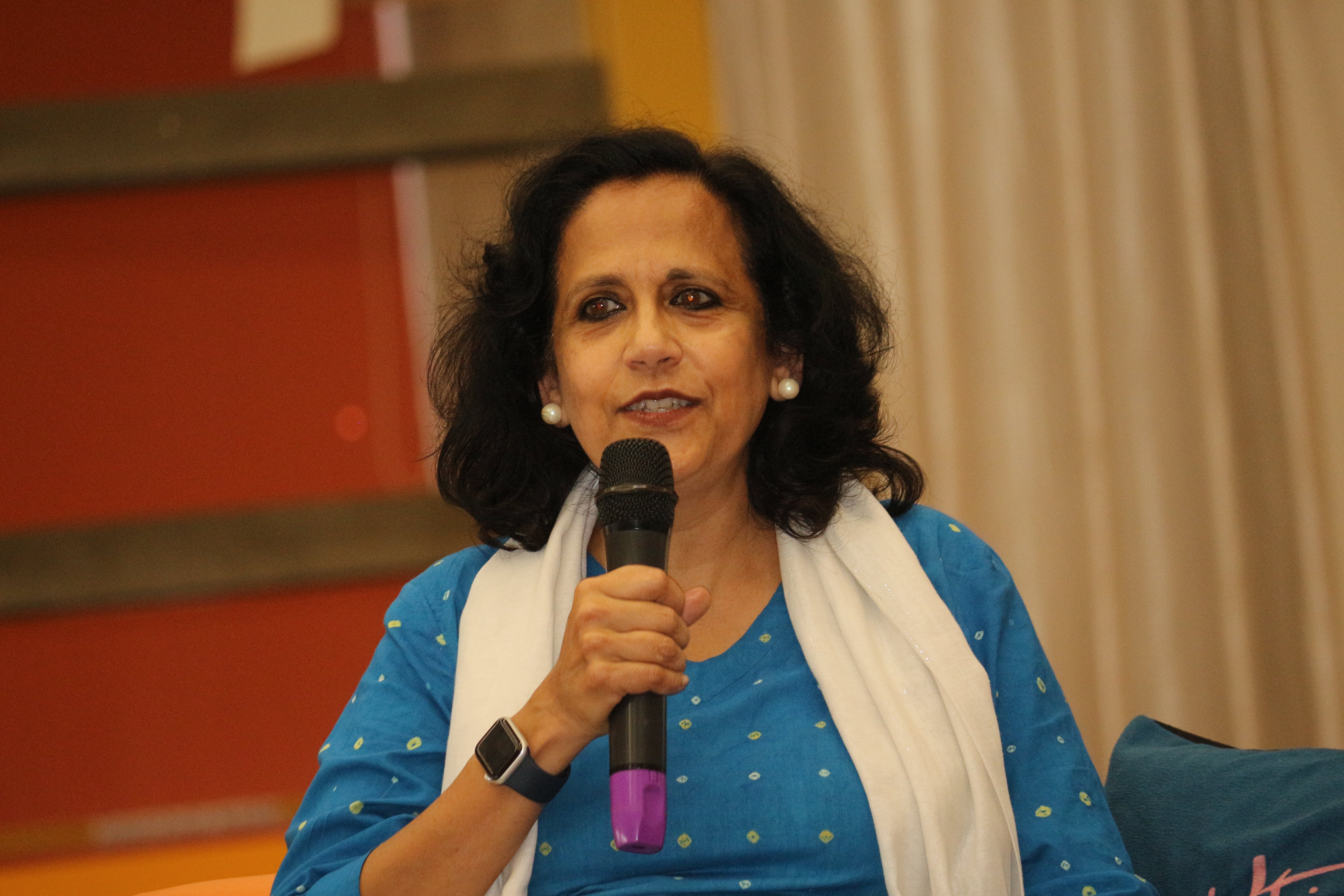
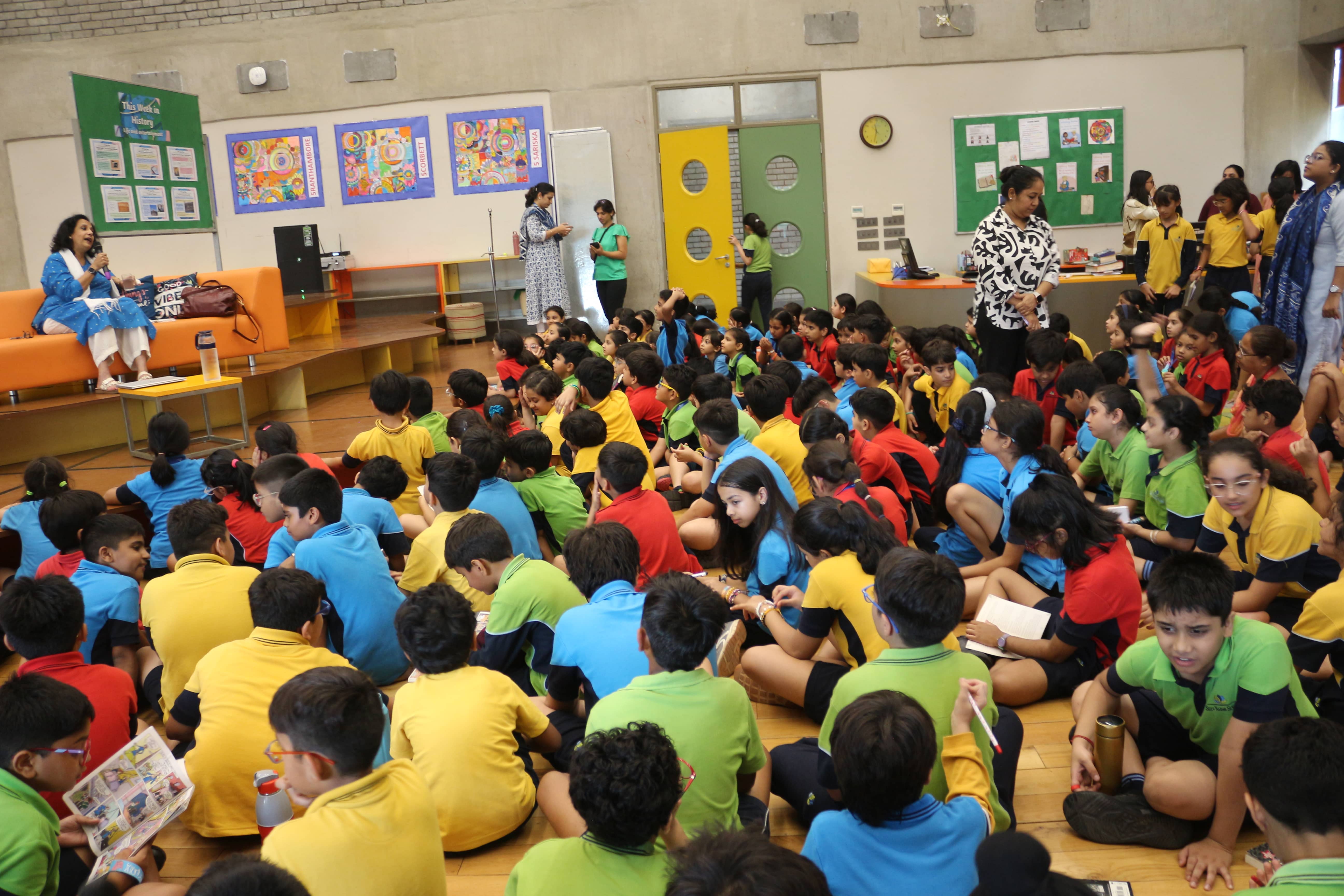
At Shiv Nadar School, we place a strong emphasis on cultivating a love for reading, viewing it as a gateway to imagination, empathy, and lifelong learning. This commitment was wonderfully showcased on August 6, 2024, when acclaimed author Shobha Tharoor Srinivasan visited our Junior Library for an engaging session with students from grades 4 and 5.

Ms. Srinivasan, known for her captivating storytelling, introduced our young readers to her latest work, Look Before You Leap, which explores the fascinating world of idiomatic expressions. Her session, filled with engaging anecdotes and witty explanations, brought idioms like "barking up the wrong tree" and "kick the bucket" to life, making language learning both fun and memorable.

This author visit is a reflection of our school's dedication to fostering a vibrant reading culture. By connecting students with celebrated authors and their works, we aim to inspire a lifelong love for reading. Ms. Srinivasan, who had previously charmed our students with It’s Time to Rhyme, once again left a lasting impression, reinforcing the importance of reading as a tool for growth and discovery.

Beyond her literary achievements, Ms. Srinivasan is a voice-over artist, poet, and editor, with a strong commitment to advocating for individuals with disabilities. Her well-loved children’s books, such as Prince with a Paintbrush: The Story of Raja Ravi Varma and Parvati the Elephant’s Very Important Day, have earned acclaim in both India and the United States.

At Shiv Nadar School, fostering a love for reading involves more than just providing books; it’s about creating experiences that connect students with stories and authors. Ms. Srinivasan’s visit was a perfect blend of learning and entertainment, highlighting the power of stories to inspire young minds. We are grateful for the opportunity to explore the world of idioms with her and look forward to more enriching experiences that celebrate the joy of reading at our school.


,

,

,

,

,

,

Competition ,

Creative ,

Cricket ,

Curriculum ,

Dance ,

Economy ,

Education ,

Education For Life ,

Environment ,

Fitness ,

IB ,

Innovation ,

Leadership ,

Lifestyle ,

Middle ,

Music ,

Nature ,

Nutrition ,

Outbound Learning ,

Parenting ,

Performing Arts ,

Philosopy ,

Pre Primary ,

Primary ,

Progressive ,

Reading ,

Relationships ,

School ,

School Life ,

Science ,

Secondary ,

Senior Secondary ,

SNS Guest ,

Soccer ,

Speaker ,

Sports ,

Theatre ,

Travel ,

,

Visual Arts ,

Welness ,

Writing ,

Inspiring Minds: A Captivating Session with the Authors of Why the Apple Falls at Shiv Nadar School Faridabad


On August 30, Shiv Nadar School Faridabad had the honor of hosting an enlightening session with the distinguished authors of Why the Apple Falls, Swagata Deb and Sandeepan Deb. The book, which captures the essence of Indian physicists and their profound contributions to the world of science, was presented in a manner that made the subject of Physics both interesting and accessible for students.

The session was attended by enthusiastic students from classes 9 and 10, who were deeply engaged in the discussions that unfolded. The authors began by highlighting the pioneering work of J.C. Bose, particularly his significant contributions to the field of radioactivity. The discussion also touched upon the intriguing "cat in the box" experiment by Austrian physicist Erwin Schrödinger, designed in 1935 to illustrate the complexities of quantum theory.

As the conversation delved deeper into quantum mechanics, the authors adeptly explained complex concepts in an approachable way, sparking curiosity and fostering a deeper understanding among the students. The authors also inspired students to consider pursuing higher studies at prestigious institutions like IIT, exploring advanced topics such as the God Particle and the Nobel Prize-winning work of Léon Lederman on the Higgs Boson, often referred to as the "goddamn particle." Additionally, they discussed the collaboration between Einstein and Satyendra Nath Bose on the Bose-Einstein theory.

The session concluded with an engaging discussion on scientific units named after renowned scientists, leaving the students inspired and eager to explore the fascinating world of physics further.

This session was not only a tribute to the brilliance of Indian physicists but also a testament to the power of storytelling in making complex scientific ideas accessible and exciting for young minds.


,

,

,

,

,

,

Competition ,

Creative ,

Cricket ,

Curriculum ,

Dance ,

Economy ,

Education ,

Education For Life ,

Environment ,

Fitness ,

IB ,

Innovation ,

Leadership ,

Lifestyle ,

Middle ,

Music ,

Nature ,

Nutrition ,

Outbound Learning ,

Parenting ,

Performing Arts ,

Philosopy ,

Pre Primary ,

Primary ,

Progressive ,

Reading ,

Relationships ,

School ,

School Life ,

Science ,

Secondary ,

Senior Secondary ,

SNS Guest ,

Soccer ,

Speaker ,

Sports ,

Theatre ,

Travel ,

,

Visual Arts ,

Welness ,

Writing ,

Shiv Nadar School Faridabad Recognized as an Apple Distinguished School


We are thrilled to announce that Shiv Nadar School Faridabad has earned the prestigious distinction of being recognized as an Apple Distinguished School, placing it among the top 5 such schools in India, and the only one in the NCR region.

This recognition highlights our seven-year journey towards integrating technology into everyday learning. Our 1:1 and Bring Your Own Device (BYOD) program is a cornerstone of our commitment to personalizing education, creating secure digital environments, and fostering differentiation and diversity in the learning process.

With the support of a robust Apple ecosystem, our students benefit from personalized learning, enabling each child to learn at their own pace. The use of Apple tools empowers students to demystify complex concepts, express their ideas creatively, and represent their knowledge through diverse models of learning. This focus on technology-enhanced education complements the core of the Shiv Nadar School philosophy — the central role of the human teacher in guiding and nurturing young minds.

We are proud to have five Apple Distinguished Educators and over 75 Apple Certified Teachers, whose expertise and dedication have played an integral role in this achievement. While the recognition from Apple is an affirmation of our efforts, the true strength of our tech-driven curriculum lies in our commitment to innovation. Our goal is to empower our students to become creators and inventors, not mere consumers of digital content.

This recognition also ensures access to cutting-edge Apple Educational Tools, further enriching our pedagogy and keeping us at the forefront of the ever-evolving educational landscape. At Shiv Nadar School, we believe that staying abreast of global changes is key to preparing our students to be the drivers of tomorrow's world.

Explore the impact of our journey as an Apple Distinguished School in this https://www.youtube.com/watch?v=mY3RhZl92aU


,

,

,

,

,

,

Competition ,

Creative ,

Cricket ,

Curriculum ,

Dance ,

Economy ,

Education ,

Education For Life ,

Environment ,

Fitness ,

IB ,

Innovation ,

Leadership ,

Lifestyle ,

Middle ,

Music ,

Nature ,

Nutrition ,

Outbound Learning ,

Parenting ,

Performing Arts ,

Philosopy ,

Pre Primary ,

Primary ,

Progressive ,

Reading ,

Relationships ,

School ,

School Life ,

Science ,

Secondary ,

Senior Secondary ,

SNS Guest ,

Soccer ,

Speaker ,

Sports ,

Theatre ,

Travel ,

,

Visual Arts ,

Welness ,

Writing ,

Shiv Nadar School Excels in the Neev Literature Reading Challenge Finals


We are proud to share the outstanding results of our students in the Neev Literature Reading Challenge Finals! Held at the Neev Academy in Bangalore as part of the Literature Festival, our young reading champions demonstrated their remarkable skills and dedication, securing top honors among some of the brightest young minds in the country.

Celebrating Our Champions

3rd Place - Team ‘Impossible Humans’

  • Paarth Gupta (Grade 5)
  • Vidit Arora (Grade 5)
  • Pakhi Goel (Grade 4)

4th Place - Team ‘The Unexpected’

  • Ritanya Pal (Grade 5)
  • Anaya Dhull (Grade 5)
  • Mayra Aggarwal (Grade 4)

Both teams exhibited exceptional reading prowess, perseverance, and teamwork, making it to the final rounds after reading 30 books over the course of three months. Their achievements in this highly competitive national event are a testament to their hard work and the school’s unwavering commitment to fostering a love for reading and intellectual growth.

At Shiv Nadar School, reading is the bedrock of our educational philosophy, laying the foundation for a lifetime of learning, curiosity, and personal growth. We congratulate our talented students on their fantastic achievements and thank their teachers and parents for their support. Their success is not only a personal victory but also a reflection of the collective spirit of our school. As we continue to nurture young minds, we look forward to many more such achievements in the future.

Let’s celebrate the success of our young readers and continue to encourage the joy of reading!


,

,

,

,

,

,

Competition ,

Creative ,

Cricket ,

Curriculum ,

Dance ,

Economy ,

Education ,

Education For Life ,

Environment ,

Fitness ,

IB ,

Innovation ,

Leadership ,

Lifestyle ,

Middle ,

Music ,

Nature ,

Nutrition ,

Outbound Learning ,

Parenting ,

Performing Arts ,

Philosopy ,

Pre Primary ,

Primary ,

Progressive ,

Reading ,

Relationships ,

School ,

School Life ,

Science ,

Secondary ,

Senior Secondary ,

SNS Guest ,

Soccer ,

Speaker ,

Sports ,

Theatre ,

Travel ,

,

Visual Arts ,

Welness ,

Writing ,

Mental Health Week 2024: Fostering Resilience and Compassion at Shiv Nadar School, Faridabad


Mental Health Week 2024 at Shiv Nadar School, Faridabad, was an inspiring celebration of resilience, solidarity, and mental well-being. This year’s theme, Invisible Battles, Visible Support, underscored the importance of recognizing and supporting mental health across our community. Held from September 23-26 for Early to Middle Years students and October 15-17 for Senior Years, the week actively engaged students, staff, and families, empowering everyone to stand together with hope and resilience.

The activities during the week were diverse and impactful, engaging students across all age groups in meaningful ways. Early and Middle Years students participated in a Reading Walk in the North Block, featuring The Boy, the Mole, the Fox and the Horse, a story that invited them into a reflective space of empathy and self-awareness. Middle schoolers further contributed with an uplifting speech, “You Are Not Alone,” a reminder of the strength found in community support. Senior Years students powerfully conveyed the week’s theme through a theatre performance that explored resilience and the courage to persevere, illustrating the strength that lies within creative expression.

A highlight of the week was the October 19th session for parents and grandparents with experts from Accord Hospital. Dr. Megha Sharda provided insights into neurodevelopment in children, Dr. Tausif Iqbal discussed the mental health impacts of screen time, and Dr. Simran Malik shared practical strategies for building emotional resilience in parenting. This session fostered a valuable dialogue on creating supportive environments for mental wellness at home and school.

For teachers, a peaceful forest bathing experience offered a moment of mindfulness, while young students enjoyed captivating storytelling sessions emphasizing kindness, courage, and resilience. Across all grades, activities like circle discussions, a poster-making competition, and hands-on projects inspired students to express their thoughts on mental health creatively.

Affirmation stickers, Psychological First Aid brochures, and educational videos further supported our mission of cultivating a healing, compassionate environment at Shiv Nadar School, Faridabad. Together, our community continues to embody the message of Invisible Battles, Visible Support, inspiring all to approach mental health with empathy, understanding, and resilience.

A Glimpse: https://youtu.be/UJd9Rpg1L6A


,

,

,

,

,

,

Competition ,

Creative ,

Cricket ,

Curriculum ,

Dance ,

Economy ,

Education ,

Education For Life ,

Environment ,

Fitness ,

IB ,

Innovation ,

Leadership ,

Lifestyle ,

Middle ,

Music ,

Nature ,

Nutrition ,

Outbound Learning ,

Parenting ,

Performing Arts ,

Philosopy ,

Pre Primary ,

Primary ,

Progressive ,

Reading ,

Relationships ,

School ,

School Life ,

Science ,

Secondary ,

Senior Secondary ,

SNS Guest ,

Soccer ,

Speaker ,

Sports ,

Theatre ,

Travel ,

,

Visual Arts ,

Welness ,

Writing ,

Delving Deeper Into The Ramayana

The month of October presents us with numerous opportunities to get back in touch with the wondrous mythological & literary heritage of ours. These roots, from which we collectively sprout, are conveniently forgotten in the mad race of life. We, at Shiv Nadar School, realise this, and hence emphasise on the fact that we all should find some time to reflect on these great stories from our past, also because they contain time-defying messages for our present and future.

Of the two great epics written in the land now known as India, Ramayana is understood as the book of ideals. The month of October, this year, celebrates not one, not two, but three festivals which invoke the characters and incidents from this famous composition, written and rewritten at numerous times during the passage of time. The versions of Ramayana, in fact, had grown so large in number, that people exclaimed that the entire earth will drown under their collective weight someday!

We thought, rather than telling you about the proverbial war of good versus evil, let us take you through some of the lesser known aspects of the epic.

  1. Ravana was a great scholar!
    Yes, the same Ravana, reviled as a demon, was a learned son of a Brahman named Vishravas, and had knowledge of all the Vedas. Ravana believed greatly in the power of astrology and had also authored an astrological treatise called Ravanasamhita. This great worshipper of Shiva is worshipped himself as a deity in a temple at Kanpur. Of Ravana’s ten heads, nine symbolised evil, but one symbolised faith and wisdom – it is because of this one head that Lord Rama felt sad upon killing him. Rama instructed Lakshmana to bow before the fallen Asura King, and ask him for the gift of knowledge. This tells us volumes about how we all can gain wisdom by moving away from shallow perceptions of good and evil.
  2. Rama – Not the ultimate incarnation of Vishnu
    Rama is known by all of us as the ideal son, ideal brother, ideal husband, ideal father, and ideal King. He has been worshipped by generations of unquestioning devotees. He is hailed as Maryada-Purushottam – the upholder of all rules and conduct of the society. However, it is not him, but Krishna, who is hailed as the Purnavtaar – the complete incarnation of Vishnu. Krishna is known as Leela-Purushottam. He is the Supreme Being Himself, He Who revealed the Bhagwat-Geeta. Rama followed rules, but Krishna made rules follow Him. What is significant to note here is that both these incarnations lived a life full of human experiences – they made mistake and suffered in consequence of those mistakes.

     
  3. Sita’s Kitchen
    Upon being abducted and taken to Lanka, Sita lead a solitary life; but because of her warm and affectionate nature, and her sharp mind, she came to be adored by all Lanka-wasis. Sita had inherited exemplary cooking skills from her mother, and these were put to use during the war at Lanka. When rakshasa warriors came home tired, their wives and mothers doled out food to them made upon the advice of Sita. So delicious was this food that the warriors kept asking for more and forgot all about the war! A well fed man is not violent by nature, and when Ravana heard of it, he ordered his warriors to be starved. Thus they came marching back to the battle-field, hungry to devour oncoming Vanara army. The lesson here? Eat well, live well.


  4. Rama had a sister
    Not many know about this, but the first born child of King Dasharatha was a girl named Shanta. She was born of the eldest Queen, Kaushalya. Dasharatha, not satisfied, went searching for a woman who could bear him a male heir, and ended up marrying Kaikeyi and Sumitra. None of them, however, could bear him a child, and hence a great Havana was conducted, the gifts of which were the four brothers – Rama, Bharata and the twins – Lakshama and Shatrughna. Shanta, meanwhile, married a tapasvi and was forgotten for a greater part of the text.


  5. Valmiki – Dacoit turned Rishi
    Rishi Valmiki is credited for having authored the earliest known version of Ramayana. We all know that Valmiki was previously a dacoit named Ratnakar, who was transformed upon his meeting with Narada, the Divine Sage. Most of us, however, do not know that Valmiki is called ‘Aadi-Kavi’, the first poet. It was he who invented the Shloka. The first shloka was uttered from his lips in a state of emotional turmoil as he saw a Krauncha bird crying over the death of his mate who was struck by a hunter’s arrow. The first ever Shloka, thus, was uttered as a curse to that insensitive hunter.


    There is a narrative of Ramayana which we all know, in which Rama, Sita and Lakshmana are banished to the woods, and they return 14 years later after defeating and killing Ravana. However, the text contains numerous stories, each with something unique to tell us about the human condition. Curiosity to explore and urge to inquire – ride on these two motivations the next time you read the Ramayana, and you will see the book reveal many hidden messages to you, applicable to the contemporary existence. Do also share with us some stories which you found interesting!

2014-10-12

I Can Call It My Own

‘Poetry is so unique. It is something I can call mine, and at the same time, it can belong to everyone’, shares Anavi Akhauri, a budding Spoken Word poet from Shiv Nadar School, Noida. In the week that has just gone by, the school celebrated poetry – along with its many facets, and its inherent character which evokes the most raw expression out of people. Stretching from 28th August to 31st August, this Poetry Week saw writing, teaching, reciting, reading – all in action at Shiv Nadar School, Noida. In every manner that poetry can be explored and relished, the students made sure it was a part of their plan.

‘Some time back, I had watched a video of Sarah and Phil Kaye. They are internationally renowned Spoken Word poets. I thought of doing something similar in school, and thankfully enough, we were able to pull together a great poetry week’, says Harsh Jain. He, in fact, was so inspired by the duet video he saw, that along with Aishwarya (surname?), he wrote a poem on adolescent sensitivities. These are topics and concerns topmost on the mind of our youngsters – poetry often becomes the aesthetic vehicle, perched on which, these can be shared and expressed in front of multitudes.

According to the book ‘What is Poetry?’ written by Michael Rosen, ‘Poetry belongs to all of us; everyone can read poems, make up poems, or share poems with others. Though we often talk about poetry being dense or difficult, poems are able to present complicated or challenging ideas in ways that we can carry around in our heads. They help us ask questions about the world, how we use words and who we are.’ That makes poetry sounds pretty cool, doesn’t it?

Let us take you through a brief journey of what happened during this week.

The Old and the New

Poems are a part of a continuously evolving tradition, which contains many great, classical poets, as well as some contemporary names which have just about begun emerging on the horizon. To create exposure, as well as a culture of appreciation, a board was put up in the school, wherein, two poets were featured each day – one old, one contemporary. Titled ‘Flair of the Feather’, this board actually afforded passers-by a moment of reflection or two, as they tried to read out the immortal verses written by legends like Oscar Wilde, John Keats, as well as the Instagram generation of Rupi Kaur, Christopher Pointdexter, etc.

Writing and Reciting

While a lot of us scribble little verses of glee and anguish at the back of our diaries and in quick access sections of our electronic devices, many of us don’t share it on a public forum. In a bid to encourage expressions and expressiveness among students, they were asked to submit their written work to the editorial board. Some poems from among these were then selected for publication, and a few others for a specific kind of recitation session, called ‘Spoken Word’.

The session saw 8-9 poems being performed by senior school students in front of an engaged audience, who spoke of issues close to their heart. ‘The spoken word session was amazing. My friends presented many different kinds of topics in their poems’, said Shifa Farooqi, a budding poetess. Upon being questioned about her poem, Anavi Akhauri said her poem ‘reflected her relationship with anxiety.’ The deeply felt emotions and experiences, all were verbalized beautifully through these raw verses composed by students.

Letting Creativity Flow On

While the Poetry Week was led mostly by senior students, they did not forget to include the junior students in this celebration of expression. As a part of the week, the student organizers conducted a workshop for fifth graders. They spoke about poetry, its many forms and figures of speech during the workshop. Not only this, each facilitator of the workshop is now mentoring a small ground of fifth graders. ‘We wanted to introduce this system of mentorship, in which the junior students can learn from their seniors. It is wonderful to see the exchange of thoughts and ideas between them’, shared Kirti Kaul, the teacher convenor for the Poetry Week.

Uninhibited expressions by students open gates of wonder, innovation and creativity for all listeners and readers, and poetry is a powerful vehicle for doing the same. The poems shared during the week stand as a testimony to the power held in the imagination of young voices.

2017-08-04

How to Manage Real Behavioural Issues in Virtual Classes

The second year of virtual learning has brought new challenges. Prolonged absence of physical classrooms and connections has led to the rise of behavioural and psychological issues among students. Many of these translate into tangibles like attendance, attentiveness, class participation and discipline.

In a session that was a part of the Continuous Professional Development program at Shiv Nadar School, teachers and counsellors sought new ways to address the behavioural issues arising due to online learning. Sharing their experiences as well as insights, they framed valuable guidelines for making online classes enriching.

Behaviour Management is not about punishing unwanted actions or rewarding good behaviour. It is about having strategies in place to support children to behave in ways that help them to gain the most from their schooling. By constantly striving to understand students’ psyche, teachers can help them learn more effectively.

Certain strategies that a teacher can employ to ensure appropriate behaviour in virtual classrooms are:

  • State objectives clearly: With well-defined goals, our actions can be directed, and attaining success becomes easier. We need to set aims at the beginning of each class and reiterate them for measuring results.
  • Have shared expectations: Simply telling rules will not help. Children must be made a party to the agreement for setting a code of conduct, regarding academics as well as behaviour. They must also propose rules to be followed in class
  • Employ positive correction: Praising effort and not just result encourages students to participate. We must inspire them to explore and evolve, learning from mistakes. Such motivation is all the more important in the online teaching world.
  • Create a connection: Observing closely and Listening Actively are essential to ensure students share their thoughts freely in order for the facilitator to counsel or course correct.

Here are some real-life case studies that will help teachers to understand how to tackle behavioural issues in online classes:

Issue: A child who performs well in offline classes and is excited about learning hardly joins online classes and is averse to keeping her camera on.

Approach: After persistently communicating with the child directly, the teachers come to know that her mother is a strict disciplinarian and resorts to helicopter parenting during classes, often punishing the girl for minor mistakes. Hence, she developed a fear of attending the classes in presence of her mother. In such a case, parent’s counselling is done, preferably by the school counsellor, and the child is encouraged to attend classes independently.

Issue: To impress the teacher in virtual classes and respond quickly, a child uses google to search for answers.

Approach: The teacher does not rebuke the child. Instead, she tries to give chance to other students who are responding after investing more time in thinking about the answers. She aims to inspire the child to think on his own by appreciating other perspectives. The child must be made to realise that his genuine effort to learn in the class is important, even if he is not answering all the questions.

In the present scenario, teachers need to be prepared with not only lesson plans and assessment sheets, but also interactive modules, quizzes, and pallets for online participation. Providing a certain level of autonomy to students for choosing the medium of interaction can also work positively. Moreover, inviting feedback from students is essential. Teaching cannot be a one-way communication. 

Developing personal connect through customized communication, experimenting with different pedagogical approaches, and forging a mutual trust-based relationship with the parent to utilize their intervention when needed, go a long way with managing behaviours. A 360 degree evaluation approach is required to take ahead the journey of virtual learning.

In the words of celebrated educator Rita Pierson, “every child deserves a champion- an adult who will never give up on them, who understands the power of connection and insists that they become the best that they can possibly be”. Today, more than ever, teachers have the task of establishing an emotional connect, be amiable and evoke happiness in children.

2021-05-13

Subscribe to Education