



SAKURAIS – THE ENERGY AMBASSADORS

Baarish Raman was one of the nine students of Shiv Nadar School Noida who went to attend the Sakura International Science Programme in Japan this March. He reflects by saying that “This enriching trip to Japan has not only been highly erudite from the point of view of science but has also enabled us to experience a whole new world. We went to the very heart of the country, Ashikaga, which gave us the actual taste of Japan’s culture ensconced in the ordinary daily life of the locals. Getting to learn about the future of the sustainable world and renewable energy in the country most renowned for technology and science was truly a one in a million opportunity. This trip not only gave us a chance to learn but also bond with our classmates.”

Promoting science and technology is a key engine to materialize a bright future of Asia. Based on this concept, Japan-Asia Youth Exchange Program in Science – SAKURA aims to facilitate short-term visits of competent Asian youths, who will play a crucial role in the future field of science and technology, to Japan through an industry-academia-government collaboration. The program aims at raising the interest of Asian youths toward the leading Japanese science and technologies at Japanese universities, research institutions and private companies.

s

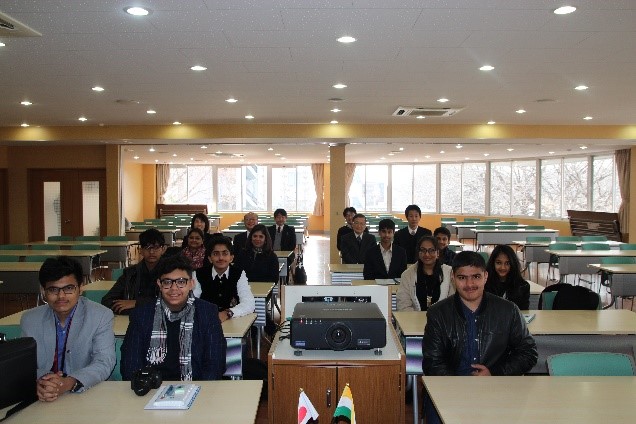
Nine students and a teacher from Shiv Nadar School, Noida (the only school which got selected for this program from India) visited the Ashikaga Institute of Technology. This was a nine-day Science and Cultural immersion, the theme of which was Alternative Sources of Energy. Students were briefed about Solar, Wind and Hydro Energy. The design included introduction sessions, hands on sessions and reflections.

Introduction: The eminent professors of Ashikaga Institute of Technology took the students through the status of harnessing alternate resources of energy in Japan, its future prospects and importance of its implementation worldwide.

Hands on session: During the hands on sessions, students made dye sensitive solar cells, a windmill, a rocket which worked on hydro pressure, and hydro pumps. All the required activities right from drilling, cutting, soldering, fitting etc. were done by the students.

Reflection: Once the devices were made, the students tested the efficiency of those devices and discussed their observations.

The students visited the Sun and Wind Square of the Institute and got the opportunity to see different kinds of wind mills and solar cookers.

The cultural immersion also included a visit to an Indigo dying unit, a textile industry, shrines and home stay with Japanese families. All the participants also tried their hands at calligraphy and origami.

The icing on the cake was the visit to the Miraikan Science Center in Tokyo where the students witnessed numerous displays on future technologies, robots, disaster management, biological advances and space science.

Going forward, the students are planning to hold an exhibition for their peers from all three Shiv Nadar Schools to share their learnings. They are also planning to set up a small climate lab with prototypes of solar cells, cookers and wind mills.

As Baarish Raman reminisced, the trip was indeed enriching!

2018-04-01

BRIDGES OF FRIENDSHIP ACROSS THE OCEANS

Australia-India BRIDGE School Partnerships Project – 9th to 19th March 18. Our adventure began as we gathered at 0600 hrs at Terminal 3, IGI Airport, New Delhi. It was as if there were three factions in that one larger group –excited students, anxious parents and the teachers.  Those few moments of us standing outside the airport entrance went by as if in a few seconds, and …we were off!

We reached the International Terminal at Sydney Airport the next morning after a layover at Singapore. It was a rushed experience as it involved figuring out how to go about immigration at Sydney’s international terminal, and then rushing to catch a transfer bus to the domestic terminal to take a Virgin Australia flight to Townsville, our final destination. Our onward journey had almost come to an end!

Just before our descent in Townsville, North Queensland, I woke up from a deep slumber and looked out of my window. What I saw was beauty I had never witnessed before in my life. Clear skies, white candyfloss clouds, wide roads, the sea, and green all around. It was a simply breathtaking view… and one could only anticipate what more the trip withheld.a

Our host families, along with Ms Elena Hawkins (the Head of Department of International Programs at our host school, Kirwan High School) and her team, received us at the airport. My host family – The Browns, along with their friends Lilly and Kylie were there to meet me and I knew immediately that my stay with them would be a wonderful experience. The Browns and their friends then took me to Castle Hill, an isolated pink granite monolith from where one can view the entire city, including Magnetic Island, an island just off the coast of Townsville.

On the next day, Sunday – 11th March, most of the host families took us Indian students to places of interest, and for me this meant a visit to the Rock Pool and The Strand.a

12th March, Monday, was our first day at KSHS – Kirwan State High School. Our host families packed lunch for us and dropped us off at school. The school had arranged a welcoming ceremony for us, where we were introduced to our school buddies. These buddies were to help us and take us to their classes in school. After the welcome Ceremony, we were introduced to some of the art forms of the aboriginal (throwing spears and Boomerangs, playing didgeridoo or the yigi-yigi) by the art teacher Les Tanner. We also tried our hand at making some native dishes like Vegemite Scrolls, Pavlova cake (a fruit dessert), scones and cookies.

aa

The next day, we visited the Port of Townsville, a commercial port that dates back to the 1880’s. We were given a short tour and presentation of the port. Since Townsville is near the central section of the Great Barrier Reef, the Port Authorities take utmost care not to damage the ecosystem of the Reef.

The much awaited full day excursion to Magnetic Island was slated for 14th March. We travelled to “Maggie” as it is locally called, by ferry and travelled around the island by bus. We spent time at Horseshoe Bay and swam in the sea. We saw the cutest Rock wallaby at a bus stop on the island.

We visited the James Cook University, Townsville campus the following day, and were given a campus tour. We also got a chance to observe the Marine Biology and Chemistry lab classes, where we watched specimens of Phytoplankton with live forms of zooplankton. The University personnel had put together a presentation about their University and the courses conducted there.

a

But this week was not only a sightseeing excursion. We attended classes with our school buddies and worked on our Sustainability and IT projects collaboratively with them. As part of the Sustainability project, we built water filters with specific materials like coal, sand, gravel, sponge, etc.

On our last day in KSHS, we performed a song and a solo guitar performance as a token of gratitude to our host school during a Special Assembly. We also presented a set of paintings done by the Primary school students of our school to KSHS. This was followed by a fun-filled session on bush dancing, a local folk dance form.


a

Saturday was our last day with our host families. My host family took me to the hugely popular Billabong Sanctuary. I indulged myself by cuddling koalas and wombats, feeding little joeys and ducks, holding a writhing carpet python and a freshwater crocodile. We saw the giant Salty, Jaws, being fed and took selfies with dingoes.

The moment for goodbye came all too soon. And Sunday saw us bidding adieu to our lovely host families who had looked after us so well for the entire week. The journey home was filled with happy memories of Australia. While we were eager to return home, we were hit by bouts of nostalgia of the week gone by. We returned to our Indian families loaded with souvenirs, memories and a !


a

Friendships forged and bonds strengthened with friends- old and new, Indian and Australian. This “Bridge Program” really did live up to its name for its built bridges of friendship across the oceans.

– Ananya Bhagwat, Grade 9 , Shiv Nadar School Gurgaon

2018-03-29

Celebrating Abilities!

“We all should know that Diversity makes for a rich tapestry, and we must understand that all the threads of the tapestry are equal in value no matter what their color.”
- Maya Angelou

All over the world, December 3 is celebrated as the International Day of Persons with Disabilities (IDPD). Through this day, the UN aims to spread awareness around disability, increase acceptance of people with disability and applaud their achievements. At Shiv Nadar School, we observe December 2 to 6 as “Ability Week”, a week dedicated to understanding and celebrating diverse needs and inclusion. For us, fostering true inclusion includes shattering every barrier of discrimination, be it ability, gender, ethnicity, or any other such bias.

img

Every individual has diverse needs, strengths and vulnerabilities, the only true disability that can exist is a disabling environment. We have thus created an inclusive space, not only through extensive investment in infrastructure, resources, and trainings, but also through focussed efforts towards sensitization of the entire ecosystem, especially when it comes to the needs of students with special educational needs (SEN) as well as those with disadvantaged socio-economic backgrounds.

As a part of the Ability Week, a plethora of activities, events, and discussions for our students were facilitated at all 3 campuses of Shiv Nadar School.

img

Shiv Nadar School Gurgaon aired special videos and short films dedicated to celebrating diversity such as “The Crayon Box That Talked” and “Ian”, with discussions and reflections following suit. There was a special assembly based on the theme “We Shall Overcome” and students were encouraged to create artwork that showcased what ‘equality’ and ‘inclusion’ meant to each child.

Shiv Nadar School Noida celebrated the week by holding sensitization fairs to build awareness on various aspects of inclusion. The fairs also saw the involvement of organisations such as Feet Me Up and Muskaan Foundation. Recognizing the role of multi-sensorial play in the rapid development of the brain during the early years, a sensory exploration circuit was held for students of the Early Years School, where they could engage all seven of their senses through various activities and play. Aligned with our motto of ‘Education for Life’, a panel discussion was held around the theme of “Transitioning from School to College for students with diverse needs. Several eminent speakers presented their perspectives – ranging from the accommodations available in colleges, to the rights of the differently-abled.

img

Shiv Nadar School Faridabad conducted special assemblies, not just to disseminate information, but also to give voice to student perspectives on inclusion. The dialogue was further facilitated with various bulletin boards. The week concluded on a high note with the acclaimed disabled rights activist, Jo Chopra on campus and her presentation on mainstreaming and children with disabilities. An engaging round of Q&A followed, with an audience that included both mainstream teachers as well as special educators.

img

Across all three of our schools, we have seen joy, creativity, and togetherness during this week as we celebrated the uniqueness in each child. Inclusion can only be facilitated within a broader culture of collaboration, mutual respect, support and problem-solving – a vision that must involve not just the entire school community, but all of society as a whole.

2019-12-18

The Many Miracles of Mindfulness

“Waking up this morning, I smile. Twenty-four brand new hours are before me. I vow to live fully in each moment and to look at all beings with eyes of compassion.”

― Thich Nhat Hanh


Walking into Shiv Nadar School Noida on a typical winter afternoon, one would have seen the usual sight – corridors bustling with cheery students and staff, and the grounds awash with happy children playing, running and having fun. But December 18 was ever-so-slightly different! The afternoon saw a small group of people, led by six robe-clad monastics, walking in perfect unison through the school campus. With gentle smiles on their faces, the monks gave us instructions on how to perform “walking meditation”. This was one of the many techniques taught to parents, educators and students as a part of the three-day Mindfulness Retreat.

Simply put, mindfulness is a state of perfect awareness in the current moment. This includes awareness of what goes on within as well as outside our minds. It refers to paying attention to one’s moment-to-moment internal and external experience — thoughts, emotions, sensations, the surrounding environment — with an attitude of nonjudgement, irrespective of whether these experiences are negative or unwanted.

i

Mindfulness-based interventions have, in fact, been proven to positively alter the structure of the human brain. It can improve attention spans and concentration, enhance social-emotional learning, develop interpersonal awareness and skills, strengthen cognitive awareness and enhance inner resilience. Much as the physical body strengthens with exercise, so too does the brain with meditation and mindfulness. For students and educators alike, cultivating mindfulness can be a powerful tool in their arsenal when dealing with stress, anxiety and depression.

Recognising the multitude of benefits offered by the simple practice of mindfulness, we have inculcated it as a way of life at Shiv Nadar School – it is a part of our day-to-day functioning. All of our in-house school programs begin with our mindfulness bell. Mental health sessions are frequently organized with a focus on teaching effective mindfulness strategies. We have thus created a cohesive, compassionate and harmonious learning community in school.

Recently, Shiv Nadar School Noida in collaboration with the Ahimsa Trust, organized the Mindfulness Retreat from December 18-20. Being one of the many parent partnership and engagement initiatives undertaken by the school, participants at the Retreat included parents, school staff as well as students. Six monastics following the Plum Valley Tradition (founded by Nobel Peace Prize Nominee Thich Nhat Hanh) had come to the school. Teaching us about mindfulness and its significance in our lives, they each spoke of their unique personal journeys and how mindfulness practices impacted their lives. They also expounded upon the theme of the Retreat, which was “Interbeing” – referring to the interdependence and interconnectedness of all things in nature.

i


All three days began with a beautiful musical medley; these simple, catchy and affirming performances were led by the monks, with children from the Early Years and Primary sections singing along with the audience. This performance set a positive tone for the events of the day to follow. Mindful eating was also practiced on all three days, with the monastics teaching the participants the beauty of silent eating and practicing gratitude. Other events included talks, guided meditations, instruction in mindfulness techniques, deep relaxation meditations and more. All three days concluded with an activity called “Circle of Sharing” – where the participants were all divided into smaller subsets, each group led by a monastic, to facilitate a non-judgemental space for sharing. This was not just a way for people to open up and discuss personal issues and anecdotes, but also a way in which they could discuss how to inculcate mindfulness practice in their day-to-day life.

Living in an era full of distractions, mindfulness finds significance today more than ever before. As 2019 draws to an end, let us welcome the new year with a fresh perspective; facing challenges while putting our best foot forward and making a commitment to better ourselves, both physically and mentally, every single day. In this context, the world must evolve from treating mindfulness as a well-meaning option, to considering it as an integral way of life.


2019-12-31

Always Learning, Ever Evolving

From the simple act of holding her student’s hand, to being a role model in his life, a teacher dons many hats. She touches students’ lives in countless ways, both big and small, tangible and intangible. Teachers help students push the boundaries of what they think they’re capable of, allowing them to think bigger and dream louder.

At Shiv Nadar School, we recognize that a vital part of improving student achievement is through the professional development of teachers, especially in the context of the ever-changing landscape of education. Student learning is thus a direct consequence of teacher learning and in this context, Shiv Nadar School’s Continuous Professional Development program was instituted to ensure high standards of teaching and learning, enabling members of staff to enhance their skills and competencies.

img


One of the aspects of the program, In-Service Teacher Empowerment, occurs over multiple blocks through the year. The recently concluded January block focuses on collaborative curriculum planning, based on the experience of the previous year. Teachers’ annual curriculum plans are reviewed and tweaked in preparation for the new academic session.This year, teachers from all three of our campuses underwent a workshop on Webb’s Depth of Knowledge (DoK) framework and the subsequent learning outcomes. A subject-based teacher assessment is also a part of the In-Service. This is an annual feature, the objective of which is to identify the areas of strengths and areas that need improvements, among the teachers.The next block of the In-Service (in March) is subject-specific and is in preparation for the new academic session. This is followed by another block in June, in which a bouquet of training workshops is organized for the teachers’ benefit.


img


Other aspects of the Continuous Professional Development program include national and international school partnerships and educator study tours, internal and external workshops, seminars and conferences, class observation, peer observation, lecture capture and more. Once a week, the teachers of the school also have Extended Days, which serve as time for internal, peer-to-peer training. Each of our three campuses also organizes its own workshops and seminars for teachers on an as-needed basis.


img

Educators play one of the most crucial roles in facilitating today’s youth to become tomorrow’s leaders. The Shiv Nadar School teacher has certain essential skills. She isn’t limited to a mastery over her curriculum with good class management skills, but is also equally at ease with a knowledge of diverse learning styles, an understanding of child psychology, as well as the ability to effectively leverage technology in the teaching-learning process. It is therefore imperative that a sustained and ongoing effort is made to ensure the professional and holistic development of teachers, which will in turn inform holistic development in students.

2020-01-25

Pandemics & History

The entrance of pandemics on the world stage is as old as the Greek language itself. Communicable diseases existed during humankind's hunter-gatherer days, but the shift to agrarian life 10,000 years ago created permanent communities. This was the advent of pandemics.

Much of our world history is based on conquest, war, revolution, political affiliation, the entrenchment of racial and economic discrimination, and religion. Pandemics play the role of an ally or a foe, which changes the course of history.

Many a time, it favours the fall of civilisations such as the 430 BCE pandemic in Athens which allowed the Spartans to steamroll through the city state of Athens. This led to the end of the Greek golden age. Or the extermination of the Inca and Aztec populations due to the smallpox epidemic during the Spanish Inquisition.

On the other hand, it has also been a saviour, a pall-bearer of peace and freedom, an ally to revolution. Chattel slavery and the end of colonisation in the New World was only possible due to the lack of immunity of the Europeans. When Napolean Bonaparte sent an armada to reinstate slavery in Haiti, his army was defeated by a slave revolution due to yellow fever. This also led to the Haitian revolution and Louisiana Purchase of 1803.

img


Hence, epidemics have had contradicting positions in world history and have been a mediating force in the rise and fall of civilisations and social structures. But an interesting feature about pandemics is their role in politics and religion.

Diseases have led to the marriage between state and religion, which has survived from the times of the Late Roman and Byzantine empires to today's superpowers. Even if they do not have a state religion, they are influenced by it. For example, in Britain during 444 CE the Cyprian Plague became a cause of obstruction in the fight of the Britons against the Picts, leading to the conquest of the British Isles by the Saxon Kings.

In 541 CE due to the Justinian Plague, Emperor Justinian was unable to unite the Roman empire, which led to a rapid spread of Christianity. During such periods of turbulence, there is not only a resurgence of faith but a need for the reason of these omens, which modern science calls epidemics. This can be seen in the form of myths and folklore, as well as religious beliefs, during the 11th century to the 19th-century.

When Leprosy struck during the Middle Ages, it was considered a punishment by the gods, while folklore of the undead such as Lugat and Moroi began in Eastern Europe. From the 19th century onwards there was an increase in the number of victims due to epidemics. This brought forth two important points which were sanitation and political oppression. The Paris Commune was an instance of radical socialist movements.

img


While pandemics have taken many lives over time, an acute sense of optimism can be felt. Due to the presence of pandemics, we as humans have developed ways to prevent the spread of these diseases. There have been advances in medicine, which not only includes finding cures or vaccines but also creating specialised branches of medicine, the discovery of new viruses and bacterium, medical institutions such as modern hospitals and Pharmaceuticals began coming into existence.

Florence Nightingale was a revolutionary in the field of nursing, and her example was used for treating patients with Spanish Flu. Modern times have benefitted from the failures of the past - from social campaigns to raise funds in the fight against AIDS during the 1980s, to organisations which send doctors to treat patients such as Doctors Without Borders during the Ebola Crisis in Africa.

img


Now, yet again we are faced with a similar challenge in the form of COVID-19, with many countries trying to combat the outbreak on a war footing. As the pandemic sweeps across the world, cities going on full lock down, travel restrictions and social isolation have all become the norm. COVID-19 has broadened the scope of zoonotic diseases as a branch of study, caused heavy setbacks upon the world economy and has many of us rethinking our food habits too.

Hence, this has and will further change our lives and our world in multiple ways. In a sense, perhaps we owe today's achievements, not to the wisdom of our ancestors, but the existence of their foe - pandemics.

I suppose Martin Luther King was correct... “We are not makers of history. We are made by History."


Written by Aaryan Sridharan, Grade XII, Shiv Nadar School Gurugram

2020-03-19

Books to the Rescue!

As the Covid-19 pandemic outbreak continues and all of us stay safe in isolation, our books can provide us with some much-needed inspiration and positivity. This is the perfect time for us to revisit old favourites or discover some new page-turners. In this blog post, our CEO, Col Gopal Karunakaran, takes us through ten of his favourite reads, in no particular order. Be prepared to be captivated as his list touches upon life, play, management, business, spirituality and a lot more!

The Last Lecture by Jeffrey Zaslow & Randy Pausch

Dr Randy Pausch, a professor of Computer Science at Carnegie Mellon University, was once asked to deliver a ‘last lecture’ to his students. This was somewhat of a tradition; professors would pretend it’s the last time they could speak to their students. But Dr. Pausch didn’t have to pretend – he was living with terminal cancer. Delivering a lecture that was optimistic, humorous and powerful, he spoke of achieving one’s dreams and enabling others to achieve theirs. His book “The Last Lecture” outlines everything from the lecture, plus other pearls of wisdom and Dr Pausch’s personal anecdotes.


Range: Why Generalists Triumph in a Specialized World by David Epstein

In this book, Mr. Epstein talks of how diverse experiences across multiple fields is more relevant for today’s world, and makes a case against overspecialization. He overthrows the existing formula for success – instead, he argues that fostering solutions to modern day problems needs generalist thinking, based on knowledge and experience gathered from multiple fields. Full of interesting anecdotes of generalists achieving success, this is a highly enjoyable read.

img

The Tao of Physics by Fritjof Capra

The famed German quantum physicist Werner Heisenberg came to India to deliver a lecture and found that Indian philosophy held similar ideas to those he was developing in quantum physics. Niels Bohr had a similar experience when he went to China. In this book, Mr. Capra explores the many parallels between Eastern culture, such as Buddhism, Hinduism and Taoism, and modern quantum theory. Published in 1975, it was one of the first to lend a spiritual significance to subatomic phenomena – and is still widely read and enjoyed today.

21 Lessons from the 21st Century by Yuval Noah Harari

Known for his renowned work about our past (Sapiens: A Brief History of Humankind) and about our future (Homo Deus: A Brief History of Tomorrow), this book is about understanding the present. Intended to stimulate the reader to think about issues in the global landscape, the book has been constructed as a collection of Dr Harari’s essays. It has been divided into multiple sections, which broadly touch upon technology, politics, religion and more. This is a must-read for anyone who, as the author says, “would like to participate in some of the major conversations of our time.”

Light from many Lamps, edited by Lillian Watson

Nothing short of a classic, this book is a treasure trove of life’s most important wisdom. Originally published in 1951, it is equally relevant today as a manual for facing life’s daily challenges. A compilation in the form of passages, poems and quotations by people through the ages, this book can serve as a good friend through difficult times.

img

Happiness by Matthieu Ricard

Dr Ricard, a Frenchman specialising in Molecular Genetics, decided to take up Tibetan Buddhism and live in the Himalayas. Synthesising centuries of Buddhism along with psychology and neuroscience, Dr Ricard makes a passionate case for regarding happiness as a skill – and the goal to get better at this skill, he argues, is at least as important as our other goals in life.

Play: How it Shapes the Brain, Opens the Imagination, and Invigorates the Soul by Stuart Brown

A book written about how the blissful joy of play plays a crucial role in developing our social skills, intelligence, creativity, problem-solving, risk-taking and more. An enjoyable read based on research and anecdotes, it is a treasure of a book in which Dr Brown notes how play can be effective in adult life, the workplace and in the broader context of freeing ourselves in the world, enough to lead a more playful, creative and progressive life.

Winning by Jack Welch & Suzy Welch

With ideas grounded in experience, this is a practical book on management and business. Written in a straight-talking, no-nonsense tone of voice, this is a riveting read that not only talks of efficiency and business, but also work-life balance and managing one’s career.

Jonathan Livingston Seagull by Richard Bach

This is a fable about a seagull, who is frustrated with the meaningless rigmarole of daily life. Driven by curiosity and passion, he repeatedly pushes boundaries and flies higher and higher. Mr Bach, a pilot, uses Jonathon’s life as a seagull and the metaphor of flight to inspire people to see beyond inconveniences and embark upon an audacious quest for achieving a higher purpose.

img

The Fountainhead by Ayn Rand

Having achieved the status of a modern classic, the novel details the story of an individualistic and innovative architect going against the grain in his craft with unyielding integrity. It is a fascinating story with well-developed characters, and might make one reconsider one’s beliefs and assumptions.

What are your favourite reads? Write back to us on social media using the hashtag #SNSReads with a picture of the book. And don’t forget to tag us, so that we can feature you on our daily stories!

2020-04-13

Raising Responsible Leaders

Ms Shashi Banerjee, Principal, Shiv Nadar School Noida, has authored the following piece. This was initially sent out as a letter to the parents.

Dear Parents,

Our children have braced the cataclysmic change in their immediate world with amazing resilience and by and large, a quiet acceptance. In most cases, they have provided unconditional support and love to their elders by shouldering responsibilities as much as has been possible in keeping with their age and individual capacities. This is certainly a time to express our gratitude for the hope they offer and stand for.

Children of these times, especially the past decade or so, are equal victims to environmental degradation at all levels - of the physical erosion of our natural environment, reckless growth and development of consumption and consumerism, an all-time low in socio-political discourse and unmediated lifestyle role-modelling offered as variant models of modernity and liberalism which strongly clash with traditional value systems. As victims of this onslaught, many of these adolescents have not had any moral or spiritual anchor to hold on to, and thence emerges an aberration in social behavior - such as the 'locker room episode' - an anomalous sporadic social eruption sending moralists and masses across into an angry chorus of 'Let's fix them - did I not say, this technology is the evil that spoils them?' This simmers, till the next big thing gets exposed. And the world carries on bearing little or no accountability for the actions of their young ones, though thankfully, many do acknowledge and constantly engage with how best to empower our young to thrive and, together, build a better world.  

Thinking objectively, beyond all the outrage, it saddens me that perhaps the society, and we as adults, have failed our young people. When in the process of becoming adults do our children get conditioned into such structures and systems? Does this not come from the socialization process, learned behaviours and attitudes from seeing all that is modelled around us - in family conversations, in movies, in advertisements, in songs, and subtly in so much around us?

It is perhaps a time for all of us to look within and wonder what we need to review and reconstruct to ensure that we scaffold our children to be respectful adults. To themselves and all around them. 

We, at School, talk about digital citizenship and cyber safety as part of our curriculum and we go deeper into age appropriate topics of gender sensitivity, the thought and vocabulary of respect and equality, sexuality and more in a safe and non-judgmental space. There are no taboo topics - for that is what creates a repressed mind more often than not, channelized towards inappropriate behaviors. 

img

As a School, through the curriculum of scholastic and co-scholastic engagement and wellbeing sessions, we constantly create environments and lessons that engage the student to think critically, to question, to reflect and to share their voices. To have thoughts, feelings, opinions and actions that they take ownership of. To empower each of them to find meaning and purpose for themselves and what they can contribute as global citizens. We will continue to create safe spaces where students can express their individuality and stand tall whether or not they 'fit' in.

This integrated, concept-based curriculum is woven into lesson plans and into a daily/weekly/ monthly/yearly timetable in the following ways:

1.      Social, Emotional, Physical and Ethical well-being modules as part of their 'Health and Well-being Classes' - spiritual well-being through the practice of mindfulness and attitude and skill building through Aha Sports. 

2.      Development of empathy and connect with the self and community through the exploration of traditional and non-linear forms of learning in the Co-Scholastic and Aha Arts programmes.  

3.      Environmental education through Sustainable Development Goals, based on Design Thinking. 

4.      Robust Technology learning programme infusing Digital citizenship enabling creativity and innovation, reducing consumption. 

5.      Problem and Project-based learning through programmes such as the Capstone. 

6.      Career Guidance and Self-awareness building through Internships and Work life exposure. 

7.      World affairs and higher order thinking, reading, listening and writing skills through the learning modules of Education for Life, Model United Nations, Literary, STEAM and Electoral Literacy Clubs, Exchange programmes, Community, Service and Outbound Learning Experiences. 

However, the efficacy of all these inputs and the entire paradigm of raising ethical, responsible, happy, aesthetically sound and purposeful citizen leaders, persons of substance, is subject to the harmony of this critical relationship between Parents, School, Family and Friends, and the immediate and larger Society.  This could be summed up as the 'Village ' that raises the child. 

The New World demands our attention in revisiting parenting, schooling and community interaction norms. Each one of us will need to re-examine our roles and responsibilities, our do's and don'ts, in order to raise a worthy individual who could be valued and would thrive and contribute (not just live) with dignity. 

What can you do as a parent? 

As a parent, there is nothing more important than to keep channels of communication open. This is the toughest when the child is an adolescent - moody and uncommunicative. Do not give up! This is when they need us most. We may feel unloved and not needed, and it takes enormous patience and unconditional love to not give the same back.

They need love. They need boundaries. They need conversations. As they grow they need consistently to see us model the values that we hold dear, hear us share our principles, our non-negotiables and for us to know that even when they do not seem to be listening, it is stored away somewhere. Let us hold firm to the non-negotiables, even in the face of tantrums and recalcitrance. Let us not be afraid of difficult conversations - our children need them.

Instinctive and informed parenting and value-led education are effective known ways to educate and guide our young for life. Together, let us continue to raise ethical, responsible, happy, contributive and purposeful leaders of an ever-evolving brave new world!


2020-05-29

‘Education for Life’ It Is!

In manners big and small, planned and spontaneous, fun and serious, we try our best to make learning exercises meaningful for our children. The guiding light for the same is the principle of lifelong learning, which we follow with full dedication to arrive at an academic and co-scholastic structure capable of preparing a child not just for the next exam, but for all the surprises that life might hold for him. Education is not a journey with a beginning or an end. While we realise it, we are also extremely conscious of the fact with the pace at which the world is progressing, it is near impossible to predict what kind of challenges lie ahead for our students when they step out into the world as independent individuals.  It is hence, that the concept of ‘Lifelong Learning’, is so important to us and the world of knowledge we are striving to create.

The month of November, we spent, introducing you to the concept of Lifelong Learning, and the manner in which it is followed in our school. As the next month looms closer, we brace ourselves to explore yet another value, but not before we give you a final peek into the various activities which speak loudly of our commitment to ‘Education for Life’. You have all been introduced to these activities earlier – but now is when we put it in the prism of Lifelong Learning, and serve it fresh to remind you of the efforts we are undertaking to make education a more fruitful journey for our children.

So here – Five Activities which carry the essence of Lifelong Learning in them!

Funkaar Week

Concluded in October this year, the Funkaar Week is a week full of experiential and creative engagements for the children. It is a week with no studies, but a lot of learning. Children get to explore varied arts, and their scholastic curriculum is pursued through the route of practical, hands-on learning experiences. Funkaar is an annual event, which creates equal amount of enthusiasm in students, teachers and parents. A detailed discussion of Funkaar can be found here, but for the purpose of this article, we can tell you that with the kind of responses students give us, we feel we are successful in fulfilling the aim of inducing love for learning in our children through this short period of exploring an overwhelming set of activities.

img

AHA! Time


A key USP of the school, the AHA! Time is aimed at unearthing and nurturing the ‘element’ in all of us. Our website will tell you a lot about this programme and its various subdivisions here. The Aha! Programme is embedded into our curriculum as a daily set of activities our children are exposed to in domains across visual and performative arts, as well as sports. Story-telling, Needle Work, Cooking and Nature-Awareness are also areas of learning our students are familiarised with. To create a joyous atmosphere of learning, and helping children develop skills other than academics are the aims of Aha! This extra hour of activities, daily, has so far been serving its purpose well, and this we say with confidence when we see our children identifying and living their passions in front of us each day.

img

Joy of Sharing Week


Here is another week of experiences which are not drawn straight from the needs of the curriculum, but which are very strongly inspired by the need of humanity and sensitivity in life. The Joy of Sharing week is a celebration of all those elements of life which often overlook our attention, but which are important parts of our environment and society nevertheless. The fact that we all have to rise above ourselves and exist as individuals who are caring, sharing and loving is our core message to all students during this week. This is also the message we would like to send out to collective humanity if we are survive and exist as an empathetic race. You may read more about it here.

img

Anandam


Anandam is a grand cultural feast which happens each year in the month of February. It is a celebration of all the learnings students have taken home during the Aha! Time. Students put on display their performances of dance and music and also display their paintings and craft in the form of an exhibition. It is also an opportunity for our parents to interact and understand the Aha! Programme and its achievements in a more direct manner. Students and teachers are already excited about this year’s Anandam – and we will keep bringing up for you the best updates from the programme here, on our blog!

img

OLE


It was just in our last blog article that we spoke to you about Outbound Learning Experiences, and the kind of value they add to the spirit of learning, togetherness, caring and understanding between peers. The OLEs are never random or whimsical destinations chosen for a vacation. Rather, they are carefully planned trips suited to a particular age group and its learning needs. You can know more about the recent trips undertaken by our students here. There are a few more outbound trips happening in December (one is underway as we write this article) and updates on the same shall be available all across our social media channels!

img

We hope this entire month, you all got to learn a little more about our school. As for us, we had fun talking about the best of our world, and reliving it all too – in a short span of a month. Stay happy, stay humble, stay a learner for life!

2014-11-30

An Open Ended Year

And here we are again, in the blink of an eye, at the threshold of another brand new year knocking at our doors. It is a mix of excitement and nostalgia for us here at Shiv Nadar School. The excitement surfaces each time we think of the brilliant, innovative, engaging plans we have in place to pursue with our students as soon as they come back to school in January. The nostalgia arises out of introspective silence we observe while looking back at our successes, achievements, learnings and all situations which surprised us, or simply left an impact on us. The year 2014 itself witnessed a mix of the good and bad in terms of events and incidents, and we made every attempt of keeping our students abreast with how the world around them was changing. It is a fond juncture to sit at and think about it again, just one more time.

Since a while now, we have made it a habit of engaging in conversations about our value system with all stakeholders of our organization. This interaction acquires intensity and discursive nature when conducted with students and employees within the school premises. It is the same depth we aspire to achieve in conversations conducted online. It is hence that we decided to adopt ‘Openness and Transparency’ as the theme for the month of December, and bring to fore the importance of open communication in our organization.

Right from our CEO, to the Principals – Ms. Shashi Banerjee and Ms. Monica Sagar – everyone insists on the observation of honesty and transparency in all our engagements. These are not merely values we teach our students, but we also maintain that they should be followed as a principle by everyone. It is said that children might forget what you teach them, but they never forget who you are. Values when practiced seldom require preaching.

img

A number of initiatives and activities are instituted in our system to consistently emphasise on a culture of Openness and Transparency. These include the Cheers to Peers programme, which was held on 24th December, 2014. Cheers to Peers is an annual Reward and Recognition event, organised by the HR teammore about which can be read here.

img

An interesting discussion on our Value System was conducted with the Student Council members, to gain insights into how they perceive different values. Many interesting ideas were mooted by students, and very unconventional definitions of our six core values suggested. An example is the following idea of Openness and Transparency as articulated by Charita, a seventh grade student of Shiv Nadar School, Gurgaon.

img

We have always maintained open and responsive channels of communication with our parents. Information about schools experiences and activities are shared with them and feedback encouraged. We value parent feedback very highly, and hence, an annual parent feedback survey is conducted, the salient observations of which significantly impact the school policies. Besides, counsellors in both our schools work actively to eliminate anxieties and offer support to parents looking at discussing issues related to pedagogy or parenting. We have always asserted and believed in the fact that parents are key stakeholders in the organization, and it is only when they have faith in our methods can we excel at building the beautiful world of learning we constantly aspire for.

To conclude, we would like to share with you these lovely words by Rupa PalChowdhury, Teacher at Shiv Nadar School, Noida.

“Openness and Transparency lies at the very core of any learning institution. It’s like opening your window to the freshness of the breeze and the light. You should be ready to receive, to make space within your heart, to accommodate new ideas, adapt to changes and in turn be brave enough to show your weakness as much as your strength.”

On that note, we journey on to the next year. Wishing you the best!

2014-12-31

Subscribe to 2014