
Perspectives Beyond
How Does Nature Connection Benefit Children?
By Rutuja Dhamale
Experienced researcher Rutuja Dhamale explores nature-integrated learning and how time outdoors builds creativity and empathy, helping children grow into compassionate and environmentally aware citizens.
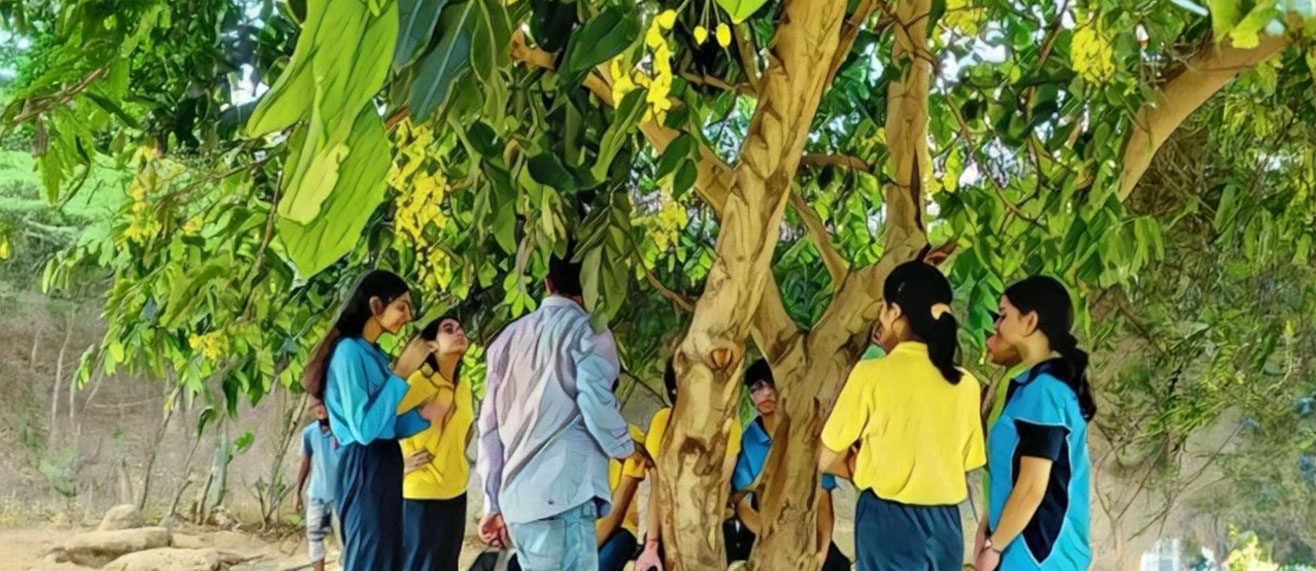
As children, do you remember the joy of dropping your school bag and running outside to meet your friends to play? Perhaps, you stood under a towering tree, marvelled at its grandeur, and maybe even climbed it? Even today, those childhood memories remain etched in our minds and make us smile.
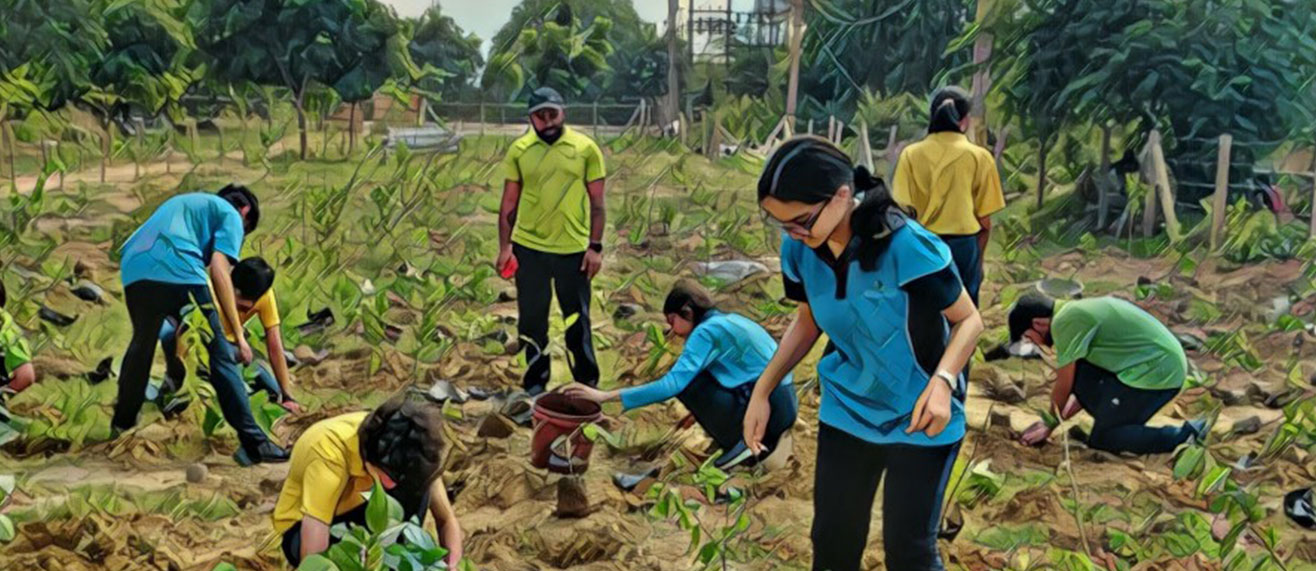
However, the contrast is stark when our experiences are compared to those of the young ones today. It has been repeatedly emphasised that children need to reconnect with nature to balance their occupied lifestyles. When the Habitats Trust team was creating a nature integration curriculum for Shiv Nadar School, we realised that children today, with their structured and screen-focused lifestyles, have little room for unstructured outdoor exploration. The foundation of this endeavour began with a fundamental question: "Why is connecting children with nature so crucial?"
Connecting children to nature offers numerous benefits that support their psychological, emotional, social, and physical development. The answer lies in the profound and multi-faceted virtues of nurturing a bond with the natural world. Research consistently highlights how it positively impacts children's psychological well-being, reducing stress and anxiety while enhancing their ability to focus. Exposure to such environments also stimulates cognitive development by fostering creativity, problem-solving skills, and observational abilities.
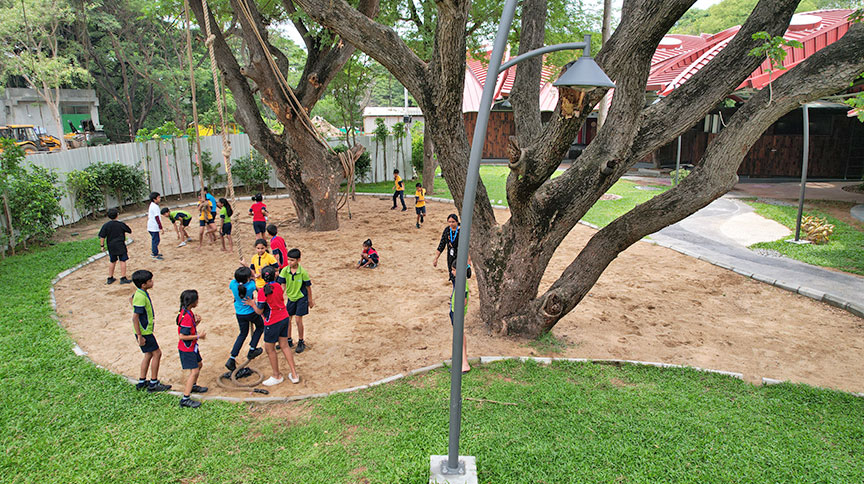
One significant benefit is the improvement in psychological well-being. Studies have shown that a four-hour mindful engagement with the natural environment increases positive emotions and reduces negative feelings. Around 30% of children who participated in such types of activities reported feeling happier and more relaxed. Regular practice of these activities can enhance their overall mental health.
Regular interaction with nature also supports cognitive development, providing restorative effects that help reduce mental fatigue, improving attention, creativity, and problem-solving skills. Studies have shown that using your five senses in natural settings promotes creativity and imagination. Simple activities like walking on a beach or trekking can lead to cognitive enhancements essential for overall mental agility.
Nature also plays a crucial role in fostering social and emotional development. Participation in nature-based programmes encourages pro-social behaviour and empathy.
It also hones interpersonal skills. Some studies have shown that participation in such programmes led to a 25% increase in empathy and pro-social behaviour, making children more cooperative and socially aware. These attributes are vital for interpersonal development and building healthy relationships with peers and adults alike.
Spending time outdoors increases physical activity, leading to better fitness levels and lower rates of obesity. Natural settings promote movement and exercise more than indoor environments, contributing to healthier lifestyles for children. Moreover, they enhance one's senses and environmental awareness, promoting sustainable behaviour. Children who develop a bond with nature are more likely to engage in environmentally friendly practices, fostering a generation that values and protects the environment. This early connection lays the foundation for lifelong environmental stewardship.
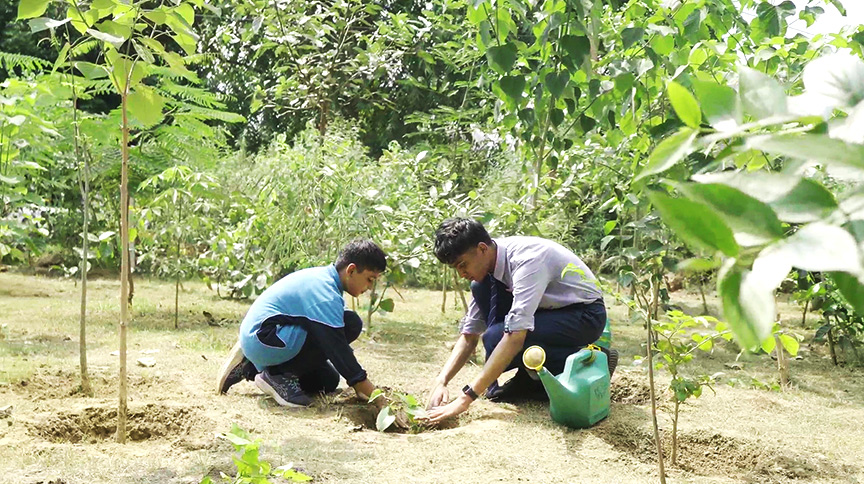
Exposure to natural environments also helps in managing behavioural issues. They have a calming effect, which can reduce symptoms of attention deficit hyperactivity disorder (ADHD) and improve overall behaviour. It is especially beneficial in urban environments, where noise and crowds often overstimulate children.
Furthermore, nature influences children's conscience by instilling a sense of responsibility, empathy, and ethical awareness. Engaging with nature encourages children to care for the environment and develop sustainable habits. Interacting with living organisms fosters empathy and moral reasoning, guiding children to consider the broader impact of their actions. From enhancing psychological well-being and cognitive skills to fostering physical health and environmental responsibility, the positive effects are profound and enduring. Encouraging children to build a strong relationship with the natural world is essential for their growth into conscientious and well-rounded individuals.
References:
- Dopko, R.L., Capaldi, C.A., & Zelenski, J. (2019) 'The psychological and social benefits of a nature experience for children: A preliminary investigation', Journal of Environmental Psychology.
- Giusti, M., Svane, U., Raymond, C., & Beery, T. (2018) 'A Framework to Assess Where and How Children Connect to Nature', Frontiers in Psychology, 8.
- Gill, T. (2014) 'The Benefits of Children's Engagement with Nature: A Systematic Literature Review', Children, Youth and Environments, 24(2), pp. 10.
- Mullenbach, L.E., Andrejewski, R.G., & Mowen, A. (2018) 'Connecting children to nature through residential outdoor environmental education', Environmental Education Research, 25(3), pp. 365-374.
- Barrable, A., Booth, D., Adams, D., & Beauchamp, G. (2021) 'Enhancing Nature Connection and Positive Affect in Children through Mindful Engagement with Natural Environments', International Journal of Environmental Research and Public Health, 18(9).
- Barrera-Hernández, L.F., Sotelo-Castillo, M.-A., Echeverría-Castro, S., & Tapia-Fonllem, C. (2020) 'Connectedness to Nature: Its Impact on Sustainable Behaviors and Happiness in Children', Frontiers in Psychology, 11.

Rutuja Dhamale
Rutuja Dhamale has a Master’s degree in Environmental Science from the University of Pune. Her interest in communication and conservation led her to pursue a second master’s degree at the University of Kent. She has previously worked with Turtle Action Group (TAG) of the Dakshin Foundation, WCT India and the Nature Conservation Foundation. At The Habitats Trust, her role focuses on nurturing environmental awareness in students through collaborations with conservation and ecology experts.
More From Perspectives Beyond