

Perspectives Beyond
Making of Shiv Nadar School Forest: From an Idea to Reality
By Ishtiyak Ahmed
From barren land to a thriving ecosystem, Shiv Nadar School Forest of the Faridabad campus shows how ecological restoration and student involvement can turn a vision into reality.
Ishtiyak Ahmed, Manager - Education at Give Me Trees Trust, played a key role in helping the Faridabad campus develop the Shiv Nadar School Forest. Shalini Chablani, an educator at the school, interviewed him to understand the process and the growth of the forest from barren land to the lush, thriving ecological space it is today.
Initial Challenges
Could you take us back to the beginning: what was the initial state of the land, and how did you assess its potential for transformation?
Initially, there was a lot of debris, mainly waste from construction and leftover building materials. There were open, untreated pools of stagnant water, the land was barren, and there were very few trees, some of which were dying due to the bad state of the soil. Stagnant water was also a breeding ground for mosquitoes. However, we saw huge possibilities for land restoration. Some of the advantages included this site being adjacent to Shiv Nadar School, Faridabad, and being part of the green belt. Developing and protecting it would set an example of ecological restoration, improve air quality, and reduce water pollution for all members of the community visiting and living around this space.
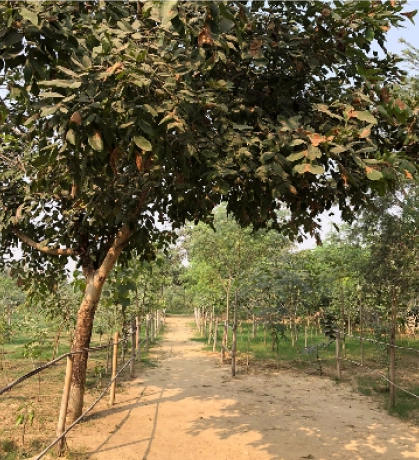
The Shiv Nadar School Forest
Vision & Inspiration
What inspired you and Shiv Nadar School to take on this ambitious project of converting a toxic land and dump yard into a forest?
We at Give Me Trees Trust believe that all land is sacred and no land is toxic; as human beings, we create toxicity in it. By improving and changing the soil quality on the site, we saw that we were able to restore this land to being fertile again from its earlier state of toxicity.
Environmental Impact
How did you plan to tackle the toxic pollutants present in the soil and the ecosystem?
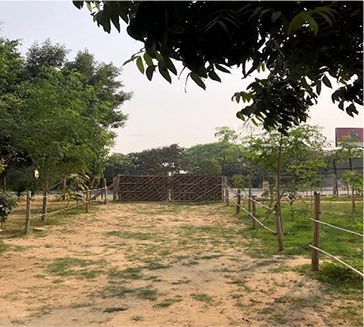
We started with clearing construction material and conducting an initial soil test. The results indicated that there were high pH levels in the soil, so to balance it, we started adding lots of biomass like hay and compost to the existing soil. Careful preparation and land planning were done beforehand by levelling the soil and demarcating walking pathways, sitting areas, and wetlands. Considering the climatic conditions of Faridabad, we carefully selected native trees to plant at the site.
Ecological Planning
How did you decide on the types of flora and fauna to introduce into the area, and what factors did you consider for long-term sustainability?
The types of trees to be planted depend on soil quality and the geographical region of the area.
If you select the right plant and take care of its survival for the first three to five years, then the trees and hence the habitat become self-sustaining, and they will start making their biomass themselves through their own leaves.
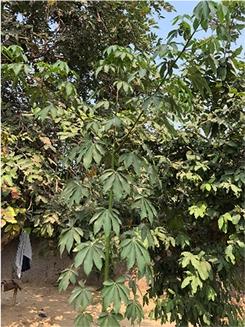
We have planted many native trees such as Moringa, Amaltas, Anar, Semal, Arjun, and Jungle Jalebi at the site.
Soil Remediation
What specific steps did you take to detoxify and rehabilitate the soil, which had been exposed to harmful pollutants?
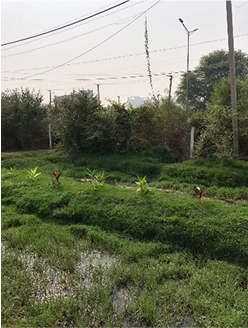
Different wetlands were constructed on the site, which had different chambers for treating the polluted water. Various aquatic plants were used in the process, and a technique called phytoremediation was incorporated, wherein plants are used to treat contaminated water, soil, and air on the site. In addition, mulching was used to improve soil quality, and wild plants and grasses were allowed to grow to provide soil cover and attract insect life.
Community Involvement
Was there any involvement from the local community, including students, in the transformation process? If so, how did they contribute to the project?
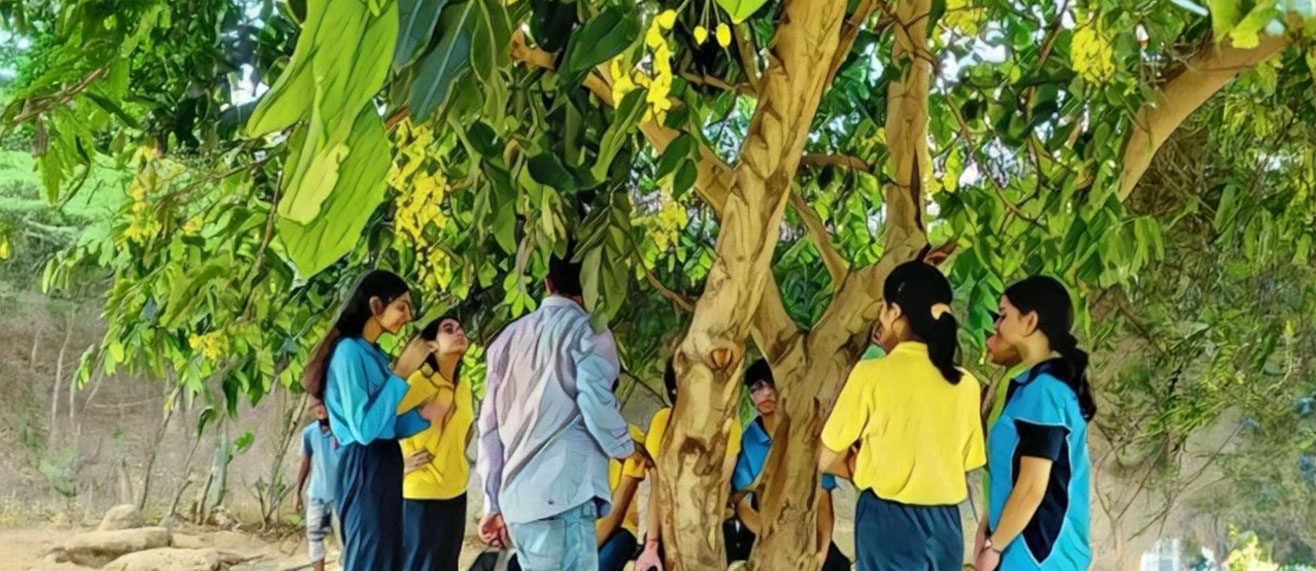
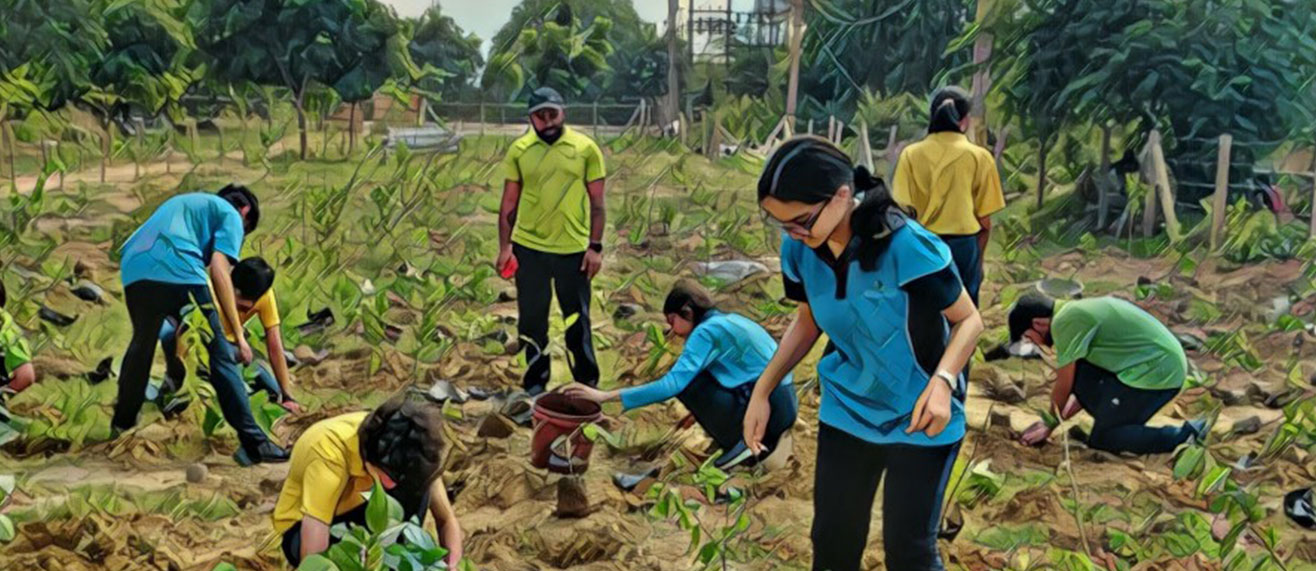
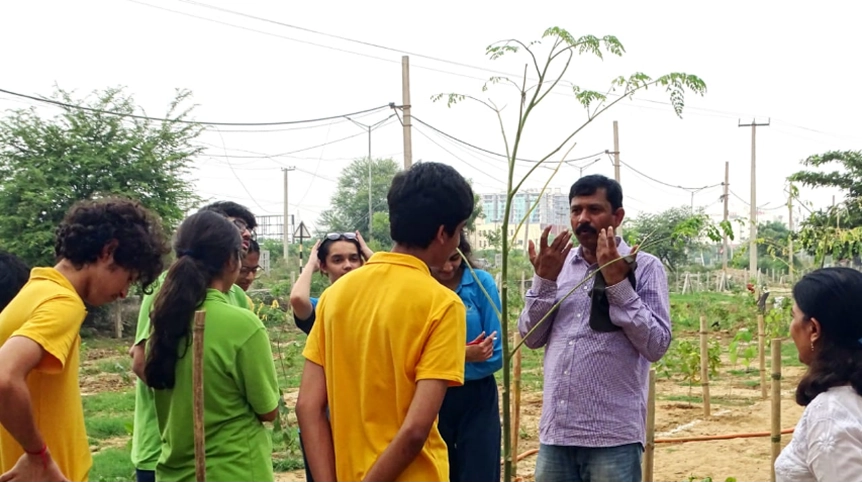
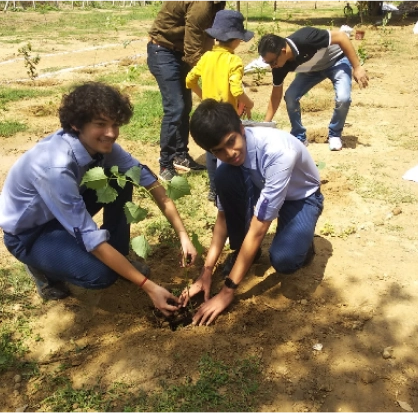
Once the land was ready for plantation, the community of the school, including teachers, students, and their parents were involved in the tree plantation process. They were engaged by taking them on site tours, and explaining the science behind plant selection. Recently, there was a Forest Bathing (Shinrin-Yoku) session that took place for the teachers here, which was aimed at spending time in the forest to improve physical and mental well-being.
Forest as a Learning Space
How do you envision the newly developed forest being used as a learning space or an eco-friendly space for students and the wider community?
All forests have lots of ecosystems residing within them, e.g., grassland ecosystems and woodland ecosystems. You can observe different lifecycles of insects, bees, and butterflies here. You can see the behaviours of different birds too. Forests are ‘living environmental books’, where you will be able to observe and learn from all these aspects of life.
We envision that students and members of the community use this forest space for practical learning and to improve their connection to nature and its beings.
Sustainability
What measures are you putting in place to ensure the forest remains healthy and continues to grow in the future? Are there any ongoing maintenance or monitoring practices?
Some ongoing maintenance work includes mulching, watering, adding compost, and hence, improving microbial quality of the soil. We try to replant a tree if it is unable to survive. But we strictly don’t believe in regular cleaning of plants from the soil except for walkways, as grasses are important companion plants in the forest to help maintain the moisture of plants, support insect populations, maintain and help in the food cycle, and improve the bacterial health of the soil.
Interviewed by Shalini Chablani
Photo Credits - Shivam Chablani 9 Sariska
Ishtiyak Ahmed
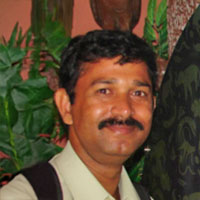
Ishtiyak Ahmed is a wildlife and biodiversity expert with over 13 years of experience. He is currently working with the Give Me Trees Trust as Manager of Nature Education and Training. He started his career in the environmental field as an Education Officer with the Bombay Natural History Society at Asola Bhatti Wildlife Sanctuary, Department of Forest & Wildlife, Delhi. His expertise ranges from wildlife and biodiversity to creating thematic gardens, nature walks and trails, landscaping, afforestation, trees, and wetlands. So far, he has organised and moderated more than 5,000 nature educational sessions, workshops, and nature walks.
More From Perspectives Beyond