


From Learning to Leading: Sustainability in Action
By Shiv Nadar School
From solar-powered campuses to student-led innovations, Shiv Nadar School turns sustainability into action, preparing young changemakers to create lasting impact for a greener future.
The sun rose, casting a gentle warmth across the city beneath predominantly clear skies with just the occasional wisp of cloud. On 14th March 2024, this quintessential spring weather created the perfect backdrop for the historic event that would unfold at Shiv Nadar School, Faridabad.
As the air filled with anticipation and excitement, 2,232 students and educators came together around a massive canvas, each with one goal in mind. They were ready to write their names in history and create a World Record for the most handprint contributions to a painting in one hour. The energy was contagious; laughter mingled with the hum of activity as everyone worked together towards a common goal.
Yet, it was more than just about breaking a record; it was about creating something beautiful and meaningful while sending a message of water conservation. Each handprint symbolised the collective strength of individuals coming together for a shared goal, a timely reminder of what we can achieve when unity meets purpose. The #EveryDropCounts pledge was taken by all participants, in line with our core principle of Responsibility and UN Sustainable Development Goal 6: Ensure availability and sustainable management of water and sanitation for all.
This event was a vivid reflection of a much larger journey, one that takes place across our campuses, where the school leads by example, integrating environmental responsibility into everyday life.
Campuses Designed for Sustainability
At Shiv Nadar School, sustainability is a way of life, woven into our learning spaces, daily practices, and long-term vision.
Our campuses are designed to reflect our approach to resource management, and every step is taken with a commitment to a greener future. For example, the Chennai campus maintains a seamless connection between indoors and outdoors, preserving existing trees and integrating natural elements into the architecture. The campus uses solar energy, passive ventilation strategies, and optimised active systems to reduce energy consumption. The building features natural materials like refurbished wood panels, steel, and AAC blocks, which contribute to its sustainable profile. The school promotes wastewater treatment and recycling for sustainable water usage. Rainwater harvesting systems are installed across our campuses to capture and recharge groundwater. Advanced purification systems and dual flushing systems are also installed throughout the campuses.
Most of the schools’ energy needs are powered by solar panels. The Noida campus meets over 75% of its electricity demand with solar energy, while Faridabad’s 133 kW system saves 500 units daily. Even at Shiv Nadar School, Chennai, where the campus is relatively new, solar energy already powers 25% of operations. The true impact of these numbers lies in what they represent: a tangible commitment to reducing carbon footprints and a model for integrating renewable energy into everyday life.
Our educators play a crucial role in shaping the sustainability discourse within the institution. Many faculty members are involved in research and professional development programmes that focus on sustainability. The school’s eco-clubs organise tree plantations, clean-up drives, and awareness programmes on pressing environmental issues. Events like ‘No-Plastic Week’ and ‘Earth Day’ celebrations promote sustainable habits.
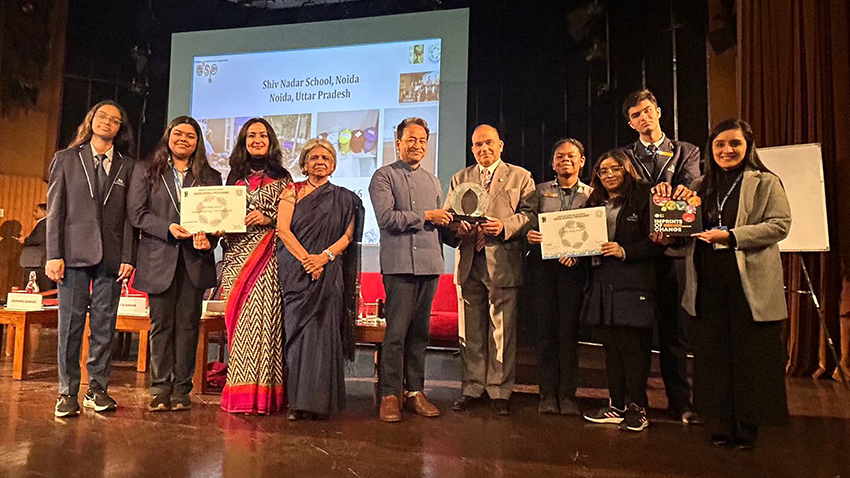
The Noida campus participated in the Green School Programme, an environmental education initiative that encourages students to assess and improve their school's resource consumption. By auditing areas such as air, energy, water, land, waste, and food, the school identified opportunities for sustainable practices. Their consistent efforts have led to a 'Green' certification in the GSP Audit for the past five years, placing them among the top schools in India for environmental management. Our Gurgaon campus received the Green School Programme Award in 2018. It was one of 118 schools shortlisted as a ‘Green School’ out of 1,696 schools that participated that year. The campus was also recognised for its water management efforts. It was awarded the ‘Best Water Management School’ for 2022-23 by The Water Digest, India's premier water magazine, in partnership with the Ministry of Jal Shakti and other government departments.
At an institutional level, Shiv Nadar School has also received international recognition for its sustainability efforts, including participation in the 8th NYC Green School Conference 2024, held at Cornell University. We showcased our eco-conscious architecture and environmental initiatives during the event.
Sustainability in the Curriculum
The journey towards a sustainable future begins in the classroom. By embedding sustainability into the curriculum, the school ensures that children not only learn about global environmental challenges but also develop the skills and mindset to address them creatively and responsibly. Students engage in hands-on projects that bring sustainability principles to life. They design and create prototypes of sustainable products such as biodegradable packaging or water-saving devices. Across our campuses, young innovators are transforming real-world challenges into groundbreaking solutions.
One such remarkable innovation is Replastify, created by a group of five Grade 10 students at our Faridabad campus. These young innovators have turned a problem into a promise with their device, which transforms discarded PET bottles into filaments for 3D printing. Inspired by the Recreator3D project, they didn’t stop at replication; they reimagined and refined the concept to suit local needs. A discarded bottle, a simple strip through the extruder, and voilà, waste becomes a resource. Their efforts have earned them the prestigious Junior Astitva Award from the PHD Chamber of Commerce, proving that innovation knows no age!
While waste management remains a critical issue, water pollution is an equally urgent challenge. Faced with the reality that 70% of India’s surface water is unfit for consumption, a team of students at Shiv Nadar School, Noida, decided to rewrite the narrative. They were determined to tackle eutrophication, a silent killer of urban ecosystems, where excessive nutrients, such as phosphorus and nitrogen, choke water bodies. Months of brainstorming, experiments, and relentless determination led to the birth of Eutrozyme, which transforms waste into a versatile bioenzyme. By reducing dependence on harmful chemicals, this eco-friendly and affordable solution showcases how students are leading the charge toward cleaner water bodies and healthier environments.
Beyond water conservation, agriculture faces its own sustainability challenges. Amidst the lush fields that sustain a nation, farmers often lack access to soil testing facilities, leaving them to estimate fertiliser and water requirements. This can lead to overuse, degrading soil health, and harming the environment, or underuse, which reduces crop yields and threatens livelihoods. Recognising this urgent issue, the students at Shiv Nadar School, Gurgaon, developed AgroVenture, an innovative device that delivers precise soil analysis in minutes. By providing actionable insights on the exact quantities of fertiliser and water needed, it optimises resource use, nurtures soil health, boosts crop yields, and supports farmers economically.
Meanwhile, waste management remains a global concern, and students from the Shiv Nadar School in Faridabad rose to the challenge with their innovative solution, Swachh Bins. Poor waste management leads to polluted air, contaminated water, and deteriorated soil quality; however, Swachh Bins have turned this challenge into an opportunity for sustainable innovation. Designed with cutting-edge technology, these bins streamline waste management, demonstrating the impact that young minds can have in driving meaningful change for a better future.
Community Action Projects
In collaboration with local communities, students lead on- and off-campus initiatives, including tree plantations, waste segregation drives, and energy audits. Across our campuses, sustainability is driven by young changemakers committed to making a difference.
On the Noida campus, a student-run thrift store called ReStore challenges the mainstream consumer culture by giving objects a second or even third life, helping students breathe new stories into pre-loved items, and weaving lessons of resource conservation and mindful consumption into everyday practice. As they sift through the racks, they aren’t merely shopping;they’re questioning, learning, and leading the charge towards a sustainable future!
Beyond reducing waste, students are also reimagining urban green spaces. At the Faridabad campus, the Shiv Nadar School Forest is home to 2,800 trees and serves as a green sanctuary that was once a barren wasteland. Transforming toxic soil into fertile ground is no small feat, but the community rose to the challenge. With 50 different species, including Jamun, Moringa, and Bamboo, the forest has become a lively hub for students and a vibrant gift to the city of Faridabad. As saplings grow into trees, they also nurture a spirit of environmental stewardship, bringing society closer to harmony with nature.
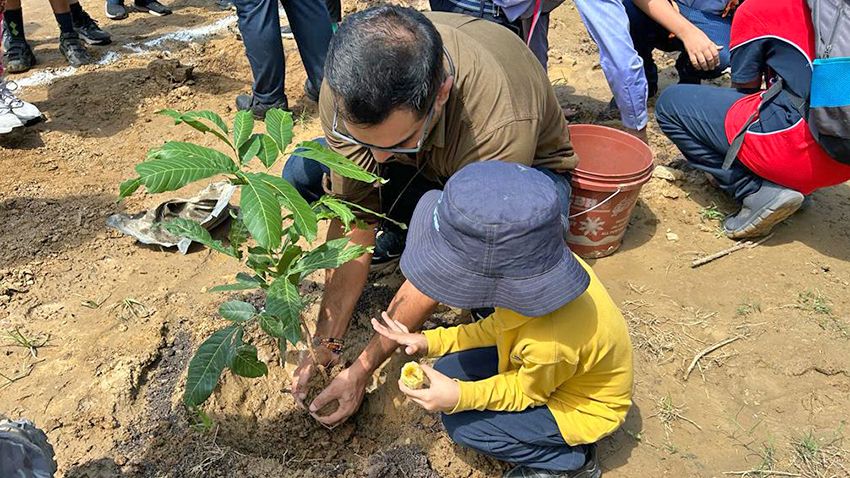
At Shiv Nadar School, Gurgaon, students have adopted the Miyawaki project, a movement that promotes the cultivation of fast-growing native plants and trees. Through active participation in plantation drives and advocacy efforts, they are not only combating deforestation but also encouraging their peers to reflect on the true cost of urban expansion.
Water conservation is another critical focus area, with students working on solutions to counter environmental degradation. Project Neer, conceived at Shiv Nadar School, Noida, tackles desertification caused by illegal mining through sustainable water practices. Building embankments for cattle and rejuvenating wells aren’t just practical measures, they are acts of hope, ensuring that communities thrive even in the face of adversity.
Project Urja, another initiative conceptualised at our Noida campus, highlights the importance of clean energy. Students are building a renewable energy system from scratch, proving that sustainable solutions are both possible and practical. By powering classrooms with clean energy, they are crafting a blueprint for a brighter, greener future while inspiring others to consider the role of renewable resources in everyday life.
As they work toward sustainability, students remain deeply committed to social equity. The spirit of giving finds a home in Project Zero Hunger. Started by a group of Grade 12 students at our Gurgaon campus, this initiative addresses the UN’s Sustainable Development Goal 2 by collecting and distributing food to those in need. Through the project, over 7,500 meals have reached those in need.
The Road Ahead: Nurturing Changemakers
By fostering a culture of sustainability, Shiv Nadar School prepares its students to be environmentally conscious global citizens. Through its holistic approach, Shiv Nadar School is not just teaching sustainability, but it is living it. By integrating sustainable practices into every aspect of its operations, the school ensures that students graduate as environmentally conscious individuals, equipped to make a positive impact in the world.
Every initiative and every project tells a story of hope and transformation. From inspiring individual action to fostering community collaboration, collective efforts lead to profound change.
As the handprints on the canvas remind us, every action, big or small, holds the power to spark change. Together, our actions become a force that can reshape our world, proving that when we unite with purpose, we can build a brighter, greener future for all.