
Ideas in Action
KaryoUs: A Vision of STEAM Innovation at Shiv Nadar School
By Yuvika Verma
Yuvika Verma, a student at Shiv Nadar School, Gurgaon, shares her journey as the co-lead of KaryoUs, a cross-campus STEAM initiative driving sustainability and innovation through projects and conclaves.
“But Why?”
It began as most things do, with a simple question, a spark of curiosity that grew into something much larger. At KaryoUs, we created a space to explore those ideas. Whether we were designing a gym that could power itself or diving into the mysteries of particle physics, each step we took felt like part of something bigger, something connected.
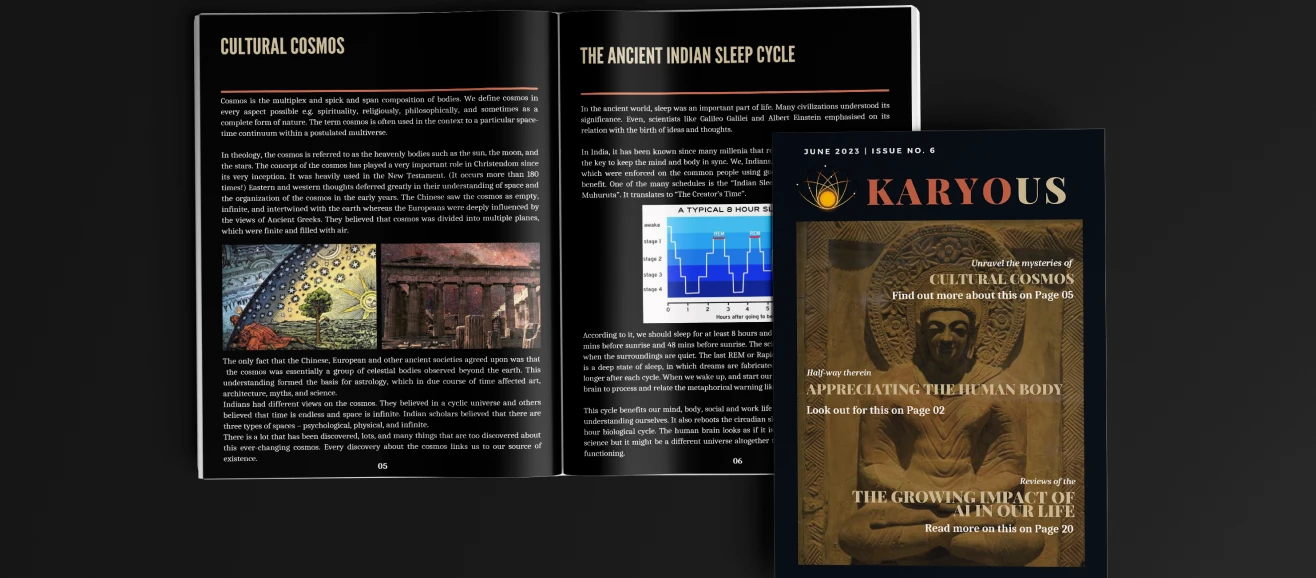
‘KaryoUS’ at Shiv Nadar School is our cross-campus science society and also a magazine where students from different Shiv Nadar institutions come together to collaborate on science, technology, engineering, arts, and mathematics initiatives, and also publish articles, news, and reviews on scientific topics, often focusing on themes related to Indian mythology and science intertwined. Essentially, it's a platform for students to explore and share scientific interests.
As a student lead for the Gurgaon campus, I have had the opportunity to lead and contribute to science, technology, engineering, arts, and mathematics (STEAM) initiatives such as Project Urja, Physics Conclave, and KaryoUs Magazine.
KaryoUs challenges us to ask, "Why?", and empowers us to turn those questions into real-world solutions. This is our story.
Project Urja: Pioneering Green Energy
At the heart of KaryoUs is a commitment to sustainability, embodied by Project Urja, a green energy initiative launched in 2023. The vision is to build a gym on campus that not only promotes physical fitness but also generates electricity, demonstrating how innovative technology can directly support environmental goals. This idea was born out of our desire to integrate sustainable practices into everyday life at school, inspiring students to see how their daily actions can make a positive environmental impact.
Through this project, the gym became both a functional solution and an educational tool, teaching students the importance of energy conservation and innovation. The initiative underscores our belief that sustainability must be woven into the fabric of everyday life.
Physics Conclave 2023: Bridging Theory and Practice
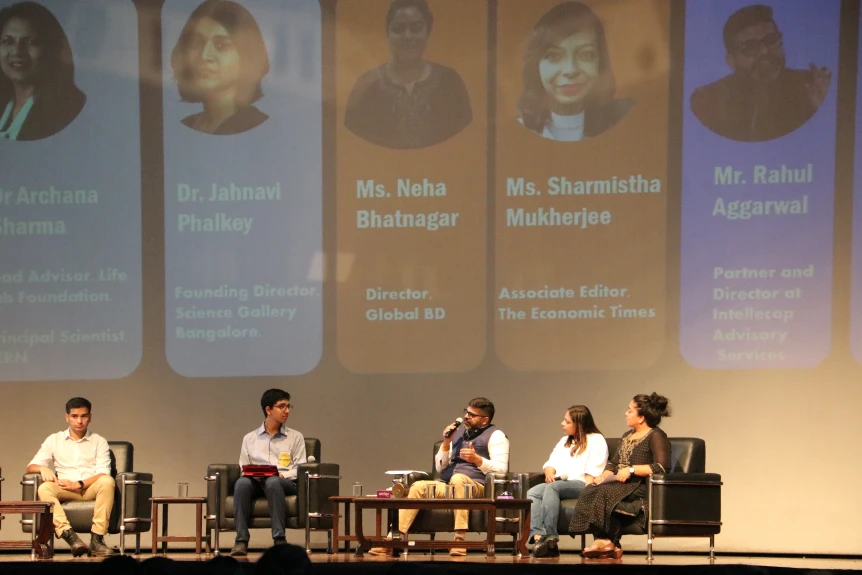
Physics Conclave at Shiv Nadar School, Gurgaon
Another initiative is the Physics Conclave 2023, themed ‘Bridging the Gap: Particle Physics and Its Relevance in Our Everyday Lives’. This event aimed to demystify particle physics, showcasing its influence on technologies we use daily.
The conclave featured renowned scientists such as Dr. Archana Sharma, an Indian physicist and senior scientist at CERN, and Dr. Jahnavi Phalkey, Founding Director of Science Gallery Bengaluru. They shared rare insights into cutting-edge research in physics while also highlighting the interplay between science, technology, and society.
Particle physics might seem distant from our everyday lives, yet, from the development of technologies like the World Wide Web at CERN to medical applications like proton therapy, particle physics plays a crucial role in shaping modern advancements. Students were given a glimpse into the Large Hadron Collider, the discovery of the Higgs boson, and ongoing research in particle accelerators, illuminating the critical role fundamental research plays in advancing technology and expanding human knowledge.
A broader perspective was shared on how scientific discoveries shape economic and social structures, highlighting the interconnectedness of science, economics, and history within a larger societal framework. The panel discussion further explored how advancements in particle physics drive innovation, influence industries, and shape public policy, reinforcing the dynamic and far-reaching impact of STEAM beyond the classroom.
The Physics Conclave was an inspiring experience for everyone and succeeded in fostering a deep interest in STEAM among all who attended.
Energy Audit: Empowering Sustainability
In May 2024, as part of our school’s commitment to sustainability, we conducted an Energy Audit in collaboration with electricians to track and analyse electrical consumption across the campus. This initiative not only emphasised the importance of energy efficiency but also provided a hands-on learning experience for students involved in STEAM initiatives.
The first phase of the audit focused on systematically measuring electricity usage in different school blocks. By monitoring consumption patterns across various days and months, we identified peak usage periods and unusual spikes. Frequent visits to the transformer area allowed us to collect real-time data multiple times a day, offering valuable insights into energy flow and inefficiencies.
In addition to tracking overall consumption, we catalogued all electrical appliances, including lights, fans, air conditioning units, and other electronics, recording their individual power usage. Comparing this data with total consumption helped pinpoint the most energy-intensive devices and areas of unnecessary waste.
Expanding our efforts beyond the school, we assisted families in monitoring their home energy usage. Many were surprised by the hidden costs of leaving devices and lights on for extended periods. Simple yet effective strategies, such as switching to LED lights, turning off appliances when not in use, and managing air conditioning more efficiently, led to noticeable reductions in household electricity bills.
These audits not only raised awareness but also empowered people to take concrete steps to reduce their energy usage. We suggested simple yet effective methods such as using energy-efficient LED lights, turning off appliances when not in use, and managing air conditioning more carefully. This initiative had a tangible impact, with many households reporting a noticeable reduction in their electricity bills after making small changes.
Our energy audit was more than just data collection; it was an opportunity to propose solutions for reducing energy consumption at both school and home. We discussed several energy-saving solutions, including implementing automatic sensors for lights, encouraging responsible energy use habits, and using more energy-efficient appliances.
Ultimately, this project underscored how the impact of small actions can lead to significant reductions in energy wastage. By identifying areas of improvement and taking steps to encourage conscious consumption, we contributed to the larger goal of promoting environmental stewardship within our school and community.
At the STEAM Conclave 2024, we presented the findings from our energy audit, highlighting areas where energy consumption could be reduced.
The Conclave also featured a keynote address by William Kamkwamba, author of The Boy Who Harnessed the Wind, and a panel discussion on the future of renewable energy. These sessions highlighted the transformative potential of innovative energy solutions and encouraged students to think beyond conventional approaches.
KaryoUs Magazine: A Fusion of Innovation and Expression
The KaryoUs Magazine, a collaboration between students from Shiv Nadar institutions, features articles, news, book reviews, and updates on STEM programmes. Serving as a creative and intellectual outlet, it showcases student contributions from across all campuses. Our editorial team curates, collects, and publishes content, ensuring each edition reflects the diversity of thought within our school community. Contributions range from research articles and creative writing to artwork and scientific explorations.
Being part of the magazine has been a valuable learning experience. It is not just about publishing, but about creating an inclusive space where every student, regardless of their background in STEAM or the arts, feels encouraged to contribute. Editing has also taught me the importance of maintaining quality while nurturing diverse voices.
What makes KaryoUs truly special is its interdisciplinary nature. It is not merely a STEAM society focused on science and technology, but also one that embraces creativity, highlighting the connection between innovation, the arts, and collaboration across multiple fields.
This holistic approach fosters a culture of innovation, which is central to our school's goals.
Looking Ahead
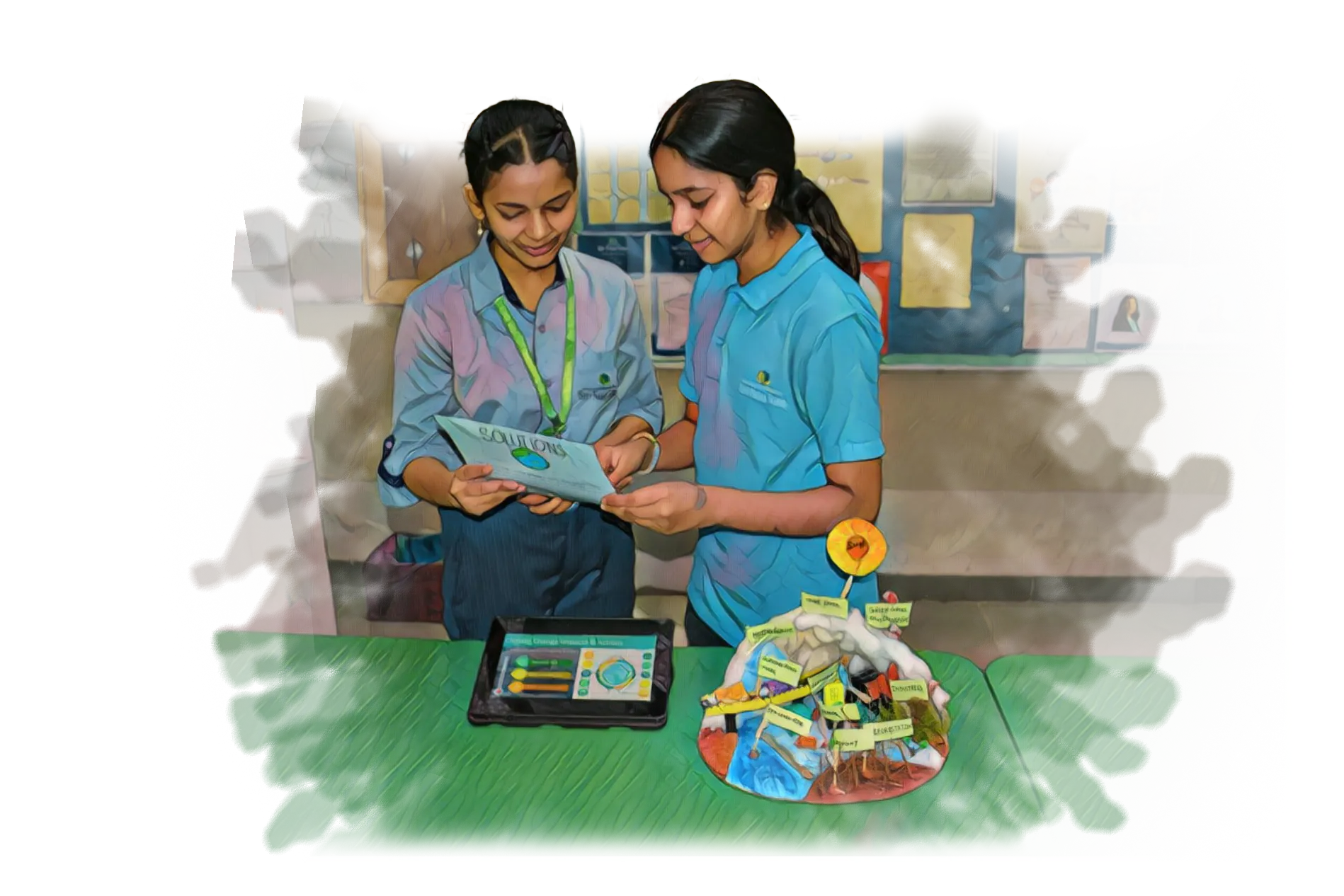
KaryoUs will continue to provide a platform for student creativity and innovation, nurturing a community of young minds who are not just learners but also changemakers in STEAM and sustainability. As we move forward, our goal remains to inspire curiosity, foster collaboration, and encourage a deep sense of responsibility towards the world around us.
As we look to the future, we hope to expand our reach, bringing more students into this dynamic space where science, creativity, and sustainability converge. Because in the end, it all begins with a question, 'Why?' and the journey to find the answer is what truly defines us.

Yuvika Verma
Yuvika Verma is a Grade 12 student of Shiv Nadar School, Gurgaon. She is a TEDx speaker and founder and developer of SkySentinel, a patented landfill risk monitoring system to prevent landfill fires. She is a published author, with a self-published book on Amazon, and a research paper published in the Curieux Academic Journal. She is co-student lead of KaryoUs STEAM Society, a green energy initiative at Shiv Nadar School.