

NextGen Voices
Igniting Passion: Our Transformative Internship at ITER
By Raghav Garg and Hrit Gupta
Shiv Nadar School, Faridabad, students Hrit Gupta and Raghav Garg share their experience of interning at ITER, France, exploring fusion energy, VR robotics, and diagnostics.
“You will be the first two from India to get such an opportunity of interning at ITER." When we heard this from Nitendra Sir, President of the Indian Youth Nuclear Society (IYNS), we were on top of the world, but little did we know about the adventures that lay ahead of us. We were also very surprised to learn about this because even though India joined the project almost 20 years ago, no student from an Indian high school has been a part of this programme before. We joined the internship through IYNS’s International Internship program. IYNS Research Foundation is the only institution in India to facilitate the ITER Internship.
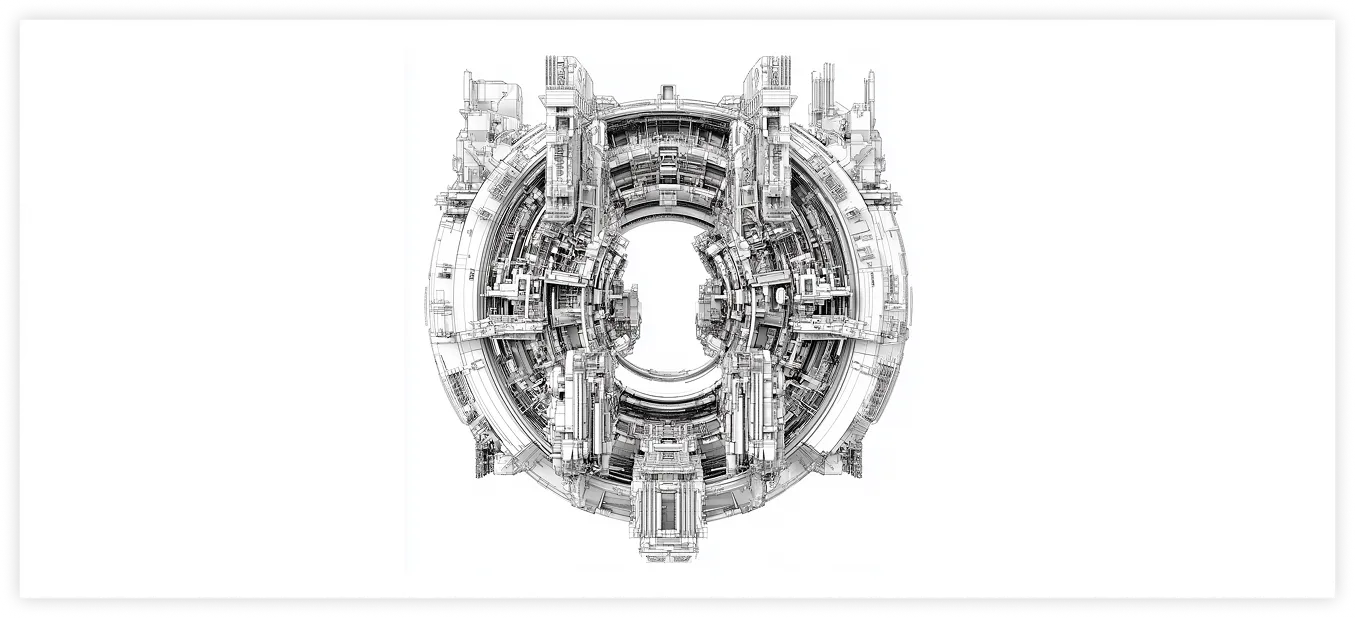
For context, ITER stands for International Thermonuclear Experimental Reactor and also means ‘the way’ in Latin. It is an international collaboration of seven member states (including the EU) or 35 nations. It aims to harness the power of nuclear fusion, the same process that fuels the sun, to create a clean, sustainable, and virtually limitless energy source for the future. The importance of this collaborative project and its triumph in the field of nuclear fusion was impressed upon us, further fuelling our passion in the field of STEAM. These industry experts exemplify the degree of dedication and knowledge they have in their individual areas of work; they not only underscored the requirement of knowledge but also the ability to adhere to and the role that the core values of ITER i.e. CARE (Collaboration, Accountability, Respect, and Excellence) play in the success of the project.
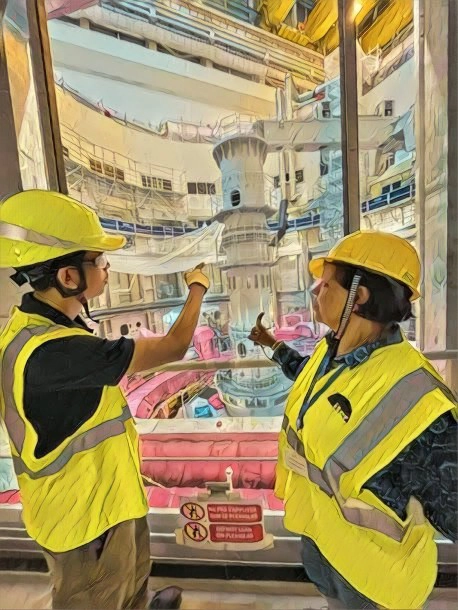
Working as an intern at ITER has enriched both our theoretical and practical knowledge in the field of STEAM. From discussing the reason behind the change in boiling point due to a vacuum to designing our own virtual reality sandbox, we did it all! We gained a lot of knowledge and learnt skills through our amazing mentors at ITER. Interacting with people like them broadened our horizons and was very enriching.
The scientific principles we learnt in school laid the groundwork for our internship experience, allowing us to grasp the complex concepts at play within ITER. Our classroom knowledge of physics, chemistry, and engineering provided a foundation upon which we could build a deeper understanding of nuclear fusion. Seeing these principles applied in a real-world setting, with cutting-edge technology and brilliant minds working together, solidified our passion for science and showcased the incredible potential it holds to address global challenges like energy production.
Besides our mentors, we got to interact in groups and one-on-one with the other interns through Ms Shira’s session on Intercultural Communication, exchanging our experiences and answering questions like, “What are three things that are unique about your country?”. Conversations with the interns hailing from varied backgrounds exposed us to different perspectives and helped us deliberate.
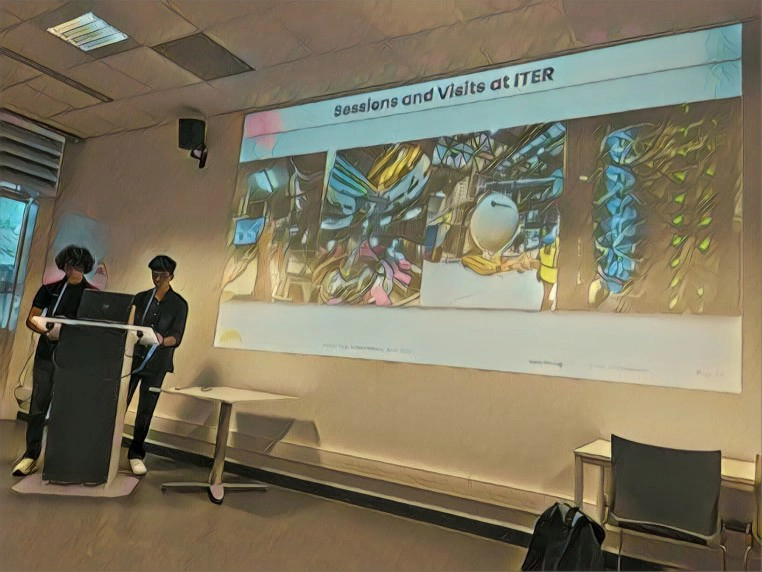
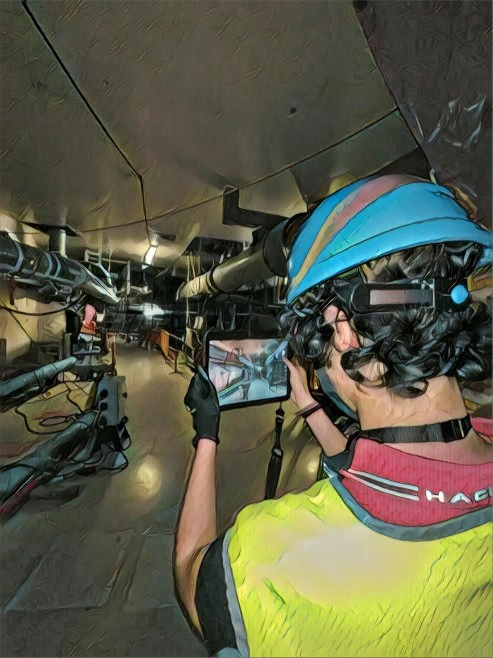
These experiences set the stage for the more pragmatic aspects of our internship. We got to work in a very professional environment, which was very alien to us: using public transport each day to get to work, scheduling our day according to the work, dressing appropriately, and having access to unlimited coffee from the vending machines. All these seemingly menial tasks have given us a taste of living like an adult, which is imperative as working does not only require skills in your field but also knowing how to handle yourself as well.
While our tasks and sessions were interspersed throughout the day, we got to pursue our technical interests in our own departments.
At ITER, we found ourselves immersed in two fascinating aspects of fusion research, one rooted in virtual reality, the other in scientific diagnostics.
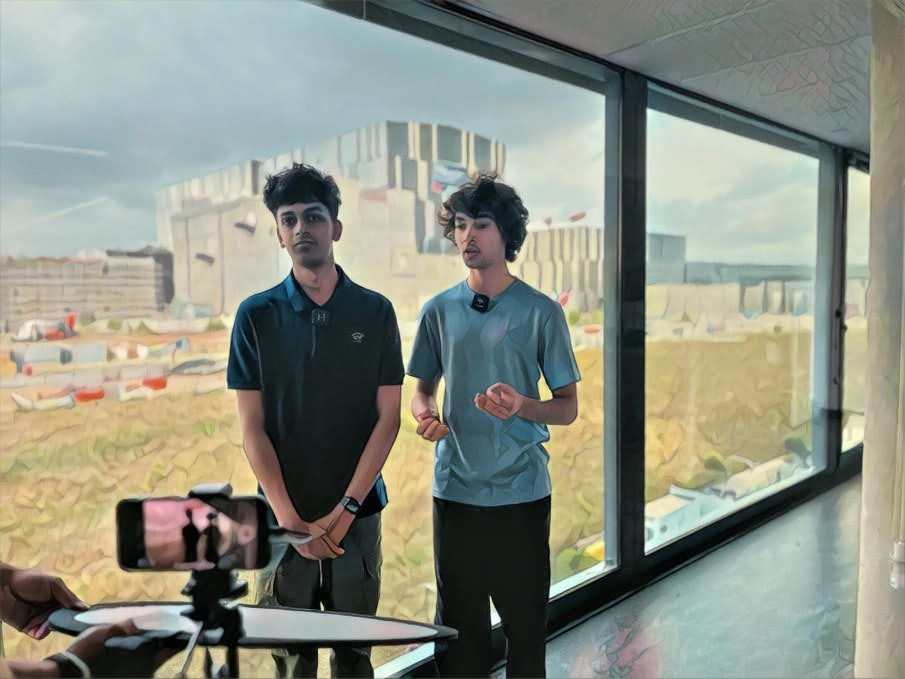
Hrit worked closely with mentor Benoit in the Virtual Reality Lab, developing a 3D simulation for a KUKA industrial robot. Using CATIA for modelling and Unity for simulation, he helped create a virtual sandbox where users could control the bot via a haptic feedback controller, pushing objects, interacting with digital environments, and even syncing VR avatars with the robot for collaborative tasks. The project went beyond creating a “cool” experience; it became a proof of concept for using immersive simulations to solve engineering challenges. It’s exciting to know the simulation continues to be used for demonstrations at ITER’s VR room.
Raghav, on the other hand, delved into the Diagnostics department, the sensory and control hub of the tokamak. His main project involved writing a detailed report on the Overview of Diagnostics at ITER, covering everything from active and passive diagnostics to the purpose of diagnostic ports. The report is now part of ITER’s research database for global use. Along the way, sessions like the one on the In-Vessel Viewing System (IVVS) showcased how LiDAR (Light Detection and Ranging) helps monitor plasma in the harsh environment of a fusion reactor.
Though we explored different paths, our experiences were united by ITER’s mission: to advance fusion research and technology. Both projects showed us how virtual innovation and precise diagnostics play vital roles in building the future of energy.
On a lighter note, lunch at ITER was also a treat that we looked forward to every day! The cafeteria offered a wide variety of international cuisines, reflecting the diverse backgrounds of the staff and interns. It was a daily reminder of the global collaboration that made ITER possible. During our final presentations, an intern also humorously proclaimed that the cafeteria was so good he could eat there thrice a day. We all chuckled in agreement.
One of the most remarkable aspects of ITER was the atmosphere of collaboration and humility. Every person we encountered, from researchers to technicians, was an expert in their field, likely one of the best in the world. Yet, there was no trace of ego. Everyone was approachable, always ready to answer questions or share their knowledge with a smile on their face. The work-life balance at ITER was equally impressive, with a strong emphasis on enjoying life outside of work. We were fortunate to experience this firsthand, witnessing two music events at ITER during our short internship. We celebrated Fête de la Musique, both at ITER and in Aix-en-Provence, and even attended an opera concert held within the ITER campus. These experiences truly highlighted the vibrant and well-rounded community at ITER.
Living in the historic, holistic centre of Aix-en-Provence for two weeks was also an unexpected perk of the internship. We spent evenings exploring Cours Mirabeau and other charming streets and lively squares, soaking in the atmosphere. The slower pace and focus on enjoying the moment was definitely a refreshing change from the hustle and bustle of India. The locals' easygoing nature and warmth struck us, people always had a smile and a kind word, making us feel right at home. It was a delightful cultural experience that perfectly complemented our time at ITER, and we even picked up a few French words along the way, such as merci, bonjour, and bon appétit!
But the adventures didn't stop there! Before the internship even began, we had a day to explore the vibrant port city of Marseille. And to top it off, we caught a Coldplay concert in Lyon over the weekend, an unforgettable experience that added an extra layer of excitement to our French escapade.
As we bid adieu to ITER and this charming region of France, we carried with us not only the knowledge and skills we had gained but also the connections we had forged and the cultural experiences we had cherished. This journey, once filled with uncertainty and anticipation, transformed into an unforgettable chapter in our lives. We are immensely grateful to ITER, IYNS, and Shiv Nadar School for this unparalleled opportunity, and are confident that this experience will serve as a foundation for our future endeavours in the realm of science and technology. We hope our journey will inspire other young minds in India and across the globe to pursue their passions in STEAM and contribute to a brighter, more sustainable future for all.
Empowering Young Innovators through Experiential STEAM Learning
At Shiv Nadar School, STEAM education blends Science, Technology, Engineering, Arts, and Mathematics with real-world learning. Students develop the ability to innovate, collaborate, and solve problems while nurturing a lasting passion for discovery.
Curiosity and innovation are central to our approach. Through outbound learning programmes, students step beyond the classroom to build resilience and apply their knowledge in real-world settings.
Guided by Ms. Vinita Sharat, Head of STEAM and Science Outreach, students and educators gain access to STEAM labs across India and abroad, participating in workshops and internships that offer hands-on exposure to scientific research and practices. Our annual month-long Scientific Exploration challenges students to tackle real-world problems aligned with the UN Sustainable Development Goals.
Initiatives such as Educational Boot Camps and the Physics Conclave give students the opportunity to learn from experts like Dr. Archana Sharma (CERN) and Dr. Jhanvi Phalke (Science Gallery Bengaluru). Mentors from Bhabha Atomic Research Centre (BARC), ITER France, and the IYNS work closely with our community. Programmes such as the Energy Boot Camp further strengthen ties between students and the world of research and industry. The school also has a partnership with the Inter-University Centre for Astronomy and Astrophysics (IUCAA).
The growing need for young scientists has long been recognised by leading research institutes, and these initiatives aim to bridge that gap by inspiring and preparing the next generation of innovators.
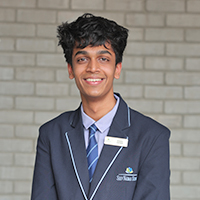
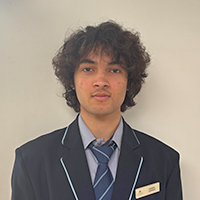
Raghav Garg and Hrit Gupta
Raghav Garg and Hrit Gupta are students of the IBDP II programme in Shiv Nadar School, Faridabad. Raghav was a part of the internationally acclaimed winning team of Colloquium 2022 and is a young and talented scholar with a knack for scientific pursuits. Hrit, along with Raghav, was the School Captain of 2024-25. This dynamic duo is smart, intellectually stimulated, and ready to take on the world.
More From NextGen Voices